Scripture · history · the life of the Church

The Bible
Timeline

From Creation to the first Christian century. Follow the people, places and events of Scripture, with illustrations and teaching from the original Arabic timeline.

Original Arabic work prepared and reviewed by Father Mark Aziz
Design and art direction by Maged Gamil Habib · Vine Activities

English review edition

Christ with figures from the Old and New Testaments, from the original timeline cover
Original illustration · Vine Activities

One unfolding story. Read in order, jump to a chapter, or find a person, place or passage.

About this English edition

A note for the reader

Reading across two editions

This English edition brings together the text and illustrations visible in two photographed Arabic editions. Their distinctive passages are retained, with overlapping material brought together.

Dates and historical interpretations follow the original authors. A reading note identifies a conflicting date, a questionable citation or a passage that the photographs do not fully resolve. Scripture quotations are translated from the Arabic source; they do not consistently follow one published English Bible.

About the sources

The working collection contains 91 photographs: the original 14 panels and 77 additional photographs. Arabic transcriptions are included where available. The cover, introduction and Creation-to-Noah section are unchanged between editions and are translated from the original photographs.

The source is Vine Activities’ Arabic Bible Timeline. Original photographs and the detailed comparison record are retained with the translation files.

All supplied photographs have a recorded review. Remaining unclear readings are identified beside the affected passages.

In the beginning

Creation & the Flood

God creates the world; the story of humanity, the Fall and the promise of renewal begins.

Creation to the Flood; dates and genealogy follow the Arabic source

Jump within this chapter 8 sections

The story

#

The beginning of Creation

About 1,656 years from the Fall of Adam to the beginning of the Flood.

From Adam to Abram.

The world destroyed by the Flood: 2348 BC.

The renewal of the world through baptism.

Timeline scale marker: 2200 BC.

Reading note

The date 2348 BC and the 1,656-year interval reproduce the printed biblical chronology. They are not independently established dates for creation or a global flood.

The story

#

Creation

God created the world in six days. No one can define what the word “day” means in the creation account, but this is how the Holy Spirit spoke through the prophet Moses. God created:

Day 1: light, described here as the nebula.

Day 2: the sky, or firmament.

Day 3: dry land and plants.

Day 4: the sun, moon, stars and planets.

Day 5: aquatic creatures and birds.

Day 6: livestock, wild animals, and then humanity, the crown of creation.

God rested on the seventh day.

Because God is good, he created the human person out of nothing, and then bestowed the further grace of making humanity in his image and likeness. God intended humanity to live the life of the saints, granting eternal life by the grace of the Word, if humanity remained in the knowledge of God and did not disobey the commandment: “In the day that you eat of it, you shall surely die” (Genesis 2:16–17).

But through Satan’s counsel humanity disobeyed God’s commandment and fell. The result was death and separation from God, the source of life. Human nature therefore became corrupted by death. It was necessary for the Word of God to become incarnate, to bring the corruptible into incorruption and recreate humanity in his image and likeness.

The Holy Spirit describes for us in the Bible how God prepared humanity to receive the Savior.

The story

#

Adam, Eve, Cain and Abel

Adam and Eve in the Garden of Eden (Genesis 2).

Humanity expelled from the Garden of Eden (Genesis 3).

Abel and Cain offer their sacrifices (Genesis 4).

The story

#

From Adam to Abram

Some original text remains unclear or falls outside the photographs. The gaps are marked below.

The orange lines trace the ancestry of the Lord Christ. The small numbers beneath them give the age at the birth of the next generation. Ages are transcribed from the chart.

Adam: lived 930 years; next generation at 130 (Genesis 2–5; 1 Chronicles 1).

Seth: 912 years; 105 (Genesis 4–5; 1 Chronicles 1).

Enosh: 905 years; 90 (Genesis 4–[ending obscured by the fold]; 1 Chronicles 1).

Kenan: 910 years; 70 (Genesis 5; 1 Chronicles 1).

Mahalalel: 895 years; 65 (Genesis 5; 1 Chronicles 1).

Jared: 962 years; 162 (Genesis 5; 1 Chronicles 1).

Enoch: 365 years; 65. He walked with God and was no more, because God took him (Genesis 5; 1 Chronicles 1).

Methuselah: 969 years; 187 (Genesis 5; 1 Chronicles 1).

Lamech: 777 years; 182 (Genesis 5; 1 Chronicles 1).

Noah: 950 years; 500. He was 600 years old at the Flood (Genesis 5–9; 1 Chronicles 1).

Shem: 600 years; 100 (Genesis 5–11; 1 Chronicles 1).

Arphaxad: 438 years; 35. He settled in Mesopotamia and the Arabian Peninsula (Genesis 10–11; 1 Chronicles 1).

Shelah: 433 years; 30 (Genesis 10–11; 1 Chronicles 1).

Eber: 464 years; 34. He is the ancestor of the Hebrews (Genesis 10–11; 1 Chronicles 1).

Peleg: 239 years; 30 (Genesis 10–11; 1 Chronicles 1).

Reu: 239 years; 32 (Genesis 11; 1 Chronicles 1).

Serug: 230 years; 30 (Genesis 11; 1 Chronicles 1).

Nahor: 148 years; 29 (Genesis 11; 1 Chronicles 1).

Terah: 205 years; 70 (Genesis 11; 1 Chronicles 1).

Abram: 175 years. Born in Ur of the Chaldeans (Genesis 11–27, as printed; 1 Chronicles 1).

Reading note

The ages follow the source’s textual and chronological tradition; biblical textual traditions differ. The printed Abram reference is Genesis 11–27. A fold obscures the end of Enosh’s Genesis citation.

Dates & connections

#

Other descendants of Noah

The chart links Noah’s descendants with these peoples and regions (1 Chronicles 1):

Japheth: the peoples of Europe. Gomer: the peoples of Europe. Magog: Russia and Mongolia. Madai: Persia and Afghanistan. Javan: Greece and Macedonia. Tubal: around the Black Sea. Meshech: Hungary, Austria and Britain. Tiras: Bosnia and Croatia.

Ham: the peoples of Africa. Cush: Ethiopia; Nimrod founded Babel, from which Assyria and Nineveh arose. Mizraim: North Africa and Egypt. Put: Tunisia, Algeria and Morocco. Canaan: Gaza, Sodom and Gomorrah.

Reading note

These connections between Noah’s descendants and modern populations are the source author’s traditional identifications, not established ethnographic history.

The story

#

Noah and the Flood

Noah builds the ark (Genesis 6).

Noah’s family is saved from the Flood (Genesis 7; 1 Peter 3:20; 2 Peter 2:5).

The story

#

Reading the timeline

Each color conveys a particular meaning, helping the reader follow events:

Orange line and circle: the genealogy of the Lord Christ.

Dark red line and circle: biblical people.

Olive line and circle: Abraham’s descendants according to the flesh only.

Black dot: historical events.

Purple dot: world history.

Blue book: the date a biblical book was written.

Red star: major events.

Blue bar: kings of the northern kingdom of Israel and its prophets.

Orange bar: righteous kings of the southern kingdom of Judah and its prophets.

Olive bar: wicked kings of Judah.

A divided-color bar: kings of Judah whose lives changed from evil to good or the reverse.

Green bar: prophets who prophesied to the nations.

Light green background: the divided kingdom.

Pink background: the period between the Assyrian captivity of Israel and the Babylonian captivity of Judah in 586 BC.

Orange background: the Babylonian exile, 586–516 BC.

Blue background: the period after the Babylonian exile, after 516 BC.

Vertical lines mark the scale: major intervals of one hundred years, with subdivisions of ten years. They show the dates of biblical events. Each biblical person has a lifeline, showing contemporary events; following it downward reveals world events contemporary with the biblical events.

The story

#

The lower bands

The books of the Bible in the order in which they were written.

World history.

Books of the Holy Bible.

Fulfilled prophecies: the birth of Christ.

Biblical prayers.

World civilizations, peoples, groups and heresies.

Reading note

The adjoining Menes and Narmer paragraph continues in “Early Egypt and the pyramids.”

Continue to Abraham, Isaac & Jacob

The patriarchs

Abraham, Isaac & Jacob

A call, a covenant and a family through whom all nations will be blessed.

2200–2000 BC; source claims and chronology preserved

Jump within this chapter 16 sections

The story

#

The age of the patriarchs

Abraham, Isaac and Jacob.

God chooses a people and makes a covenant with them.

God’s care for humanity and the establishment of a people for himself.

Century markers: 2200, 2100 and 2000 BC.

The story

#

Abraham and Sarah

Abraham: 2166–1991 BC.

Sarah: 2156–2029 BC.

Abraham stops at Haran, 2140 BC (Genesis 12).

Abraham marries Sarah, 2126 BC (Genesis 12, as printed).

God calls Abraham to leave his family and kindred, to make him a blessed nation, 2091 BC (Genesis 12).

Abraham and Sarah flee to Egypt because of famine, 2089 BC (Genesis 12).

The Lord appears to Abraham while he is sitting at the entrance of the tent (Genesis 18).

Sarah gives birth to Isaac (Genesis 12, as printed).

Abraham offers his only son Isaac as a burnt offering (Genesis 22).

The story

#

Ishmael

2080–1943 BC.

Abraham sends Hagar and her son Ishmael away. The angel’s prophecy is fulfilled: “He will live in the wilderness like a wild donkey” (Genesis 16:5 as printed). They wander in the wilderness of Beersheba, and God shows her a well of water. His mother arranges a wife for him from Egypt. Twelve sons are born to him and become the fathers of the Arab tribes. He also has a daughter named Mahalath, or Basemath, whom Esau marries (Genesis 21).

The destruction of Sodom and Gomorrah: 2067 BC (Genesis 19).

The story

#

Isaac and Jacob

Isaac: 2066–1886 BC.

Isaac marries Rebekah, 2026 BC (Genesis 24).

Esau and Jacob are born to Isaac and Rebekah, 2005 BC (Genesis 25).

Jacob, “he grasps the heel” in the narrative edition’s name gloss: 2005–1859 BC.

Jacob’s ladder (Genesis 28).

The story

#

Job

The exact date of his life is unknown; it is thought to have been between Noah and Abraham.

The book of Job is placed in the writing-date band at 2000–1800 BC.

The story

#

Babel

The building of the tower of Babel and the confusion of languages (Genesis 11).

“Come, let us build ourselves a city and a tower with its top in the heavens.” And the Lord said, “Come, let us go down and confuse their language there, so that they may not understand one another’s speech” (Genesis 11:4–7).

The story

#

Early Egypt and the pyramids

3200 BC: the first forms of early writing in Egypt.

3100 BC: unification under King Narmer, or Menes.

2770 BC: the Egyptians know that the calendar year has 365 days.

The Old Kingdom, Dynasties 3–6:2700–2200 BC.

2700 BC: construction of Djoser’s Step Pyramid.

King Menes unites Upper and Lower Egypt and establishes the first ruling dynasty. Unity is consolidated during the Second Dynasty. Egypt advances in all aspects of life, and the ancient Egyptian writing the Greeks called “hieroglyphic” develops. Egypt is thus prepared for a new period, the Old Kingdom, encompassing Dynasties 3–6.

The Old Kingdom is called the age of the pyramid builders. The great pyramids were built in the desert to the right of the valley, from Faiyum in the south to Giza in the north. They arose from the ancient Egyptians’ belief in the immortality of the soul, resurrection and eternal life. A tomb housed the embalmed body and was supplied with the deceased’s tools, furniture, food and drink, so that when the soul returned to the body the person would resume eternal life.

2200 BC: building the pyramids in Egypt, the first of the Seven Wonders of the World and the only one still surviving. The author considers their construction after the Flood probable.

2234 BC: construction of the tower of Babel begins.

Illustration captions: hieroglyphic writing; the Epic of Gilgamesh, recounting the Flood and the hero who ordered a ship built and took aboard every kind of animal.

Reading note

The source dates the pyramids to 2200 BC and Babel to 2234 BC. These dates follow its chronology.

The story

#

Egypt: division and the Middle Kingdom

The age of revolts, Dynasties 7–10 in Egypt: 2200–2000 BC. Political disturbances; temples, tombs and statues are looted.

This is Egypt’s First Intermediate Period. Disorder spreads, and Asiatic Bedouin tribes enter Egypt and take control of parts of it. The sage Ipuwer, in the late Sixth Dynasty, laments Egypt’s condition: “Foreign people have come into Egypt from outside. The Delta has become unprotected, and no craftsman is working, for the enemy has deprived the country of its crafts, and foreigners have become skilled in the country’s industries.”

The Middle Kingdom, Dynasties 11–12:2050–1800 BC. Agriculture, international trade, literature, art and architecture flourish. It begins with the first ruler at Thebes, named Intef, who brings political unity to the country and reunites central authority after a long period of disorder. Projects benefit all classes and bring prosperity. Mentuhotep II reunifies Egypt. King Senusret III digs an eastern Delta canal connecting the easternmost branch of the Nile with the Gulf of Suez, the earliest connection between the Red Sea and the Mediterranean. The Greeks call it the Canal of Sesostris. It increases trade between Egypt, Somalia, the Mediterranean countries and the Levant.

Map labels: Mediterranean Sea; Canal of Sesostris; the Nile; Red Sea; Memphis.

Reading note

The paragraph’s dates and historical assertions follow the original author.

The story

#

Other developments around 2000 BC

A bathtub found on the island of Crete, 4 feet long, 2000 BC.

The Hittites and Indo-European tribes from Asia Minor form one kingdom, 2000–1200 BC.

The Babylonians use geometry in royal measurements and identify the signs of the zodiac, 2000 BC.

In India, the four basic elements are identified: earth, air, fire and water, 2000 BC.

The beginning of the Semitic alphabet, 2000 BC.

Egypt domesticates cats to catch snakes and predicts the date of the flood, 2000 BC.

Baths and plumbing are first used indoors on Crete, 2000 BC.

The Egyptians use an alphabet in writing, 1991 BC.

Reading note & Arabic text

The historical descriptions, including the bathtub measurement and the use of cats to catch snakes, are the source author’s claims.

حوض استحمام وجد في جزيرة كريت، طوله ٤ قدم، ٢٠٠٠ ق.م.

الحثيين والقبائل الهندو أوروبية من آسيا الصغرى يشكلون مملكة واحدة ٢٠٠٠–١٢٠٠ ق.م.

البابليون: استخدام الهندسة في القياسات الملكية، وتحديد علامات زودياك ٢٠٠٠ ق.م.

في الهند: تم تحديد العناصر الأربعة الأساسية: الأرض والهواء والنار والماء ٢٠٠٠ ق.م.

بداية الأبجدية السامية ٢٠٠٠ ق.م.

مصر توطن القطط لاصطياد الثعابين، التنبؤ بمعاد الفيضان ٢٠٠٠ ق.م.

استخدام الحمام (والسباكة) في الأماكن المغلقة لأول مرة في جزيرة كريت ٢٠٠٠ ق.م.

المصريون يستخدمون الأبجدية في الكتابة ١٩٩١ ق.م.

The story

#

Facts about the Holy Bible

• About forty writers, moved by the Holy Spirit, wrote the biblical books.

• Writing took about 1,600 years.

• The books were written in more than ten countries, including Egypt, Palestine, Iraq, Turkey, Greece and Italy.

• Ezra the priest first collected the sacred books after the exile.

• The two Testaments were first brought together in the fourth century AD.

• The present chapter division is attributed here to Cardinal Hugo de Sancto Caro in 1248. Verse division is attributed to the monk Pagninus and the French scholar Robert Estienne in 1551.

• The Bible has sixty-six books: thirty-nine in the Old Testament and twenty-seven in the New Testament, plus seven deuterocanonical books.

• There are 1,189 chapters, plus 147 chapters in the deuterocanonical books.

• Longest verse: Esther 8:9. Shortest: John 11:35, “Jesus wept.”

• Longest chapter: Psalm 119. Shortest: Psalm 117.

• Longest book: Psalms. Shortest: 3 John.

• Longest name: Maher-shalal-hash-baz (Isaiah 8:1).

• The only book that does not mention the name of God is Esther.

• Acts is the only New Testament book that does not conclude, because the work of the Holy Spirit continues in the Church of God.

Books of the Bible

#

Genesis

50 chapters. Its Hebrew name, Bereshit, means “in the beginning.” Its events span about 2,199 years, from Adam’s creation to Joseph’s death. It reveals the world’s beginning, God’s plan for creation, the value and dignity of humanity made in God’s image, the tragedy and consequences of sin, and the promise of salvation through the expected Messiah.

Writer: Moses. Purpose: to record the creation of the world and God’s desire to have a special people. Place of writing: the region now known as the Middle East, Egypt and Canaan. Written for: the people of Israel and God’s people everywhere. Date: 1446–1406 BC.

Key verses: “God created the human person in his image; in the image of God he created him; male and female he created them” (1:27). “I will establish my covenant between me and you, and your descendants after you throughout their generations, as an everlasting covenant, to be God to you and to your descendants after you” (17:7).

Principal people: Adam, Eve, Noah, Abraham, Sarah, Isaac, Rebekah, Jacob and Joseph.

Christ in Genesis: my Creator.

Reading note

Both editions give the period as 2,199 years.

Books of the Bible

#

Exodus

40 chapters. Writer: Moses. Purpose: to announce God’s free salvation through the blood of the lamb, so that humanity may leave bondage to the devil, the true Pharaoh, and journey toward the eternal Canaan through the wilderness of this world.

Place of writing: the wilderness during Israel’s wandering in the Sinai Peninsula. Written for: the people of Israel and God’s people everywhere. Date: 1446–1406 BC, the same period as Genesis.

Key verses: “The Lord said, I have surely seen the affliction of my people in Egypt ... Now therefore, come, and I will send you to Pharaoh, that you may bring my people, the Israelites, out of Egypt” (3:7–10).

Principal people: Moses, Miriam, Pharaoh’s daughter, Pharaoh, Jethro, Aaron, Joshua and Bezalel.

Christ in Exodus: my Liberator.

Prophecies

#

Fulfilled prophecies: the birth of Christ

The offspring of the woman: Genesis 3:15. Fulfilled in Galatians 4:4; Luke 2:7; Revelation 12:5; Hebrews 2:14; 1 John 3:8.

Descendant of Abraham: Genesis 12:3; 18:18; 22:18; 26:4; 28:14. Fulfilled in Acts 3:25; Matthew 1:1; Luke 3:34.

Descendant of Isaac: Genesis 17:19; 21:12; 26:2–4. Fulfilled in Matthew 1:2; Luke 3:34; Romans 9:7; Hebrews 11:17–19.

Descendant of Jacob: Genesis 28:13; Numbers 24:17. Fulfilled in Matthew 1:2; Luke 3:33–34.

From the tribe of Judah: Genesis 49:10; Micah 5:2. Fulfilled in Matthew 1:1–3; Hebrews 7:14; Revelation 5:5.

Place of birth: Micah 5:2. Fulfilled in Matthew 2:1; Luke 2:4–7.

The killing of the children: Jeremiah 31:15. Fulfilled in Matthew 2:16–18.

Son of David: Isaiah 9:7; 2 Samuel 7:12. Fulfilled in Matthew 1:2; Luke 3:33; Acts 13:22, as printed.

A son is born to us: Isaiah 9:6. Fulfilled in Luke 2:11.

The flight to Egypt: Hosea 11:1. Fulfilled in Matthew 2:13–15, 19–21.

Time ofhis birth: Daniel 9:25. Fulfilled in Luke 2:1 and Luke 3:2, as printed.

Reading note

The printed Son of David references are Matthew 1:2, Luke 3:33 and Acts 13:22. The adjoining birth and gifts references are presented separately below.

Prayers

#

Biblical prayers

Abraham prays concerning Sodom and Gomorrah: Genesis 18:16–19.

Abraham’s chief servant prays while choosing a wife for Isaac: Genesis 24:12–14.

Jacob prays for deliverance from Esau: Genesis 32:9–12.

Jacob blesses Joseph’s sons: Genesis 48:15–16.

Moses prays beside the burning bush: Exodus 3–4.

Moses prays for water from the rock: Exodus 17:4–5.

Moses’ prayers for the people continue on the Joseph panel.

Reading note

The first printed range is Genesis 18:16–19, although Abraham’s intercession continues beyond those verses.

Historical context

#

Ancient Egyptian civilization

It arose in North Africa, along the Nile. The chart calls it the longest-lasting civilization of the ancient world, from 3500 BC until 330 BC, when Alexander the Great’s rule began. Pharaonic Egyptian history is divided into thirty dynasties:

1. Predynastic era: Dynasties 1–2.

2. Old Kingdom: Dynasties 3–6, 2700–2200 BC; the pyramids are built.

3. Age of revolts: Dynasties 7–10, 2200–2000 BC; civil wars.

4. Middle Kingdom: Dynasties 11–12, 2000–1800 BC. Egypt is invaded by the Hyksos until Ahmose expels them.

5. New Kingdom: Dynasties 18–20, 1600–1100 BC. The chart identifies the Eighteenth Dynasty with Exodus: Ahmose I; Hatshepsut, who raises Moses; Thutmose I, the new king who did not know Joseph; and Amenhotep II, the Pharaoh of the plagues, whose tomb was not completed, perhaps because he drowned, and whose son did not succeed him, perhaps because he died in the plague of the firstborn.

6. Late Kingdom: Dynasties 20–30.

Historical context

#

Assyrian civilization

An ancient civilization that arose after the confusion of languages in Mesopotamia, the land between the two rivers. Its history is known from fragments of clay tablets written in cuneiform. After the confusion of languages, two groups settled there: the Akkadians in the north and the Sumerians in the south. Sumer’s name appeared at the beginning of the third millennium BC. Their cities included Eridu, Kish, Lagash, Larsa, Nippur, Ur, Umma and Uruk. Ur was the capital between 2500 and 2300 BC.

After 2300 BC a powerful Akkadian ruler named Sargon conquered Sumer and united Mesopotamia under what the chart calls the first empire known to history, with Babylon as its capital. Babylon had many gods. The people worshiped Ishtar, goddess of love and fertility, and Tammuz, god of spring, later replacing him with Marduk. They practiced magic and astrology, and mixed with the peoples of the Levant and Arabia through migration and raids. They invented cuneiform on clay tablets. Sumerian writing remained a means of communication among Middle Eastern countries for two thousand years.

Continue to Joseph & Egypt

Into Egypt

Joseph & Egypt

Joseph’s life brings the family of Jacob to Egypt, where a people grows.

1900–1700 BC; imported Joseph/Egypt pilot

Jump within this chapter 43 sections

Dates & connections

#

Century markers

1700 BC · 1800 BC · 1900 BC

Reading note & Arabic text

Full wording, labels, printed dates and available picture references compared visually. Source chronological claims retained.

١٧٠٠ ق.م · ١٨٠٠ ق.م · ١٩٠٠ ق.م

The story

#

Slavery in Egypt

Slavery in Egypt

Reading note & Arabic text

Full wording, labels, printed dates and available picture references compared visually. Source chronological claims retained.

العبودية في مصر

The story

#

Jacob and his family in Egypt

Jacob and his family in Egypt, 1875–1446 BC

Reading note & Arabic text

Full wording, labels, printed dates and available picture references compared visually. Source chronological claims retained.

يعقوب وعائلته في مصر ١٨٧٥–١٤٤٦ ق.م

The story

#

Spiritual interpretation

A type of the Church sojourning in the world, and of the devil’s attempt to enslave her.

Reading note & Arabic text

Full wording, labels, printed dates and available picture references compared visually. Source chronological claims retained.

كمثال للكنيسة المتغربة في العالم ومحاولة إبليس لاستعبادها

The story

#

Joseph’s office

Joseph, second only to Pharaoh, 1884–1805 BC

Reading note & Arabic text

Full wording, labels, printed dates and available picture references compared visually. Source chronological claims retained.

يوسف ثانيًا بعد فرعون ١٨٨٤–١٨٠٥ ق.م

The story

#

Joseph’s dreams fulfilled

Joseph’s dreams are fulfilled (Genesis 37:5).

Reading note & Arabic text

Full wording, labels, printed dates and available picture references compared visually. Source chronological claims retained.

أحلام يوسف تتحقق (تك ٣٧: ٥)

The story

#

Joseph’s death

Joseph dies in Egypt at about 110 years of age, in 1805 BC. He is embalmed and placed in a coffin in Egypt (Genesis 50).

Reading note & Arabic text

Full wording, labels, printed dates and available picture references compared visually. Source chronological claims retained.

وفاة يوسف في مصر عن عمر يناهز ١١٠ عام.. سنة ١٨٠٥ ق.م.. حنطوه ووضعوه في تابوت في مصر (تك ٥٠).

The story

#

The multicolored coat

Joseph and his multicolored coat (Genesis 37).

Reading note & Arabic text

Full wording, labels, printed dates and available picture references compared visually. Source chronological claims retained.

يوسف صاحب القميص الملون (تك ٣٧)

The story

#

Lot and his daughters

Lot and his daughters leave Sodom and Gomorrah before their destruction by fire (Genesis 19).

Reading note & Arabic text

Full wording, labels, printed dates and available picture references compared visually. Source chronological claims retained.

لوط وبناته يخرجون من سدوم وعمورة قبل احتراقها (تك ١٩)

The story

#

The Israelites enslaved

The Egyptians enslave the people of Israel (Exodus 1).

Reading note & Arabic text

Full wording, labels, printed dates and available picture references compared visually. Source chronological claims retained.

استعباد المصريون لشعب إسرائيل (خر ١)

The story

#

Jacob’s family enters Egypt

Jacob and his family, seventy people, go down to Egypt to escape the famine (Genesis 46).

Reading note & Arabic text

Full wording, labels, printed dates and available picture references compared visually. Source chronological claims retained.

يعقوب وعائلته (٧٠ شخصًا) ينزلون إلى مصر هربًا من المجاعة (تك ٤٦)

The story

#

Joseph in Egypt

Joseph in Egypt (Genesis 37–50).

Reading note & Arabic text

Full wording, labels, printed dates and available picture references compared visually. Source chronological claims retained.

يوسف في مصر (تك ٣٧–٥٠)

The story

#

Joseph’s Egyptian name

Pharaoh calls him “Zaphenath-Paneah,” interpreted here as “savior of the world” (Genesis 41).

Reading note & Arabic text

Full wording, labels, printed dates and available picture references compared visually. Source chronological claims retained.

فرعون يدعو اسمه: «صفنات فعنيح» = مخلص العالم (تك ٤١)

The story

#

Esau’s birthright

Esau sells his birthright to Jacob for a meal of lentils, 1929 BC (Genesis 25).

Reading note & Arabic text

Full wording, labels, printed dates and available picture references compared visually. Source chronological claims retained.

عيسو يبيع بكوريته ليعقوب بسبب أكلة عدس ١٩٢٩ ق.م (تك ٢٥).

The story

#

Jacob works for Laban

Jacob works for his uncle Laban for seven years to marry his daughter Rachel (Genesis 29). The new photograph gives 1928 BC; the legacy photograph gives 2028 BC.

Reading note & Arabic text

The compact edition gives 2028 BC; the expanded edition gives 1928 BC. Both readings are preserved. The latter fits the following event more closely, but neither is asserted here as a settled historical date.

يعقوب يعمل لدى خاله لابان ٧ سنوات ليتزوج ابنته راحيل ١٩٢٨ ق.م (تك ٢٩).

The story

#

Jacob’s children

Jacob’s sons: Reuben, Simeon, Levi, Judah, Issachar and Zebulun by Leah; Gad and Asher by Zilpah; Joseph and Benjamin by Rachel; Dan and Naphtali by Bilhah. His grandsons through Joseph are Manasseh and Ephraim.

Reading note & Arabic text

Full wording, labels, printed dates and available picture references compared visually. Source chronological claims retained.

أبناء يعقوب (إسرائيل): (رأوبين، شمعون، لاوي، يهوذا، يساكر، زبولون) من ليئة، (جاد، أشير) من زلفة، (يوسف، بنيامين) من راحيل، (دان، نفتالي) من بلهة. أحفاده (أبناء يوسف): منسى وأفرايم.

The story

#

Judah

Judah, “he praises” in the source’s name gloss, 1918 BC

Reading note & Arabic text

Full wording, labels, printed dates and available picture references compared visually. Source chronological claims retained.

يهوذا ١٩١٨ ق.م

Dates & connections

#

The genealogy of Christ

The genealogy of Christ: Judah fathered Perez and Zerah by Tamar; Perez fathered Hezron; Hezron fathered Ram; Ram fathered Amminadab.

Reading note & Arabic text

Full wording, labels, printed dates and available picture references compared visually. Source chronological claims retained.

سلسلة أنساب المسيح: يهوذا ولد فارص وزارح من ثامار، وفارص ولد حصرون، وحصرون ولد آرام، وآرام ولد عميناداب.

The story

#

Joseph’s lifespan

Joseph, “he increases” in the source’s name gloss, 1914–1805 BC

Reading note & Arabic text

Full wording, labels, printed dates and available picture references compared visually. Source chronological claims retained.

يوسف ١٩١٤–١٨٠٥ ق.م

The story

#

Jacob wrestles with God

Jacob wrestles with God, 1908 BC (Genesis 32).

Reading note & Arabic text

Full wording, labels, printed dates and available picture references compared visually. Source chronological claims retained.

يعقوب يصارع مع الله ١٩٠٨ ق.م (تك ٣٢).

The story

#

Joseph sold into Egypt

Joseph’s brothers sell him to the Ishmaelites when he is seventeen. The Ishmaelites sell him in Egypt to Potiphar, Pharaoh’s eunuch or court official, in 1897 BC (Genesis 37).

Reading note & Arabic text

Source uses خصي, literally eunuch, for Potiphar. Both the literal word and court-office sense are retained.

إخوة يوسف يبيعوه للإسماعيليين (وعمره ١٧ سنة). الإسماعيليين يبيعوه في مصر إلى فوطيفار خصي فرعون ١٨٩٧ ق.م (تك ٣٧).

The story

#

Pharaoh’s dreams

Joseph interprets Pharaoh’s dreams. Pharaoh places him over the land of Egypt, 1884 BC (Genesis 41).

Reading note & Arabic text

Full wording, labels, printed dates and available picture references compared visually. Source chronological claims retained.

يوسف يفسر أحلام فرعون. وفرعون يجعله على أرض مصر ١٨٨٤ ق.م (تك ٤١).

The story

#

The famine

Jacob and his family, the people of Israel, seventy souls, flee to Egypt because of the famine and settle in Goshen (identified as Sharqia in the new photograph), 1875 BC (Genesis 46).

Reading note & Arabic text

Full sentence checked. New photograph explicitly adds الشرقية after Goshen; legacy photograph lacks that parenthetical geographical identification.

هروب يعقوب وعائلته (شعب إسرائيل، ٧٠ نفسًا) إلى مصر خوفًا من المجاعة (ليسكنون في جاسان) ١٨٧٥ ق.م (تك ٤٦).

The story

#

Jacob’s death

Jacob dies in Egypt at the age of 147, in 1859 BC (Genesis 46).

Reading note & Arabic text

The source prints Genesis 46 beside Jacob’s death. The account of his death is in Genesis 49; the printed reference is preserved here.

موت يعقوب في مصر وعمره ١٤٧ سنة عام ١٨٥٩ ق.م (تك ٤٦).

The story

#

Jacob sees God face to face

Jacob wrestles with God face to face (Genesis 32).

Reading note & Arabic text

Full wording, labels, printed dates and available picture references compared visually. Source chronological claims retained.

يعقوب يصارع الله وجهًا لوجه (تك ٣٢)

The story

#

Egypt sign

EGYPT

Reading note & Arabic text

Full wording, labels, printed dates and available picture references compared visually. Source chronological claims retained.

مصر

Historical context

#

The Hyksos

The Hyksos invade Egypt, 1670–1570 BC. They enter Egypt as traders and occupy northern Egypt. The image is from the paintings in Khnumhotep’s tomb at Beni Hasan. The author identifies the figures as Hyksos arriving from Asia (Canaan) as merchants in colorful clothing.

Reading note & Arabic text

Full English compared with Arabic source. Printed book dates, citations, historical assertions and Christian typological labels retained.

غزو الهكسوس لمصر ١٦٧٠–١٥٧٠ ق.م. دخلوا مصر كتجار، واحتلوا شمال مصر. صورة من نقوش مقبرة خنومحتب في آثار بني حسن توضح الهكسوس وكيف دخلوا مصر كتجار بملابسهم الملونة قادمون من آسيا (كنعان).

Historical context

#

The Code of Hammurabi

Hammurabi’s stele contains 282 laws addressing economic and social life, with detailed provisions for people’s duties and rights. Issued in the final years of his reign, the code represents the height of the country’s political and cultural unity. It applied to all the cities and provinces of the Babylonian state and included principles of compensation and retribution. Laws were revised and provisions added as the empire required. Hammurabi followed a centralized policy founded on his own authority, without intervention by the priests. Governors appointed by him administered the empire’s cities and provinces.

Reading note & Arabic text

Full English compared with Arabic source. Printed book dates, citations, historical assertions and Christian typological labels retained.

تحتوي مسلة حمورابي على ٢٨٢ مادة تعالج مختلف شؤون الحياة الاقتصادية والاجتماعية وهو على جانب كبير من الدقة لواجبات الأفراد وحقوقهم في المجتمع. ويشتمل قانون حمورابي الذي صدر في السنوات الأخيرة من عهده قمة ما وصلت إليه وحدة البلاد السياسية والحضارية حيث طبق القانون على جميع المدن والأقاليم التي ضمتها الدولة البابلية وضم القانون مختلف القواعد والأحكام القانونية كمبدأ التعويض ومبدأ القصاص وكان يتم تعديل بعض القوانين وإضافة القواعد التي تتطلبها الإمبراطورية. وقد قام حمورابي باتباع سياسة مركزية تعتمد على سلطته دون أي تدخل من قبل الكهنة وكانت الإمبراطورية تدار من قبل الحكام الذين يعينهم في المدن والأقاليم المختلفة.

Historical context

#

Hammurabi image captions

The Code of Hammurabi, sixth king of Babylon, 1792–1750 BC. The oldest written law code, 300 years before Moses received the Ten Commandments.

Reading note & Arabic text

The oldest-code claim and the interval of 300 years before Moses are the source author’s assertions. See the editorial check below.

شريعة حمورابي (سادس ملوك بابل ١٧٩٢–١٧٥٠ ق.م). أقدم شريعة مكتوبة، ٣٠٠ سنة قبل استلام موسى للوصايا العشر.

Historical context

#

Written narrative

The earliest form of written narrative in Egypt, 1900 BC.

Reading note & Arabic text

Full English compared with Arabic source. Printed book dates, citations, historical assertions and Christian typological labels retained.

أقدم شكل من أشكال رواية مكتوبة في مصر ١٩٠٠ ق.م.

Historical context

#

Amenemhat III’s temple

Construction of Amenemhat III’s mortuary temple, the Labyrinth, in Egypt, 1870 BC.

Reading note & Arabic text

Full English compared with Arabic source. Printed book dates, citations, historical assertions and Christian typological labels retained.

بناء المعبد الجنائزي (المتاهة) لأمنمحات الثالث في مصر ١٨٧٠ ق.م.

Historical context

#

Hawara and the Labyrinth

King Amenemhat III of the Twelfth Dynasty devoted his efforts to development and the use of Egypt’s natural resources. His name is associated with major works in the Faiyum. He built a dam at Lahun to hold back water, reclaiming extensive land from the flood and adding it to Egypt’s cultivated area. It later became known as the Lahun Dam. He also established a measure of the flood’s height in the south at the fortress of Semna, on which tax assessments were based. He built his celebrated pyramid at Hawara in the Faiyum and a vast mortuary temple, later called the Labyrinth because of its many chambers and the difficulty of finding one’s way out. The Greek historian Herodotus wrote, describing the Labyrinth: “It surpasses description. It consists of 21 halls and 300 rooms, half underground and the other half above. The upper rooms surpass the monuments produced by man, since all their roofs were built of stone, and each hall is surrounded by columns made of white stone.”

Reading note & Arabic text

The Arabic print clearly gives 21 halls and 300 rooms. These figures differ from the familiar text of Herodotus and need editorial correction or explanation. The quotation is translated from this Arabic source; it is not presented as a verified quotation from an English Herodotus edition.

وجه الملك «أمنمحات الثالث» (من ملوك الأسرة الثانية عشرة) جهده للتنمية واستثمار موارد البلاد الطبيعية. وارتبط اسمه بعمله العظيم في منطقة الفيوم، إذ بنى سدًا لحجز المياه عند اللاهون، أنقذ به مساحة كبيرة من الأراضي كانت ضائعة في مياه الفيضان، وأضافها إلى المساحة المزروعة في مصر. وقد عرف هذا السد فيما بعد بسد اللاهون. كما أقام الملك أمنمحات الثالث مقياسًا في الجنوب عند قلعة سمنة للتعرف على ارتفاع الفيضان، والذي كان يتم على أساسه تقدير الضرائب. وبنى هرمه الشهير عند بلدة هوارة بالفيوم، وأقام معبدًا جنائزيًا ضخمًا أطلق عليه فيما بعد قصر التيه لتعدد حجراته، حيث كان من الصعب على الزائر الخروج منه بعد دخوله. كتب المؤرخ اليوناني هيرودوت يصف قصر التيه: «إنه يفوق الوصف. يتكون من ٢١ بهوًا، ومن ٣٠٠ غرفة، نصفها تحت الأرض ونصفها الآخر فوقها. والغرف العليا تفوق ما أخرجه الإنسان من آثار إذ إن سقوفها كلها قد شيدت من الأحجار، ويحيط بكل بهو أعمدة مصنوعة من الأحجار البيضاء».

Historical context

#

Hawara image caption

The pyramid at Hawara and its mortuary temple, the Labyrinth.

Reading note & Arabic text

Full English compared with Arabic source. Printed book dates, citations, historical assertions and Christian typological labels retained.

هرم هوارة والمعبد الجنائزي (المتاهة)

The story

#

Leviticus

LEVITICUS · 27 chapters

Author: Moses. Purpose: to guide the Hebrews in a life of holiness and explain the Levites’ priestly duties in worship. Written at Mount Sinai, 1446–1406 BC, for Israel, the Levites and God’s people everywhere. Key verse: “Speak to all the congregation of the children of Israel and say to them: You shall be holy, for I, the Lord your God, am holy” (19:2). Main figures: Moses, Aaron, Nadab, Abihu, Eleazar and Ithamar. The source says that “holiness” occurs 152 times, more than in any other book. Christ in Leviticus: He is my sanctifier.

Reading note & Arabic text

Full English compared with Arabic source. Printed book dates, citations, historical assertions and Christian typological labels retained.

سفر اللاويين (٢٧ إصحاحًا). الكاتب: موسى. الهدف: يرشد العبرانيين (اليهود) لحياة القداسة ويشرح للاويين واجباتهم الكهنوتية في العبادة. أين كتب: عند جبل سيناء. تاريخ الكتابة: ما بين ١٤٤٦–١٤٠٦ ق.م. لمن كتب: لشعب إسرائيل واللاويين، وشعب الله في كل مكان. الآيات الرئيسية: «كلم كل جماعة بني إسرائيل وقل لهم: تكونون قديسين لأني قدوس الرب إلهكم» (لا ١٩: ٢). الشخصيات الرئيسية: موسى، هارون، ناداب، أبيهو، العازار، إيثامار. معالم رئيسية: تذكر فيه كلمة «القداسة» (١٥٢ مرة) أكثر من أي سفر آخر. المسيح في سفر اللاويين: هو مقدسي.

The story

#

Numbers

NUMBERS · 36 chapters

Author: Moses. Purpose: to reveal God’s saving work in preparing people for the true land of their inheritance, how His people sinned and judgment fell upon them, and how they prepared to try again. Written in Sinai, 1446–1406 BC, for Israel and God’s people everywhere. Key verses: “All the men who have seen My glory and the signs I performed in Egypt and in the wilderness, yet have tested Me these ten times and have not obeyed My voice, shall not see the land I swore to their fathers; none who have despised Me shall see it” (14:22–23). Main figures: Moses, Aaron, Miriam, Joshua, Caleb, Eleazar, Korah and Balaam. Christ in Numbers: He is my guide.

Reading note & Arabic text

Full English compared with Arabic source. Printed book dates, citations, historical assertions and Christian typological labels retained.

سفر العدد (٣٦ إصحاحًا). الكاتب: موسى. الهدف: يكشف عمل الله الخلاصي لتهيئة الإنسان للتمتع بأرض الميراث الحقيقية، وكيف أخطأ شعب الله فوقع عليهم القصاص، وكيف استعدوا للمحاولة مرة أخرى. أين كتب: في أرض سيناء. لمن كتب: لشعب إسرائيل وشعب الله في كل مكان. تاريخ الكتابة: ما بين ١٤٤٦–١٤٠٦ ق.م. الآيات الرئيسية: «إن جميع الرجال الذين رأوا مجدي وآياتي التي عملتها في مصر وفي البرية، وجربوني الآن عشر مرات، ولم يسمعوا لقولي، لن يروا الأرض التي حلفت لآبائهم. وجميع الذين أهانوني لا يرونها» (عد ١٤: ٢٢–٢٣). الشخصيات الرئيسية: موسى، هارون، مريم، يشوع، كالب، العازار، قورح، بلعام. المسيح في سفر العدد: هو قائدي.

The story

#

Deuteronomy

DEUTERONOMY · 34 chapters

Authors: Moses and Joshua. Purpose: to recall God’s commandments, preparing the new generation through obedience born of faith to enter the Promised Land and renew the covenant. Written east of the Jordan, in the land of Canaan, 1407–1406 BC, for the new generation of Israel. Key verse: “Know that the Lord your God is God, the faithful God who keeps covenant and mercy with those who love Him and keep His commandments, to a thousand generations” (7:9). Main figures: Moses and Joshua, in the final chapter. Christ in Deuteronomy: He is my friend, as He was to Moses.

Reading note & Arabic text

Full English compared with Arabic source. Printed book dates, citations, historical assertions and Christian typological labels retained.

سفر التثنية (٣٤ إصحاحًا). الكاتب: موسى ويشوع. الهدف: تذكير بوصايا الله لتأهيل الجيل الجديد بالطاعة النابعة عن الإيمان قبل الدخول لأرض الموعد وتجديد العهد مع الله. أين كتب: في شرق الأردن، أرض كنعان. لمن كتب: للجيل الجديد من شعب إسرائيل. تاريخ الكتابة: ما بين ١٤٠٧–١٤٠٦ ق.م. الآيات الرئيسية: «فاعلم أن الرب إلهك هو الله، الإله الأمين الحافظ العهد والإحسان للذين يحبونه ويحفظون وصاياه إلى ألف جيل» (تث ٧: ٩). الشخصيات الرئيسية: موسى، يشوع (الإصحاح الأخير). المسيح في سفر التثنية: هو خليلي (مثل موسى).

The story

#

Joshua

JOSHUA · 24 chapters

Authors: Joshua and Phinehas the high priest. Purpose: to record Israel’s entry into Canaan, show God’s faithfulness in fulfilling His promises, and reveal His holiness, which does not tolerate sin among His people or the nations. Written in Canaan for Israel’s new generation. The source dates it to 1406–1391 BC. Key verse: “Prepare provisions for yourselves, for within three days you will cross this Jordan to go in and possess the land which the Lord your God is giving you to possess” (1:11). Main figures: Joshua, Rahab, Achan, Phinehas and Eleazar. Christ in Joshua: He fulfills the promise.

Reading note & Arabic text

Full English compared with Arabic source. Printed book dates, citations, historical assertions and Christian typological labels retained.

سفر يشوع (٢٤ إصحاحًا). الكاتب: يشوع وفينحاس رئيس الكهنة. الهدف: تسجيل دخول شعب إسرائيل أرض كنعان، ويوضح أمانة الله في تحقيق مواعيده، ويبرز قداسة الله الذي لا يطيق الخطية سواء كانت من شعبه أو من الأمم. أين كتب: أرض كنعان. لمن كتب: للجيل الجديد من شعب إسرائيل. تاريخ الكتابة: ما بين ١٤٠٦–١٣٩١ ق.م. الآيات الرئيسية: «هيئوا لأنفسكم زادًا، لأنكم بعد ثلاثة أيام تعبرون الأردن هذا لكي تدخلوا فتمتلكوا الأرض التي يعطيكم الرب إلهكم لتمتلكوها» (يش ١: ١١). الشخصيات الرئيسية: يشوع، راحاب، عخان، فينحاس، العازار. المسيح في سفر يشوع: هو محقق الوعد.

The story

#

Judges

JUDGES · 21 chapters

Author: Samuel the prophet. Purpose: to show the certainty of God’s judgment on sin, His forgiveness of the repentant, and their restoration to fellowship with Him. However often people turn from God in pursuit of pleasure, He patiently sends salvation. Written in Canaan, 1375–1040 BC, for Israel and God’s people everywhere who risk losing the Promised Land through disobedience. Key verse: “In those days there was no king in Israel; everyone did what was right in his own eyes” (17:6). Main figures: Othniel, Ehud, Deborah, Gideon, Abimelech, Jephthah, Samson, Delilah and Samuel. Christ in Judges: He is our judge and redeemer.

Reading note & Arabic text

Full English compared with Arabic source. Printed book dates, citations, historical assertions and Christian typological labels retained.

سفر القضاة (٢١ إصحاحًا). الكاتب: صموئيل النبي. الهدف: إظهار أن دينونة الله للخطية أكيدة، كما أن غفرانه لخطية التائبين وردهم للعلاقة معه أمور أكيدة. مهما ارتد الإنسان عن الله طلبًا لملذاته فالله في طول أناته يرسل خلاصًا. أين كتب: أرض كنعان. لمن كتب: لشعب إسرائيل، وشعب الله في كل مكان المعرضين لفقد أرض الموعد بسبب عصيانهم. تاريخ الكتابة: ما بين ١٣٧٥–١٠٤٠ ق.م. الآيات الرئيسية: «في تلك الأيام لم يكن ملك في إسرائيل. كان كل واحد يعمل ما يحسن في عينيه» (قض ١٧: ٦). الشخصيات الرئيسية: عثنيئيل، أهود، دبورة، جدعون، أبيمالك، يفتاح، شمشون، دليلة، صموئيل. المسيح في سفر القضاة: هو قاضينا وفادينا.

Prophecies

#

Prophecies and fulfillment, left

Some original text remains unclear or falls outside the photographs. The gaps are marked below.

Rejected by the Jews: Isaiah 53:3 and Psalm 69:8 [last printed mark beside 8 still uncertain]; fulfilled in Luke 17:25.

He proclaims good news to the nations: Isaiah 55:4; fulfillment reference continues beyond the available readable edge.

At his coming the deaf hear and the blind see: Isaiah 29:18; fulfilled in Matthew 11:15 as printed.

A prophet like Moses: Deuteronomy 18:15; fulfilled in Matthew 21:11.

Hated without cause: Psalm 35:19; fulfilled in John 15:24 as printed.

He does the Father’s will: Psalm 40:8; fulfilled in Matthew 26:39.

Reading note & Arabic text

New close-up recovers most references. Matthew11:15 and John15:24 appear to be source citation errors; retain print. Two precise items remain unresolved: extra mark in Psalm69 reference, and the continuation of the nations fulfillment.

يرفض من اليهود: إش٥٣:٣، مز٦٩:٨ [علامة أخيرة غير مؤكدة]؛ تحققت في: لو١٧:٢٥.

يبشر الأمم: إش٥٥:٤؛ [مرجع التحقيق خارج الجزء المقروء].

بمجيئه الصم يسمعون والعمي يبصرون: إش٢٩:١٨؛ تحققت في: مت١١:١٥.

نبي مثل موسى: تث١٨:١٥؛ تحققت في: مت٢١:١١.

يبغض بلا سبب: مز٣٥:١٩؛ تحققت في: يو١٥:٢٤.

يفعل مشيئة الآب: مز٤٠:٨؛ تحققت في: مت٢٦:٣٩.

Prophecies

#

Prophecies and fulfillment, right

Some original text remains unclear or falls outside the photographs. The gaps are marked below.

Born of a virgin: Isaiah 7:14. A red fulfillment string reads Matthew 1:18–23 and Luke 1:26–35 in the continuation beneath the birth heading on the adjoining part of the ribbon.

Kings offer him gifts: Psalm 72:10–11. Another red continuation reads Matthew 2:1–11.

His entry into the Temple: Micah 3:1 as printed; fulfilled in Matthew 21:12–16 and Luke 2:25–47 as printed.

The stone the builders rejected: Isaiah 8:14 as printed; fulfilled in 1 Peter 2:7–8 and Romans 9:23 as printed.

Reading note & Arabic text

Two reference strings wrap across the birth and gifts topics, and their exact pairing remains unclear. The source also prints Micah 3:1 where Malachi 3:1 is expected, and Romans 9:23 where 9:33 may be intended.

حياة المسيح: يولد من عذراء (إش ٧: ١٤) ... الملوك تقدم له هدايا (مز ٧٢: ١٠، ١١) ... دخوله الهيكل ... [بقية المراجع والتتمات تحتاج صورة أقرب].

Prayers

#

Prayers of Moses

Moses prays for Miriam’s healing (Numbers 12:13); that the people will not be destroyed (Numbers 14); that the Lord will bless Joshua (Numbers 27:15–17); to enter Canaan (Deuteronomy 3:23–26); to see God’s glory (Exodus 33:18); when the Ark sets out (Numbers 10:35–36); and under the burden of leadership (Numbers 11:10–15).

The preceding overlapping ribbon also gives: Moses beside the burning bush (Exodus 3–4), for water from the rock (Exodus 17:4–5), and for his people (Exodus 32:11–14).

Reading note & Arabic text

The Numbers 11 range begins at verse 10 as printed. The Joshua heading asks the Lord to bless Joshua, while its reference concerns appointing a successor.

صلاة موسى لشفاء مريم (عد ١٢: ١٣). صلاة موسى لئلا يباد الشعب (عد ١٤). صلاة موسى أن يبارك الرب يشوع (عد ٢٧: ١٥–١٧). صلاة موسى للدخول لكنعان (تث ٣: ٢٣–[نهاية المرجع تحتاج صورة أقرب]). صلاة موسى أن يرى مجد الله (خر ٣٣: ١٨). صلاة موسى عند ارتحال التابوت (عد ١٠: ٣٥–٣٦). صلاة موسى من ثقل الحمل (عد ١١: ١١–١٥).

Historical context

#

The Canaanites

CANAANITES. The source describes Canaan as the region comprising Palestine, Lebanon and the western parts of Jordan and Syria, including the Phoenicians, Ammonites, Hittites, Jebusites, Amorites and Hivites, most descended from Canaan, Ham’s fourth son. It says that many historians regard Canaan and Phoenicia as the same name. The Canaanites founded ancient cities including Gezer, Megiddo, Jericho, Sodom, Gomorrah and Jerusalem. The source says that Scripture records their great stature and wickedness, and God’s command to Joshua to destroy their civilization, peoples and cities (Genesis 13:13; 15:16; Joshua 9:24). It identifies their chief deity as El, his wife as Asherah, and says he also married his three daughters, including Ashtoreth (Judges 10:6), and had seventy sons, most notably Baal. It identifies Molech as their national deity (1 Kings 11:5, 7), with child sacrifice as a principal rite, practiced by Ahaz and Manasseh, kings of Judah (2 Kings 16:3; 21:6).

Reading note & Arabic text

Full English compared with Arabic source. Printed book dates, citations, historical assertions and Christian typological labels retained.

الكنعانيون. كنعان هي منطقة تشمل فلسطين ولبنان والأجزاء الغربية من الأردن وسوريا وضمت الفينيقيين والعمونيين والحثيين واليبوسيين والأموريين والحويين وينحدر غالبيتهم من كنعان الابن الرابع لحام. كثير من المؤرخين يعتقد أن كنعان وفينيقية اسم واحد. أسس الكنعانيون العديد من المدن القديمة منها جازر ومجدو وأريحا وسدوم وعمورة وأورشليم. يسجل الوحي الإلهي بأنهم كانوا عمالقة ويسجل أيضًا مدى فجورهم، لذا أمر الله يشوع أن يبيد حضارتهم وشعوبهم ومدنهم (تك ١٣: ١٣؛ تك ١٥: ١٦؛ يش ٩: ٢٤). الإله الأول عندهم هو إيل وزوجته عشيرا كما تزوج بناته الثلاث منهن عشتاروث (قضاة ١٠: ٦)، وله سبعون ابنًا أشهرهم البعل. أما الإله القومي فهو مولك (١مل ١١: ٥، ٧) ويعد ذبح الأطفال أهم طقوس عبادته وهو ما فعله آحاز ومنسى ملكا يهوذا (٢ملوك ١٦: ٣؛ ٢١: ٦).

Historical context

#

Babylonian civilization

BABYLONIAN CIVILIZATION. The source calls Babylon the earliest empire, explains its name as “Gate of the god,” associates it with ancient Sumer, and says that Nimrod, a descendant of Ham, migrated there between the Tigris and Euphrates. It dates Hammurabi’s founding of a new empire to 1763 BC and notes his law code. It recounts the Hittite king Mursili’s seizure of Babylon, Assyrian rule from 1240 BC, and Nebuchadnezzar’s reign in 1245–1104 BC. The Babylonians rebelled against their Assyrian rulers in 652 BC and invaded Assyria in 612 BC. Nebuchadnezzar II, the Chaldean, took Jerusalem in 578 BC and exiled the Jews in 586 BC. The source attributes the Hanging Gardens and massive walls with broad gates to him. After his death the kingdom weakened. The allied Persians and Medes invaded, Belshazzar was killed, and Babylon fell to Cyrus II of Persia in 539 BC, after which, the source says, it never rose again (Daniel 5).

Reading note & Arabic text

The printed chronology gives 1763 BC for Hammurabi’s founding, 1245–1104 BC for Nebuchadnezzar, 578 BC for Jerusalem, 586 BC for exile and 539 BC for the fall. Several dates are erroneous; see the editorial check.

الحضارة البابلية. أقدم إمبراطورية على الإطلاق. بابل تعني «بوابة الإله» وكانت تعرف قديمًا ببلاد سومر وقد نزح إليها نمرود من نسل حام، تقع بين نهري دجلة والفرات. الإمبراطورية الجديدة أسسها حمورابي عام ١٧٦٣ ق.م. أصدر قانونه «شريعة حمورابي». استولى ملك الحثيين مارسيليس على بابل واستولى الآشوريون عليها عام ١٢٤٠ ق.م، وظهر نبوخذ نصر كملك لبابل (١٢٤٥–١١٠٤ ق.م). قام البابليون بثورة ضد حكامهم الآشوريين عام ٦٥٢ ق.م وقاموا بغزو آشور عام ٦١٢ ق.م. استولى نبوخذ نصر الثاني (الكلداني) على أورشليم عام ٥٧٨ ق.م وسبى اليهود عام ٥٨٦ ق.م، وبنى حدائق بابل المعلقة، وأحاط بابل بأسوار ضخمة ذات أبواب عريضة. ولكن بعد موت نبوخذ نصر دب الضعف في المملكة وأغارت عليها القوات المتحالفة من الفرس والماديين حيث قتل بيلشاصر وسقطت بابل في يد كورش الثاني ملك الفرس عام ٥٣٩ ق.م، ولم تقم لها قائمة بعد ذلك (دانيال ٥).

Continue to Moses & the Exodus

From slavery to freedom

Moses & the Exodus

Deliverance from Egypt, the giving of the Law and the journey to the promised land.

1600–1300 BC; the Exodus, wilderness and entry into Canaan

Jump within this chapter 24 sections

The story

#

Moses, the Exodus and Joshua

Moses and the Exodus: God appears in Sinai.

Joshua: entry into Canaan.

Liberation from slavery to the devil; our journey toward the heavenly Jerusalem.

Century markers: 1600, 1500, 1400 and 1300 BC.

The story

#

Moses, Aaron and Joshua

Pharaoh orders the Hebrew midwives Shiphrah and Puah to kill the Hebrew boys, 1527 BC (Exodus 1).

Aaron (“very high / mountainous”): 1529–1407 BC.

Moses (“drawn out”): 1526–1406 BC.

Moses’ mother places him in a basket in the Nile when he is three months old, 1526 BC.

Moses is raised in Pharaoh’s house, and Pharaoh’s daughter gives him his name (Exodus 2).

Moses kills an Egyptian and buries him in the sand, 1486 BC (Exodus 2).

Joshua (“Yahweh saves”): 1501–1391 BC.

Moses flees to Midian and lives beside a well, 1486 BC.

Moses stays with the priest of Midian, marries his daughter Zipporah, and has a son, Gershom (Exodus 2).

The story

#

The burning bush and the ten plagues

Moses speaks with God in the burning bush. God commands him and his brother Aaron to rescue Israel from bondage to Pharaoh, 1446 BC (Exodus 3).

Pharaoh and the Egyptians suffer ten plagues so that Israel, God’s firstborn son, may leave Egypt, 1446 BC: blood; frogs; mosquitoes; flies; plague on livestock; boils; hail; locusts; darkness; and the firstborn (Exodus 7–12).

Reading note

Complete text compared. Third plague is labeled البعوض, mosquitoes, in the source; not silently changed to another conventional biblical rendering.

The story

#

Passover and the crossing of the sea

The Israelites eat the Passover lamb during the plague of the firstborn, and Pharaoh permits them to leave Egypt. They leave after living there for about 430 years. On the way, God divides the Red Sea before them through Moses, and they cross into the wilderness of Sinai. There are about 600,000 men, besides women and children, more than two million in all, in 1446 BC. This date is based on 1 Kings 6:1 (Exodus 12–14).

The story

#

The wilderness, the law and Canaan

God gives Moses the two tablets of the law, the Ten Commandments, 1445 BC (Exodus 31).

God commands Moses to build the tabernacle through Bezalel son of Uri, 1445 BC (Exodus 31).

Moses chooses Joshua and appoints him leader after him, 1406 BC (Deuteronomy 34).

Moses dies at the age of 120 in 1406 BC (Deuteronomy 34:5).

The Israelites enter Canaan under Joshua.

Rahab (“broad/spacious”) helps the spies, 1405 BC (Joshua 2).

The Hebrew males are circumcised; the people celebrate Passover for the first time since the Exodus, 1405 BC (Joshua 5).

The conquest of Canaan is completed, 1400 BC (Joshua 6, as printed).

The story

#

Illustrated events

Moses in the river (Exodus 2).

Moses parts the Red Sea so that the people of Israel may pass through (Exodus 14).

Moses receives the tablets of the law (Exodus 32, as printed).

The tabernacle in the wilderness, among the tents of Israel (Exodus 25–27).

Moses strikes the rock (Exodus 17).

Rahab helps the two spies escape over the wall (Joshua 2).

The two spies return from the Promised Land (Numbers 13).

Joshua and the walls of Jericho (Joshua 6).

Ruth and Naomi (Ruth 1).

Dates & connections

#

The judges and the genealogy

Some original text remains unclear or falls outside the photographs. The gaps are marked below.

The age of the judges: 1391–1051 BC. The opening sequence names Othniel, Ehud, Shamgar, Deborah and Barak.

Ruth (“beautiful / friend”): 1290 BC.

Amminadab fathered Nahshon; Nahshon fathered Salmon; Salmon fathered Boaz by Rahab; Boaz fathered Obed by Ruth. The line continues to Jesse and David on the united-kingdom panel.

N048 adds a parenthetical gloss to Othniel beginning “strength of …”; its ending is outside the photographed left edge.

Reading note

The explanation of Othniel’s name is cut off after “strength of …” at the photograph’s edge.

The story

#

Books in order of writing

The writing-date band names Genesis, Exodus, Leviticus and Numbers, 1446–1406 BC; Deuteronomy, 1407–1406 BC; Joshua, 1406–1391 BC; and Judges. In the version photographed in N009, Psalms, 1440–510 BC, and Psalm 151 also appear in the band before Judges.

Reading note

The source includes Psalm 151, which is presented separately with the additional biblical books.

The story

#

The Hyksos

The Hyksos invaded Egypt during the Twelfth Dynasty. The Egyptians called the Hyksos “heqa khasut,” meaning foreign rulers and, literally, the hill countries. Ancient Greek historians altered the name to “Hyksos.” As Manetho explained it, the word consisted of two parts: “heka,” meaning king, and “sos,” meaning shepherds. Josephus translated it as “captive shepherds.”

The Hyksos were not one race but a mixture of peoples, including Amorites, since some of their names had a Semitic character. Names that have been found include “Abd,” “Anat” and “Nahman.”

Reading note & Arabic text

The name meanings and attribution to Egypt’s Twelfth Dynasty are the source author’s claims.

غزا الهكسوس مصر أثناء حكم الأسرة الثانية عشرة. وقد أطلق المصريون على الهكسوس لقب «حقا خاسوت» بمعنى الحكام الأجانب وحرفيا البلاد الجبلية. وقد حرف المؤرخون القدامى من الإغريق التسمية إلى هكسوس، وهي كما شرح (مانيتون) كلمة مكونة من مقطعين (هكا) بمعنى ملك و(سوس) بمعنى الرعاة، وترجمها يوسيفوس بمعنى الأسرى الرعاة.

الهكسوس ليسوا جنسا واحدا بل كانوا خليطا من الأجناس منهم أموريون لما تضمنته أسماء البعض منهم من صبغة سامية، حيث عثر على أسماء «عبد»، و«عنات»، و«نحمان».

The story

#

Egyptian rulers and proposed connections with Exodus

Ahmose: 1570–1545 BC. He develops the Egyptian army and introduces war chariots, with which he expels the Hyksos. Eighteenth Dynasty.

Thutmose I: 1529–1517 BC. The chart considers him the Pharaoh in whose house Moses grew up.

Queen Hatshepsut: 1504–1483 BC. The chart considers her the daughter of Pharaoh who rescued Moses from the river.

Amenhotep II: 1453–1426 BC. The chart identifies him provisionally as the Pharaoh of the Exodus.

Amenhotep III: 1416–1377 BC.

Amenhotep IV, Akhenaten: a call to monotheism in 1375 BC; the capital is moved from Thebes to Tell el-Amarna. Illustration: Akhenaten and his wife Nefertiti playing with their children.

Tutankhamun: 1360–1350 BC, as printed.

Ramesses II: 1304–1237 BC.

Reading note

Full captions compared, including independent numeral proof. Thutmose I starts 1529 and Hatshepsut ends 1483. The source does not label the Tutankhamun range as dates of death. Connections to Moses remain the author’s hypotheses.

Historical context

#

Other historical notes

The Egyptian Book of the Dead, 1550 BC.

A picture preserved at the University of Oklahoma is dated here to about 1500 BC. The author describes an Egyptian chariot pursuing a person said to be Moses through divided water; the water returns and drowns the chariot. Waves are drawn as spirals.

Early Greek alphabet, 1500 BC.

A library in the Hittite capital contains tablets in eight languages, 1500 BC.

Shipbuilding in the Mediterranean and Scandinavia, 1500 BC.

Leprosy in India and Egypt, 1500 BC.

The Shang dynasty in China, 1450–1027 BC.

Reading note

The Oklahoma artifact identification and date are the author’s assertions; this translation does not authenticate the artifact. Both editions date the Book of the Dead to 1550 BC.

Dates & connections

#

The author’s evidence for the date of the Exodus

Evidence offered by the author for the date of the Exodus:

Jacobovici, called a scholar in the source, is said to have discovered mass graves containing only males at Tell el-Dab'a near the site of Ramses, dated to the fifteenth century BC. The author interprets this as evidence for the tenth plague, the death of every male firstborn, during the Eighteenth Dynasty.

An inscription found in the coastal area of el-Arish is dated in the source to the third century BC and said to be copied from a much earlier text. The author says it recounts the defeat of Shu, god of air and light, and his son Geb, god of the earth, by the God of Israel, presenting the Exodus from an Egyptian perspective. It also refers to Yam Suf, the Sea of Suf.

Based on 1 Kings 6:1, the Lord’s house was built in the 480th year after Israel’s Exodus, in Solomon’s fourth regnal year: 966+480=1446 BC. The author calls this the date of the Exodus established by Scripture.

The author also states that archaeologists date Jericho’s fall to 1400 BC; adding 40 years in the wilderness gives 1440 BC.

Reading note

The archaeological identifications and chronological conclusions are the author’s interpretation and require independent assessment.

The story

#

Why the author rejects Ramesses II as the Pharaoh of the Exodus

Some identify Ramesses II as the Pharaoh of the Exodus. The author responds:

1. Based on 1 Kings 6:1 and the calculations already given, the Exodus was around 1446 BC.

2. Ramesses II did not drown in the sea, and there is no evidence of drowning on his mummy.

3. Despite detailed records of his reign, the author sees no written or excavated evidence corresponding to the plagues suffered by Egypt during the Hebrews’ time.

4. Ramesses II died at over ninety years of age; the author argues that at that age he could not have gone out to pursue the Hebrews.

Reading note

Four arguments compared with source. These are the author’s arguments, not a verification of the Exodus pharaoh’s identity.

Books of the Bible

#

Ruth

4 chapters. Writer: the prophet Samuel. Purpose: to show that God has a holy remnant even among the nations. The book explains how Ruth, a Gentile, was received into God’s people and became an ancestor of the Messiah. Place of writing: Canaan. Written for: Israel and God’s people everywhere, showing that even amid the darkness of the age of the judges there were blessed people from the nations. Date: 1375–1040 BC, as printed.

Key verse: Ruth says, “Do not urge me to leave you and return from following you. Where you go I will go, and where you stay I will stay. Your people shall be my people, and your God my God” (1:16).

Principal people: Ruth, Naomi and Boaz.

Christ in Ruth: our Bridegroom and the source of our fulfillment.

The story

#

1 and 2 Samuel

31 and 24 chapters. In the Hebrew original they were one book. Writers: Samuel the prophet, Gad and Nathan. Purpose: to show that our Savior is our King over our lives and to record the history of the kingdom. Place of writing: the land of Israel. Written for: Israel and God’s people everywhere, making clear that God wants to be enthroned over the heart and mind, with no earthly king or earthly law taking God’s place in our lives. Date: about 1030–930 BC.

Key verse: “The Lord said to Samuel, Listen to the voice of the people in all that they say to you; for they have not rejected you, but they have rejected me from being king over them” (1 Samuel 8:7).

Principal people: Eli, Hannah, Samuel, Saul, Jonathan and David.

Christ in Samuel: the one who hears our prayers.

Reading note

Full card compared. Corrects person list and final theological title; printed date and key verse retained.

The story

#

1 and 2 Kings

22 and 25 chapters. In the Hebrew original they were one book. Writer: Jeremiah the prophet. Purpose: to show that the kingdom remains strong while it stands in the true King, and that when it departs, it falls under discipline. Place of writing: Israel. Written for: Israel and God’s people everywhere, making clear that amid the dark days of the judges there are blessed people from the nations, as the source states. Date: 627–582 BC.

Key verse: “As for you, if you walk before me as David your father walked, with integrity of heart and uprightness ... then I will establish the throne of your kingdom over Israel for ever” (1 Kings 9:4–5).

Principal people: David, Solomon, Rehoboam, Jeroboam, Elijah, Ahab and Jezebel.

Christ in 1 and 2 Kings: our true King.

Reading note

The source gives 627–582 BC as the writing date. Its audience sentence refers to the Book of Judges, an apparent copying error retained here.

The story

#

1 and 2 Chronicles

29 and 36 chapters. In the Hebrew original they were one book. Writer: Ezra the priest. Purpose: to show the depth of the people’s decline before the exile. The genealogies are given so that each tribe may receive its portion after returning from exile. Written in exile for the people of Israel and God’s people everywhere, to encourage repentance while in captivity to Satan. Date of writing: 458–450 BC.

Key verse: “David knew that the Lord had established him as king over Israel, for his kingdom was highly exalted for the sake of his people Israel” (1 Chronicles 14:2).

Principal people: David, Solomon, Jehoiakim, Zedekiah and Nebuchadnezzar.

Christ in 1 and 2 Chronicles: our heavenly King.

Reading note & Arabic text

The source gives the place of writing as exile and the date as 458–450 BC. These are its chronology and attribution.

سفر أخبار الأيام الأول والثاني (٢٩،٣٦ إصحاحا). في الأصل العبري كانا سفرا واحدا. الكاتب: عزرا الكاهن. الهدف: الإشارة إلى مدى الانحطاط الذي بلغه الشعب قبل السبي. وذكر الأنساب حتى يمتلك كل سبط نصيبه بعد العودة من السبي. أين كتب: في السبي. لمن كتب: لشعب إسرائيل، وشعب الله في كل مكان، لحثهم على التوبة أثناء سبي الشيطان لنا. تاريخ الكتابة: من٤٥٨–٤٥٠ ق.م. الآيات الرئيسية: «وعلم داود أن الرب قد أثبته ملكا على إسرائيل، لأن مملكته ارتفعت متصاعدة من أجل شعبه إسرائيل» (١أخ١٤:٢). الشخصيات الرئيسية: داود وسليمان، يهوياقيم، صدقيا، نبوخذ نصر. المسيح في سفري أخبار الأيام: هو ملكنا السماوي.

Books of the Bible

#

Ezra

10 chapters. Writer: Ezra the priest. Purpose: attention to the ecclesial aspect, building the Temple, and the civil aspect, building the wall. Written in Jerusalem for the people of Israel and God’s people everywhere, to teach that God’s law is the secret of building the inner temple. Date: 458–450 BC.

Key verse: “They slaughtered the Passover for all the returned exiles, for their brothers the priests, and for themselves. The Israelites who had returned from exile ate it” (Ezra 6:20 as printed).

Principal people: Cyrus, Zerubbabel, Haggai, Zechariah, Darius, ArtaxerxesI and Ezra.

Christ in Ezra: the builder of our inner temple.

Reading note & Arabic text

The quotation extends into Ezra 6:21, although the source prints the reference as Ezra 6:20.

سفر عزرا (١٠ إصحاحات). الكاتب: عزرا الكاهن. الهدف: يهتم بالجانب الكنسي وبناء الهيكل وبالجانب المدني وبناء السور. أين كتب: في أورشليم. لمن كتب: لشعب إسرائيل، وشعب الله في كل مكان، ليعلمهم أن شريعة الله هي سر بناء الهيكل الداخلي. تاريخ الكتابة: من٤٥٨–٤٥٠ ق.م. الآيات الرئيسية: «وذبحوا الفصح لجميع بني السبي ولإخوتهم الكهنة ولأنفسهم. وأكله بنو إسرائيل الراجعون من السبي» (عز٦:٢٠). الشخصيات الرئيسية: كورش، زربابل، حجي، زكريا، داريوس، أرتحششتا الأول، عزرا. المسيح في سفر عزرا: هو باني هيكلنا الداخلي.

Books of the Bible

#

Nehemiah

13 chapters. Writer: Nehemiah. Purpose: to record the return of the third group of exiles to Jerusalem, the rebuilding of the walls, and the people’s return to faith. Written in Jerusalem for Israel and God’s people everywhere, showing fulfillment of the prophecies of Zechariah and Daniel concerning the rebuilding of Jerusalem’s walls. Date: about 432 BC.

Key verse: “The wall was completed on the twenty-fifth of Elul, in fifty-two days. When all our enemies heard of it, and all the nations around us saw it, they fell greatly in their own eyes, and knew that this work was accomplished by our God” (Nehemiah 6:15 as printed).

Principal people: Nehemiah, Ezra, Sanballat and Tobiah.

Christ in Nehemiah: the builder of our outer walls.

Reading note

The source cites Nehemiah 6:15 for a quotation that continues into verse 16.

Prophecies

#

Fulfilled prophecies: Christ’s life

Your throne endures for ever: Psalm 45:7 as printed; fulfilled in Hebrews 1:8.

He prays for those who hate him: Psalm 109:4; fulfilled in Matthew 5:44 and Luke 23:34.

All authority is given to him: Isaiah 9:6; fulfilled in Matthew 28:18.

Zeal for your house has consumed me: Psalm 69:9; fulfilled in John 2:17.

A priest in the order of Melchizedek: Psalm 110:4; fulfilled in Hebrews 6:20.

A voice crying in the wilderness: Isaiah 40:3–5; fulfilled in Matthew 3:3 and Mark 1:3.

He cares for the poor and needy: Psalm 72:12; fulfilled in Luke 7:22.

He speaks in parables: Psalm 78:2; fulfilled in Matthew 13:10 and Luke 8:10.

The people’s hearts have grown dull: Isaiah 6:9; fulfilled in Matthew 13:13–15 and John 12:37.

The people sitting in darkness: Isaiah 9:1–2; fulfilled in Matthew 4:16–17.

The Spirit of God rests upon him: Isaiah 11:2 and 42:1–4; fulfilled in Matthew 3:16, Mark 1:10, Luke 3:22 and John 1:32.

The next panel continues with healing the sick, release for captives, the Shepherd, the nations walking in his light, and God dwelling among us.

Reading note

Entire ribbon translated across overlaps. Corrected prayer for his haters, Psalm 45:7 retained as printed, Luke 3:22 restored. Independent proof confirms the wilderness citation as Mark 1:3.

Prayers

#

Biblical prayers

Joshua for deliverance from the Amorites: Joshua 7:6–9.

Joshua for the sun to stand still: Joshua 10:12–15.

Gideon asks for a sign: Judges 6:17–18.

Manoah asks God to grant Samson: Judges 13:8.

Samson asks God for strength: Judges 16:28.

Hannah asks for offspring: 1 Samuel 1:10–11.

Hannah thanks the Lord: 1 Samuel 2:1–10.

David’s prayers continue on the next panel.

Reading note

Every listed prayer and number compared with overlapping source. Joshua7:6–9 is the source’s reference under the label deliverance from Amorites; do not silently substitute another passage.

The story

#

The Philistines

The Philistines descend from Ham through his second son, Mizraim (1 Chronicles 1:12). They came to Palestine around 1200 BC from Crete (Deuteronomy 2:23; Jeremiah 47:4; Amos 9:7). They attempted to invade Egypt in 1190 BC, but Ramesses III expelled them. They settled along the northern coastal strip, which they named Palestine.

They established five cities: Gaza, Ashdod, Ashkelon, Ekron and Gath, appointing a ruler over each. They worshiped Dagon, god of grain, Ashtoreth, goddess of fertility, and Baal-zebub, “god of dwelling,” as the source calls him (1 Samuel 5:4; 31:10; 2 Kings 1:2). They celebrated victories in idol temples (1 Samuel 31:9), and often carried their idols into battle (2 Samuel 5:21).

Scripture records their wars with Israel. Shamgar and Samson fought them (Judges 3:31; 13:1; 15:20); Jonathan defeated them (1 Samuel 14); Samuel drove them out; Saul fell in war against them; David fought them; and Solomon subjected them (1 Kings 4:21).

The story

#

The Assyrians

The author describes them as exceptionally brutal and fierce. They invented the battering ram to break down city walls, excelled in architecture and built great gates and towers. Nineveh, their capital, is described here as being on the eastern bank of the Euphrates. Important kings:

1. Tiglath-pileser I, 1114–1076 BC, one of their strongest kings, who called himself ruler of the earth.

2. Ashurnasirpal, 883–859 BC, whose reign began campaigns to expand the empire.

3. Shalmaneser III, 858–824 BC, son of Ashurnasirpal. History records wars with King Ahab that are not mentioned in the Bible.

4. Tiglath-pileser III, 744–727 BC. The king of Judah appealed to him against Israel. He later invaded Israel under Pekah son of Remaliah and exiled the two and a half tribes living east of the Jordan.

5. Shalmaneser V, 726–722 BC, who arrested and imprisoned Hoshea king of Israel.

6. Sargon II, 722–705 BC, who completed the conquest of Samaria.

7. Sennacherib, 704–681 BC, who attacked the cities of Judah during Hezekiah’s reign. God rescued the city by sending an angel who destroyed Sennacherib’s men, and Sennacherib himself was killed.

8. Esarhaddon, 680–669 BC, who rebuilt Babylon and probably took the king of Judah captive.

9. Ashurbanipal, 668–627 BC, described in the source as the last of Babylon’s strong kings.

Reading note

This paragraph gives Esarhaddon’s dates as 680–669 BC; the king band gives 681–669 BC. Its placement of Nineveh on the Euphrates and description of Ashurbanipal as a king of Babylon require correction.

The story

#

The Jewish feasts and their fulfillment in Christ

Jewish feasts: symbolic feasts instituted by God to show the plan of salvation through the year.

Passover

Spring · 14 Nisan

Reason
Deliverance from slavery in Egypt
Meaning in the Christian reading
Deliverance from slavery to the devil, death and sin
Old Testament
Exodus 12:26–48
Fulfillment
The death of Christ, the Lamb of God, on the cross
New Testament
1 Peter 1:18–19

Unleavened Bread

Spring · 15–21 Nisan

Reason
Removal of leaven, the symbol of sin
Meaning in the Christian reading
In Christ we are a new creation, a new life
Old Testament
Exodus 12:15–20
Fulfillment
Christ in the tomb
New Testament
1 Corinthians 5:7

Firstfruits

Spring · 16 Nisan

Reason
Presenting the firstfruits to him as a pledge of the whole harvest
Meaning in the Christian reading
Christ is the firstfruits of those who have fallen asleep
Old Testament
Leviticus 23:9–11
Fulfillment
The resurrection of Christ
New Testament
1 Corinthians 15:20–22

Weeks / Pentecost

Spring · 6 Sivan

Reason
Giving thanks for the harvest of the spring crops
Meaning in the Christian reading
The birth of the Church; the descent of the Holy Spirit
Old Testament
Leviticus 23:15–16
Fulfillment
Fulfillment of Christ’s promise to send the Holy Spirit; the birth of the Church
New Testament
John 16:7; Acts 2:1–4

Trumpets / New Year

Autumn · 1 Tishri

Reason
Remembering the sacrifice of Isaac
Meaning in the Christian reading
The life of repentance is the first step in receiving Christ’s atonement
Old Testament
Leviticus 23:24–25
Fulfillment
Christ, the only-begotten Son, is offered on behalf of humanity
New Testament
John 3:16; Matthew 3:17

Day of Atonement

Autumn · 10 Tishri

Reason
Offering sacrifices on the day of atonement, Yom Kippur
Meaning in the Christian reading
Receiving atonement through Christ’s blood for the forgiveness of sins
Old Testament
Exodus 30:11–15
Fulfillment
Atonement through the blood of Christ
New Testament
1 John 2:1–2;1 John 4:10

Tabernacles

Autumn · 15–21 Tishri

Reason
Remembering the tents in which the people of Israel lived in the wilderness
Meaning in the Christian reading
Christ is present in his Church, giving her true joy
Old Testament
Leviticus 23:34–43
Fulfillment
Christ dwells in us and is the source of our joy
New Testament
John 1:4; John 7:37
Read as text

Jewish feasts: symbolic feasts instituted by God to show the plan of salvation through the year.

Spring: Passover (14 Nisan). Reason: Deliverance from slavery in Egypt. Meaning: Deliverance from slavery to the devil, death and sin. Old Testament: Exodus 12:26–48. Fulfillment: The death of Christ, the Lamb of God, on the cross. New Testament: 1 Peter 1:18–19.

Spring: Unleavened Bread (15–21 Nisan). Reason: Removal of leaven, the symbol of sin. Meaning: In Christ we are a new creation, a new life. Old Testament: Exodus 12:15–20. Fulfillment: Christ in the tomb. New Testament: 1 Corinthians 5:7.

Spring: Firstfruits (16 Nisan). Reason: Presenting the firstfruits to him as a pledge of the whole harvest. Meaning: Christ is the firstfruits of those who have fallen asleep. Old Testament: Leviticus 23:9–11. Fulfillment: The resurrection of Christ. New Testament: 1 Corinthians 15:20–22.

Spring: Weeks / Pentecost (6 Sivan). Reason: Giving thanks for the harvest of the spring crops. Meaning: The birth of the Church; the descent of the Holy Spirit. Old Testament: Leviticus 23:15–16. Fulfillment: Fulfillment of Christ’s promise to send the Holy Spirit; the birth of the Church. New Testament: John 16:7; Acts 2:1–4.

Autumn: Trumpets / New Year (1 Tishri). Reason: Remembering the sacrifice of Isaac. Meaning: The life of repentance is the first step in receiving Christ’s atonement. Old Testament: Leviticus 23:24–25. Fulfillment: Christ, the only-begotten Son, is offered on behalf of humanity. New Testament: John 3:16; Matthew 3:17.

Autumn: Day of Atonement (10 Tishri). Reason: Offering sacrifices on the day of atonement, Yom Kippur. Meaning: Receiving atonement through Christ’s blood for the forgiveness of sins. Old Testament: Exodus 30:11–15. Fulfillment: Atonement through the blood of Christ. New Testament: 1 John 2:1–2; 1 John 4:10.

Autumn: Tabernacles (15–21 Tishri). Reason: Remembering the tents in which the people of Israel lived in the wilderness. Meaning: Christ is present in his Church, giving her true joy. Old Testament: Leviticus 23:34–43. Fulfillment: Christ dwells in us and is the source of our joy. New Testament: John 1:4; John 7:37.

Reading note & Arabic text

This feast table is present only in the expanded layout. Its final row prints John 1:4, where John 1:14 may be intended. The Atonement row prints Exodus 30:11–15; Leviticus 16 gives the main biblical account. The connections to Christ express the author’s Christian interpretation.

الأعياد اليهودية: أعياد رمزية تبرز خطة الخلاص على مدار العام.

العيد | لماذا | معنى العيد | الشاهد | تحقيقه في العهد الجديد | الشاهد.

أعياد الربيع:

الفصح١٤ نيسان: الخلاص من العبودية في مصر؛ الخلاص من عبودية الشيطان والموت والخطية؛ خر١٢:٢٦–٤٨؛ موت المسيح حمل الله على الصليب؛١بط١:١٨–١٩.

الفطير١٥–٢١ نيسان: التخلص من الخميرة (رمز الخطية)؛ في المسيح نحن خليقة جديدة (حياة جديدة)؛ خر١٢:١٥–٢٠؛ المسيح في القبر؛١كو٥:٧.

الباكورات١٦ نيسان: تقديم الباكورة لله كعربون للحصاد كله؛ المسيح باكورة الراقدين؛ لا٢٣:٩–١١؛ قيامة المسيح؛١كو١٥:٢٠–٢٢.

الأسابيع/الخمسون٦ سيفان: تقديم شكر على حصاد محاصيل الربيع؛ (ميلاد الكنيسة) حلول الروح القدس؛ لا٢٣:١٥–١٦؛ تحقيق وعد المسيح بإرسال الروح القدس (ميلاد الكنيسة)؛ يو١٦:٧؛ أع٢:١–٤.

أعياد الخريف:

الأبواق/رأس السنة١ تشرى: تذكار ذبح إسحق؛ حياة التوبة هي أول خطوة للتمتع بكفارة المسيح؛ لا٢٣:٢٤–٢٥؛ المسيح الابن الوحيد يقدم نيابة عن البشر؛ يو٣:١٦؛ مت٣:١٧.

يوم الكفارة١٠ تشرى: تقديم ذبائح يوم الكفارة (يوم كيبور)؛ التمتع بكفارة دم المسيح لغفران الخطايا؛ خر٣٠:١١–١٥؛ كفارة دم المسيح؛١يو٢:١–٢؛١يو٤:١٠.

عيد المظال١٥–٢١ تشرى: تذكار الخيام التي سكنها شعب إسرائيل في البرية؛ المسيح حاضر في كنيسته يهبها الفرح الحقيقي؛ لا٢٣:٣٤–٤٣؛ المسيح يسكن فينا، وهو ينبوع فرحنا؛ يو١:٤؛ يو٧:٣٧.

Continue to Judges, David & Solomon

A people and a kingdom

Judges, David & Solomon

Israel’s judges and kings; David’s lineage and Solomon’s Temple.

1200–1000 BC; judges and the united monarchy

Jump within this chapter 23 sections

The story

#

The judges and the united kingdom

The age of the judges: settlement in Canaan. God rules through the prophets and judges, a theocratic system.

The united Jewish kingdom: Samuel and the life of prayer; David and standing before the Lord.

Century markers: 1200, 1100 and 1000 BC.

Reading note

Full English compared with the Arabic source. Source historical and interpretive claims are preserved without independent endorsement.

The story

#

The age of the judges

The sequence continues with Deborah and Barak, Gideon, Tola, Jair, Jephthah the Gileadite, Ibzan, Elon, Abdon, Samson, Eli and his sons, and Samuel.

Abimelech seizes power in Israel, 1177 BC (Judges 9:6).

The age of the judges lasts about 340 years. Adding the years of all the judges mentioned in the book gives 410 years, because some periods overlap in different parts of Israel. Many scholars and students date the first judge, after Joshua’s death, to around 1250 BC; this would make the actual period of judges in Israel about two hundred years.

Edition variant in N011: many scholars date the first judge after Joshua’s death to about 1350 BC, giving an actual period of about 300 years.

Name meanings printed in the narrative layout: Shamgar, “he dwells there”; Deborah, “bee”; Barak, “lightning”; Gideon, “hewer”; Tola, “worm”; Jair, “Yahweh enlightens”; Jephthah the Gileadite, “he opens”; Ibzan, “weariness”; Elon, “oak”; Abdon, “servant.”

Reading note

The compact edition gives 1250 BC and 200 years; the expanded edition gives 1350 BC and 300 years. Both print 340 years and a summed total of 410 years.

Dates & connections

#

The chronological chart of the judges

The chart compares overlapping periods of judges. Its dates and totals are preserved as printed.

Othniel: 1350–1302 BC, 48 years, comprising 8 years of servitude and 40 of peace (Judges 3:7–11).

Ehud: 1302–1204 BC, 98 years, comprising 18 years of servitude and 80 of peace (Judges 3:12–30).

Shamgar and Deborah: 1204–1144 BC, 60 years (Judges 3:31; chapters 4–5).

Gideon, Abimelech, Tola and Jair: 1191–1096 BC, 95 years. Gideon’s note gives 48 years, including 40 of peace (Judges 6–8). Abimelech: Judges 9. Tola: Judges 10:1–2. Jair: Judges 10:3–4.

Jephthah, Ibzan, Elon and Abdon: 1118–1070 BC, 48 years. Jephthah: Judges 11–12. Ibzan: Judges 12:8–10. Elon: Judges 12:11–12. Abdon: Judges 12:13–15.

Samson: 1118–1078 BC, 40 years (Judges 13–16).

Eli the priest: 1134–1094 BC, 40 years (1 Samuel 1–4).

Samuel: 1100–1051 BC, 50 years as printed (1 Samuel 1–25).

Saul is anointed king in 1051 BC.

Scale: 1350, 1325, 1300, 1275, 1250, 1225, 1200, 1175, 1150, 1125, 1100, 1075, 1051 BC.

Reading note

All rows recovered from enlarged judges chart. The overlapping periods and inclusive totals are the author’s scheme; they are not harmonized to a different biblical chronology.

The story

#

The repeating cycle

The age of the judges (Nehemiah 9:27–28):

1. Falling into sin and turning away from God.

2. God gives them into the hands of their enemies, who enslave them.

3. Repentance and crying out.

4. God sends a deliverer who saves them from their oppressors.

The cycle repeats.

Reading note

Full English compared with the Arabic source. Source historical and interpretive claims are preserved without independent endorsement.

The story

#

Eli, Samuel and Saul

Eli becomes priest at Shiloh, 1100–1060 BC (1 Samuel 1).

Samuel, judge and priest of Israel: 1100–1020 BC (1 Samuel 1).

The Philistines advance into the heart of Israel, 1067 BC (1 Samuel 4).

Saul begins his reign: 1051–1011 BC (1 Samuel 10–31). The chart describes his reign as the desire for an earthly king.

Illustrations: the prophet Samuel (1 Samuel 1–25); Samuel anoints Saul as king; Hannah, Samuel’s mother (1 Samuel 1); Samson (Judges 14–16); Gideon (Judges 6–8); and Deborah (Judges 4–5).

Reading note

The chronology here differs from the judges chart; both source readings are retained.

The story

#

David

David: 1041–971 BC. Reign: 1011–971 BC (1 Samuel 1–25 as printed). The desire for the divine Kingdom.

Saul wins many victories over the Philistines, giving the Israelites a prosperous period, 1026–1023 BC (1 Samuel 13–15).

Samuel secretly anoints David as king to succeed Saul, 1023 BC (1 Samuel 16).

David kills Goliath, 1023 BC (1 Samuel 17). David and Jonathan become close friends (1 Samuel 18).

Saul becomes hostile toward David and tries to kill him, 1019 BC (1 Samuel 19).

The prophet Samuel dies, 1013 BC (1 Samuel 25).

At Mount Gilboa the Philistines defeat the Israelites (1 Samuel 31). Saul is defeated and Jonathan is killed, 1011 BC (1 Samuel 31).

David reigns for forty years, beginning at thirty: first over Judah, then over all Israel, 1011–971 BC (2 Samuel 5).

David makes Jerusalem Israel’s capital and reigns there, 1005 BC (2 Samuel 5).

David brings the ark of the covenant to Jerusalem, 1003 BC (1 Chronicles 15).

Illustrations: David; David fights and kills Goliath (1 Samuel 17); friendship between David and Jonathan (1 Samuel 18–31).

Name meanings printed in the narrative edition: David, “beloved/dear”; Goliath, “a captive of captivity.”

Reading note

Full English compared with the Arabic source. Source historical and interpretive claims are preserved without independent endorsement.

The story

#

Solomon

Solomon: 996–931 BC. Reign: 971–931 BC (1 Kings 1–11). Building the Temple.

Solomon is born to David and Bathsheba, 996 BC (2 Samuel 12).

Nathan’s prophecies: 991–960 BC (2 Samuel 7).

Solomon reigns over Israel, 971–931 BC.

Solomon asks God for wisdom and a discerning heart, 971 BC (1 Kings 3).

He begins building the Temple in Jerusalem, 966 BC (1 Kings 5–7).

He completes it in 960 BC (1 Kings 6).

The Queen of Sheba visits Solomon (1 Kings 10).

Solomon brings the ark of the covenant into the Temple, 959 BC (1 Kings 8).

Solomon marries many foreign women, 941 BC (1 Kings 11).

Rehoboam, Solomon’s son, becomes king; the kingdom divides, and he rules Judah alone, 931 BC (1 Kings 12).

Illustration: Solomon’s Temple (1 Kings 6).

Name meaning printed in the narrative edition: Solomon, “peaceful.”

Reading note

Full English compared with the Arabic source. Source historical and interpretive claims are preserved without independent endorsement.

Dates & connections

#

The genealogy continues

Salmon fathered Boaz by Rahab; Boaz fathered Obed by Ruth; Obed fathered Jesse; Jesse fathered David the king; David the king fathered Solomon.

The kingdom of Israel divides into two kingdoms after Solomon.

Reading note

Full English compared with the Arabic source. Source historical and interpretive claims are preserved without independent endorsement.

Dates & connections

#

The Bible’s writing-date band

Ruth; 1 and 2 Samuel; Psalms; Proverbs; Song of Songs; Ecclesiastes.

Additional labels in the narrative edition: Ruth (1375–1040 BC); 1 and 2 Samuel (1030–960 BC); Wisdom (970–931 BC).

Reading note

Full English compared with the Arabic source. Source historical and interpretive claims are preserved without independent endorsement.

Books of the Bible

#

Esther

10 chapters. Writer: Ezra the priest or Mordecai. Purpose: to establish God’s absolute sovereignty, care and love for his people. Place of writing: Susa in Persia. Written for: Israel and God’s people everywhere, making clear that he directs our lives and that God’s absolute sovereignty is revealed in them. Date: about 478–458 BC.

Key verse: “If you remain silent at this time, relief and deliverance will arise for the Jews from another place, but you and your father’s house will perish. And who knows whether you have come to the kingdom for such a time as this?” (4:14).

Principal people: Esther, Mordecai, King Ahasuerus and Haman.

Christ in Esther: our Savior and the giver of victory.

Reading note

Full card compared. Source has Esther, Mordecai, Ahasuerus and Haman; Vashti was an unprinted addition.

Books of the Bible

#

Job

42 chapters. Writer: possibly Job; some consider Moses, Solomon or Elihu. Purpose: to show God’s absolute sovereignty and the endurance of bodily suffering by the righteous. Place of writing: Mesopotamia. The date is unknown; it is thought to be about 2000–1800 BC.

Key verse: “The Lord said to Satan, Have you considered my servant Job? There is no one like him on the earth, a blameless and upright man, fearing God and turning away from evil. He still holds fast his integrity, although you incited me against him to destroy him without cause” (2:3).

Principal people: Job, Eliphaz the Temanite, Bildad the Shuhite, Zophar the Naamathite and Elihu the Buzite.

Christ in Job: our living Savior.

Reading note

The source identifies the final title of Christ as “our Savior.”

Books of the Bible

#

Psalms

150 psalms. Writers: Moses, Solomon, David, Asaph, the sons of Korah, Ethan and others. Purpose: to praise God. Written in Jerusalem. Written for the people of Israel and God’s people everywhere, that they may praise God, confess and take pride in him.

Characteristics: among the Jews, Psalms resembles the five books of Moses. Its divisions begin at Psalms 1, 42, 73, 90 and 107, corresponding to Genesis, Exodus, Leviticus, Numbers and Deuteronomy. Date of writing: 1440–510 BC.

Key verse: “Let everything that has breath praise the Lord. Hallelujah” (Psalm 150:5 as printed).

Principal person: David.

Christ in Psalms: our Good Shepherd.

Reading note & Arabic text

The source dates the book to 510 BC. Its printed key reference, Psalm 150:5, differs from the quoted wording, which is Psalm 150:6.

سفر المزامير (١٥٠ مزمورا). الكاتب: موسى، وسليمان، وداود، وآساف، وبني قورح، وإيثان، وآخرون. الهدف: تسبيح الله. أين كتب: أورشليم. لمن كتب: لشعب إسرائيل، وشعب الله في كل مكان، ليسبحوا الله ويعترفوا ويفتخروا به. سماته: جاء عند اليهود سفر المزامير يشابه أسفار موسى الخمسة (مز١،٤٢،٧٣،٩٠،١٠٧) = (تكوين، خروج، لاويين، عدد، تثنية). تاريخ الكتابة: ما بين١٤٤٠–٥١٠ ق.م. الآيات الرئيسية: «كل نسمة فلتسبح الرب. هللويا» (مز١٥٠:٥). الشخصيات الرئيسية: داود. المسيح في سفر المزامير: هو راعينا الصالح.

Books of the Bible

#

Proverbs

31 chapters. Writers: Solomon the prophet, Agur and Lemuel. Purpose: to make the simple person wise. Place of writing: Susa in Persia, as printed. Written for: Israel and God’s people everywhere, to apply heavenly wisdom to daily life and provide moral instruction. Date: 970–931 BC.

Key verse: “The fear of the Lord is the beginning of wisdom, but fools despise wisdom and instruction” (1:7).

Principal person: Wisdom, the Son of God.

Christ in Proverbs: our heavenly Wisdom.

Reading note

The source’s key quotation says “wisdom,” while Proverbs 1:7 normally says “knowledge.” Its stated place of writing, Susa in Persia, also requires clarification.

Books of the Bible

#

Ecclesiastes

12 chapters. Writer: Solomon. Purpose: to reveal that everything under the sun is unable to satisfy us. Place of writing: Jerusalem. Written for: Israel and God’s people everywhere, sparing them the bitterness they would suffer through discovering this by personal experience. Date: about 935 BC.

Key verse: “Fear God and keep his commandments, for this is the whole of humanity” (12:13).

Principal person: Solomon.

Christ in Ecclesiastes: our fulfillment.

Reading note

Full English compared with the Arabic source. Source historical and interpretive claims are preserved without independent endorsement.

Books of the Bible

#

Song of Songs

8 chapters. Writer: the prophet Solomon. Purpose: that every living member of the Church may sing to the heavenly Bridegroom. Place of writing: Jerusalem. Written for: Israel and God’s people everywhere, a song in which the people sing to their heavenly Bridegroom. Date: 970–950 BC.

Key verse: “I am my beloved’s, and my beloved is mine; he feeds among the lilies” (6:3).

Principal person: the heavenly Bridegroom, the Son of God.

Christ in Song of Songs: the Bridegroom of our souls.

Reading note

The source identifies Christ as the heavenly Bridegroom.

Historical context

#

World history: 1200–1000 BC

The Iron Age begins, 1200 BC.

The Hittite Empire collapses, 1200 BC.

Olmec civilization begins in Mexico, with great basalt sculptures, 1200 BC.

The siege of Troy begins, 1190 BC.

Egypt’s power begins to decline, 1146 BC.

The conquest of Troy: the traditional date in Greek literature, Homer’s Iliad and Odyssey, 1184 BC.

Illustration: the Trojan horse.

Illustration: the victory stele of Merneptah, 1237–1227 BC.

The beginning of Hebrew literature: Deborah’s song.

The age of classical pagan religion in Greece.

The caste system develops in India; the heavenly religion teaches the identity of the self and the transmigration of the soul.

Professional musicians appear, singing and playing at religious celebrations in Israel.

Early advanced refrigeration in China uses blocks of ice cut in winter and stored.

The Maya dynasties are established in Central America, 1000 BC.

The Latin tribe first settles near the Tiber River in Italy, 1000 BC.

Reading note

The description of identity and the soul’s migration translates the author’s account. The chronological and religious assertions follow the source.

The story

#

The House of David inscription

The inscription of the House of David. The first recognized reference to King David outside the Holy Bible.

Reading note

Full English compared with the Arabic source. Source historical and interpretive claims are preserved without independent endorsement.

The story

#

Late-period Egypt

The late period in Egypt begins around 1085 BC and includes Dynasties 21–31. Egypt divides into small states. The Twentieth Dynasty employs Libyan mercenary soldiers, until one of them, Sheshonq I, takes the Egyptian throne and establishes the Twenty-second Dynasty. Nubia separates from Egypt, until the Nubian kings gain control of all Egypt around 73 BC, as printed. The text identifies their king as Piye, the first king of the Twenty-fifth Dynasty. The Assyrian king Ashurbanipal enters Egypt, until King Psamtik expels them and declares himself king of Egypt in 663 BC. This is known as the Saite period. He tries to restore the glories of the earliest pharaohs.

King Cambyses invades Egypt in 525 BC, adds it to the Persian Empire and destroys the capital, Thebes. There are repeated revolts against the Persians, until the Persians return again in 341 BC. Alexander the Great enters in 332 BC and adds Egypt to his kingdom. Thus the pharaonic period ends and the Ptolemaic period begins.

Reading note

Both editions print 73 BC, apparently omitting a zero. The printed date is preserved and requires correction by the author.

The story

#

The Egyptian campaign against Jerusalem

In the fifth year of King Rehoboam, Shishak king of Egypt came up against Jerusalem. He took the treasures of the house of the Lord and of the king’s house; he took everything, including all the gold shields Solomon had made. A relief on the walls of Karnak records the campaign and names 140 places in Israel, 926 BC. (1 Kings 14:25, as printed.)

Reading note

Full narrative and exact printed reference 1 Kings 14:25 checked. Quotation extends into verse 26 although the source cites only verse 25.

Prophecies

#

Fulfilled prophecies: life, death and resurrection

Healing the sick: Isaiah 35:4–6; fulfilled in Matthew 9:30 and Mark 7:32.

The nations walk in his light: Isaiah 60:1–3; fulfilled in Matthew 4:16 and John 12:46.

God dwells among us: Zechariah 2:10; fulfilled in John 1:14.

The Shepherd: Isaiah 40:10; fulfilled in John 10:11 and Hebrews 13:20.

He proclaims liberty to the captives: Isaiah 61:1–2; fulfilled in Luke 4:16–21 and Acts 10:38.

He makes us kings and priests: Zechariah 3:8; fulfilled in 1 Peter 2:5 and Revelation 1:6.

The Servant: Isaiah 42:1–4; fulfilled in Matthew 12:16–21.

He sends his Holy Spirit: Joel 2:28–32; fulfilled in Acts 2:16–23.

The Savior and Redeemer: Isaiah 59:16–20; fulfilled in Romans 11:26–27.

He raises up David’s fallen tent: Amos 9:11–12; fulfilled in Acts 15:16–18.

The next section concerns Christ’s death and resurrection.

Reading note

The references include the printed Isaiah 40:10 and Zechariah 3:8. They have not been replaced with more familiar prophecy references.

Prayers

#

Biblical prayers

David for the establishment of Israel’s kingdom: 2 Samuel 7:25.

David concerning the child whom the source calls “Uriah the Hittite’s son”: 2 Samuel 12:16.

Solomon asks for wisdom: 1 Kings 3:9.

Solomon prays concerning the Temple: 1 Kings 8:23–24.

Elijah for the child’s restoration to life: 1 Kings 17:20–21; for fire: 1 Kings 18:36–38; and for the Lord to take his life: 1 Kings 19:3–4.

Hezekiah’s prayer: 2 Kings 19:14–19.

Reading note

Full English compared with the Arabic source. Source historical and interpretive claims are preserved without independent endorsement.

Historical context

#

The Persians

The Medes and Persians were nomadic Aryan peoples of Indo-European origin who migrated from their original homeland to Iranian lands. Historians date Persian history from Cyrus the Great, who founded the Persian Empire in 559 BC. He was prince of Elam before adding Media and Persia to his kingdom after Nebuchadnezzar’s death. Scripture mentions him in several books, including Ezra, Isaiah and Daniel. Persia ruled for 220 years over many lands, with Susa as its capital.

Cyrus allowed the Jews to return to Jerusalem. His son Cambyses succeeded him, marched on Egypt and conquered it. On the journey back he learned that Gaumata the Magian had seized the throne, and killed himself.

Darius then ruled. He treated his people with great brutality; when a rebellion occurred in Babylon, he crucified three thousand citizens. He led a vast fleet of about six hundred ships and about sixty thousand warriors toward Greece, seeking to conquer it around 490 BC, but was defeated at Marathon.

Xerxes I followed him and was defeated at Salamis in Greece, and his army at Plataea. Artaxerxes ruled afterward, in the time of Ezra and Nehemiah, and concluded a peace treaty with Greece. After a series of assassinations Ahasuerus came to power. During his short reign Alexander the Great came and destroyed the Persian Empire.

Reading note

Entire footer checked. Numeral is 60 thousand, not 600 thousand. Source conflates Persian rulers near its ending; retain its Ahasuerus statement with editorial flag.

Historical context

#

The Greeks and Romans

Greek lands faced continuous Persian threat from 546 to 479 BC, according to the chart. The threat ended after the battles of Salamis and Plataea, where the Greeks achieved several victories. After the Persian wars, Greece entered its democratic era under Pericles, 461–429 BC. Famous figures in his time included Herodotus, father of history, 485–425 BC; Hippocrates, father of modern medicine, 460–370 BC; the philosophers Socrates, 469–399 BC, Plato, 427–347 BC, and Aristotle, 384–322 BC; and the orator and statesman Demosthenes, 385–322 BC.

Philip of Macedon took control of Greece but was assassinated two years later. His son Alexander the Great ruled from 336 to 323 BC, taking power at twenty. Described as history’s most famous conqueror, he quickly carried out his father’s plan to invade Persia, defeated the Persians, swept through Tyre and Jerusalem, and was welcomed in Egypt, where he founded Alexandria. He defeated Persia decisively at Arbela in 331 BC, invaded India in 327 BC, and, the source says, died there in 323 BC at thirty-three.

After his death the empire divided among senior generals: Ptolemy ruled Egypt; Seleucus ruled Syria; Antigonus ruled Greece and Macedonia; and Lysimachus ruled Asia Minor.

Reading note

Entire footer checked, including names and dates. Corrected threat versus rule, 546, 429, and restored Plataea. Source description of successors retained.

Continue to The kingdoms & the prophets

Division and exile

The kingdoms & the prophets

The divided kingdoms, the voices of the prophets and the years of captivity.

900–600 BC; divided kingdom and the exiles

Jump within this chapter 23 sections

The story

#

The divided kingdom

The divided Jewish kingdom.

The king’s spiritual life and its effect on the kingdom.

Century markers: 900,800, 700 and 600 BC.

Reading note

Full English compared with the Arabic source. Source historical and interpretive claims are preserved without independent endorsement.

The story

#

The northern kingdom of Israel

Capital: Samaria. The chart describes all its kings as wicked. It consisted of ten tribes from the tribes of Israel, headed by the tribe of Ephraim. The northern kingdom lasted about 210 years, until the Assyrian king Tiglath-pileser III, as named in the source, captured and destroyed it. The Assyrian captivity ends the northern kingdom in 722 BC.

The royal chart gives this sequence of reigns, including overlapping years:

Jeroboam, 931–910 BC; Nadab, 910–909; Baasha, 909–886; Elah, 886–885; Zimri, 885; Omri, 885–874; Ahab, 874–853; Ahaziah, 853–852; Joram, 852–841; Jehu, 841–814; Jehoahaz, 814–798; Joash, 798–782; Jeroboam II, 793–752; Zechariah, 752; Shallum, 752; Menahem, 752–743; Pekahiah, 742–740; Pekah, 752–732; and Hoshea, 732–722.

References printed beneath the reign bars, in order: Jeroboam, 1 Kings 11:29; Nadab, 1 Kings 15:25; Baasha, 1 Kings 15:27; Elah, 1 Kings 16:6; Zimri, 1 Kings 16:15; Omri, 1 Kings 16:15; Ahab, 1 Kings 16:28; Ahaziah, 1 Kings 22:40; Joram, 2 Kings 3:1; Jehu, 2 Kings 9:1; Jehoahaz, 2 Kings 13:1; Joash, 2 Kings 13:6; Jeroboam II, 2 Kings 14:23; Zechariah, 2 Kings 14:29; Shallum, 2 Kings 15:10; Menahem, 2 Kings 15:14; Pekahiah, 2 Kings 15:22; Pekah, 2 Kings 15:25; Hoshea, 2 Kings 15:30.

Reading note

Narrative, names, reigns and references checked, including independent enlargement of Jeroboam 1 Kings 11:29, Omri 1 Kings 16:15 and Joash 2 Kings 13:6. Source credits Tiglath-pileser III with destroying the northern kingdom; retained as a source claim.

The story

#

The southern kingdom of Judah

Capital: Jerusalem. Some of its kings are described as wicked. The key distinguishes righteous kings, wicked kings, and kings whose lives changed from good to evil or the reverse. The heading gives the Babylonian captivity as 586 BC.

The royal chart gives this sequence, with some co-regencies and overlapping years:

Rehoboam, 931–913 BC; Abijah, 913–911; Asa, 911–870; Jehoshaphat, 873–848; Jehoram, 853–841; Ahaziah, 841; Queen Athaliah, 841–835; Joash, 835–796; Amaziah, 796–767; Uzziah, 792–740; Jotham, 750–732; Ahaz, 735–716; Hezekiah, 716–687; Manasseh, 697–642; Amon, 642–641; Josiah, 641–609; Jehoahaz, 609; Jehoiakim, 609–598; Jehoiachin, 597; and Zedekiah, 597–586.

References printed above the reign bars: Rehoboam, 1 Kings 11:43; Abijah, 1 Kings 14:31; Asa, 1 Kings 15:8; Jehoshaphat, 1 Kings 22:41; Jehoram, 2 Kings 8:16; Ahaziah, 2 Kings 8:24; Athaliah, 2 Kings 11:1; Joash, 2 Kings 11:2–12:21; Amaziah, 2 Kings 12:21; Uzziah, 2 Kings 15:1; Jotham, 2 Kings 15:32; Ahaz, 2 Kings 16:1; Hezekiah, 2 Kings 18:1; Manasseh, 2 Kings 21:1; Amon, 2 Kings 21:18; Josiah, 2 Kings 21:26; Jehoahaz, 2 Kings 23:30; Jehoiakim and Jehoiachin, 2 Kings 23:34 and 24:6; Zedekiah, 2 Kings 24:17.

Edition variant: the legacy heading prints 587 BC for the Babylonian captivity; N015/N016 print 586 BC.

Reading note

All names, reigns and references checked, including independent proof of Rehoboam 1 Kings 11:43, Abijah 1 Kings 14:31 and Joash 2 Kings 11:2–12:21. Uzziah begins 792. Legacy captivity heading 587 differs from new 586; both retained.

The story

#

The fall of Judah

Judah consisted of two tribes, Judah and Benjamin. Its first king was Solomon’s son Rehoboam, and its capital was Jerusalem. It outlasted its sister, the northern kingdom of Israel. It was invaded from the north and south. Sennacherib king of Assyria besieged it in 713 BC, then returned in defeat after most of his army perished. Finally Nebuchadnezzar king of Babylon invaded in 605 BC, overcame it and imposed tribute.

It rebelled under King Jehoiakim, so he invaded in 597 BC. He exiled ten thousand of its sons and nobles, together with the treasures of the Temple and royal palace. It rebelled again in 586 BC under Zedekiah. He captured Jerusalem, destroyed its walls, burned the Temple and took the Jews into exile in Babylon. The land remained desolate until the return after seventy years.

Reading note

Full paragraph checked across overlaps. Sennacherib date is 713, not 712. Source’s chronology and attribution to Jehoiakim in 597 preserved.

The story

#

The stages of Judah’s exile

Stages of Judah’s exile.

First stage: 605 BC. The nobles and Daniel. References: 2 Kings 24:1; Daniel 1:1–2.

Second stage: 597 BC. Jehoiachin and Ezekiel. References in the legacy photograph: 2 Kings 24:1; Jeremiah 52:26; Ezekiel 1:1–2. N015 omits the 2 Kings reference and retains Jeremiah 52:26 and Ezekiel 1:1–2.

Third stage: 586 BC. Small groups. Reference: Jeremiah 52:30.

The Babylonian exile lasts seventy years.

Reading note

Jeremiah 52:26 is printed in the source, although the deportation figures occur later in that chapter. The expanded edition omits the second-row citation from 2 Kings.

Dates & connections

#

Foreign rulers and the genealogy

Kings of Aram (Syria): Hezion, 940–910 BC; Tabrimmon, 910–890; Ben-hadad I, 890–841; Hazael, 841–801; Ben-hadad II, 801 (only one year printed); Rezin, 750–732.

Kings of Assyria, capital Nineveh: Ashurnasirpal II, 883–859 BC; Shalmaneser III, 857–824; Shamshi-Adad V, 823–811; Adad-nirari III, 810–783; Shalmaneser IV, 782–773; Ashur-dan III, 772–755; Ashur-nirari V, 754–745; Tiglath-pileser III, 744–727; Shalmaneser V, 726–722; Sargon II, 722–705; Sennacherib, 704–681; Esarhaddon, 681–669; Ashurbanipal, 668–627; Nabopolassar, 625–605 in the legacy layout and 625–615 in N015’s narrative layout. The label under Tiglath-pileser III says “He occupied Samaria”; that under Sargon II says “He took the people of Samaria captive to Babylon, 722 BC.”

Kings of Neo-Babylonia: Nebuchadnezzar, 605–562 BC. The source calls its capital Nineveh and says he took Judah captive to Babylon and destroyed Jerusalem.

The orange genealogy continues: Solomon fathered Rehoboam; Rehoboam fathered Abijah; Abijah fathered Asa; Asa fathered Jehoshaphat; Jehoshaphat fathered Joram; Joram fathered Uzziah; Uzziah fathered Jotham; Jotham fathered Ahaz; Ahaz fathered Hezekiah; Hezekiah fathered Manasseh; Manasseh fathered Amon; Amon fathered Josiah; Josiah fathered Jeconiah and his brothers at the time of the Babylonian exile.

Reading note

Names, dates, genealogy and captions read across legacy and two new photos. Source historical errors retained: Nineveh as Neo-Babylonian capital; Nabopolassar in Assyrian band; conquest/deportation captions. Shalmaneser III starts 857 and Tiglath-pileser III 744 as visibly printed, not standardized dates.

The story

#

Ahijah, Elijah and Elisha

Ahijah: 935–931 BC (1 Kings 11 and 14). He prophesies before Solomon’s death concerning the division of the kingdom.

Elijah: 870–845 BC (1 Kings 17–2 Kings 2). A prophet of Israel during Ahab, Ahaziah and Joram.

Elisha: 845–800 BC (2 Kings 2–13). A prophet of Israel during Joram, Jehu and Jehoahaz.

Ahab king of Israel marries Jezebel of the Phoenician royal family, a worshiper of Baal, the Canaanites’ god, 870 BC (1 Kings 16).

Ahab builds a temple to Baal in Samaria and kills many prophets of God, 869 BC (1 Kings 16).

Elijah challenges all the prophets of Baal on Mount Carmel, 866 BC (1 Kings 18).

Jehoram marries Ahab’s daughter, 853 BC (2 Chronicles 18, as printed).

Elijah chooses Elisha as his successor, 865 BC (1 Kings 19).

Elijah is taken up to heaven in a fiery chariot, 845 BC (2 Kings 2). Elisha becomes prophet to succeed him, 845–800 BC (2 Kings 2–13).

Syria dominates Israel, 841–807 BC (2 Kings 6–7).

Elisha heals Naaman the Syrian, commander of the army, of leprosy, 832 BC (2 Kings 5).

The house of Baal in Jerusalem is destroyed, 823 BC (2 Kings 10:18–26 as printed).

Elisha prophesies Israel’s victory over Syria and dies the following year, 801 BC (2 Kings 13).

Micaiah son of Imlah: 856–853 BC (1 Kings 22), a prophet of Israel.

Name meanings in the narrative edition: Ahijah, “brother of Yahweh”; Elijah, “my God is Yahweh”; Elisha, “God is salvation”; Micaiah son of Imlah, “Who is like Yahweh?” The narrative edition dates Micaiah to 856–852 BC, while the legacy photograph gives 856–853 BC.

Reading note

Full events and labels checked. Source’s chronology, 2 Chronicles 18 marriage citation and Jerusalem/Baal statement preserved. New name meanings and its differing Micaiah terminal date are recorded below.

The story

#

The prophets of the divided kingdom

Jonah: 790–775 BC. A prophet of Israel during Jeroboam II, prophesying concerning Nineveh. Illustration: the fish casts Jonah onto the shore (Jonah 2).

Joel: 790–760 BC. A prophet of Judah.

Amos: 765–754 BC. A prophet of Israel during Jeroboam II.

Hosea: 758–725 BC. A prophet of Israel during Jeroboam II, Zechariah, Shallum, Menahem, Pekahiah, Pekah and Hoshea.

Isaiah: 742–699 BC. A prophet of Judah during Uzziah, Jotham, Ahaz, Hezekiah and Manasseh. The illustration calls him the evangelical prophet.

Micah: 738–696 BC. A prophet of Judah during Jotham, Ahaz, Hezekiah and Manasseh.

Reading note

Legacy prophet dates and royal contemporaries checked. Narrative edition has distinct dates, extra name meanings and citations; retained as a separate variant block.

The story

#

Between the Assyrian and Babylonian exiles

Nahum: 650–635 BC. A prophet of Judah during Manasseh, Amon and Josiah, prophesying about Nineveh.

Zephaniah: 642–626 BC. A prophet of Judah during Amon and Josiah.

Jeremiah: 628–582 BC. A prophet of Judah during Josiah, Jehoahaz, Jehoiakim, Jehoiachin and Zedekiah.

Obadiah: 627–587 BC. A prophet of Judah contemporary with Jeremiah, prophesying about Edom.

Habakkuk, Baruch and Ezekiel continue into the next photographed panel.

Huldah the prophetess: 622 BC. A prophet of Judah during Josiah.

Illustrations: King Josiah destroys an idol (2 Chronicles 34); the prophet Hosea; Ezekiel beside a boiling pot (Ezekiel 4, as printed).

Reading note

Full legacy labels checked. Narrative edition dates are separately recorded. Ezekiel image cites chapter 4 even though the boiling-pot oracle is chapter 24; retain printed citation.

Dates & connections

#

The Bible’s writing-date band

Jonah, Joel, Amos, Hosea, Isaiah, Micah, Nahum, Zephaniah, Jeremiah, Lamentations and Obadiah. The sequence continues in the return-from-exile panel.

Additional narrative-edition writing-band entries: Ecclesiastes (935 BC); Wisdom (970–931 BC); Micah (790–696 BC); Prayer of Manasseh; Baruch.

Reading note

Full English compared with the Arabic source. Source historical and interpretive claims are preserved without independent endorsement.

Books of the Bible

#

Isaiah

66 chapters. Writer: the prophet Isaiah. Purpose: to move us from deliverance from the Babylonian captivity to eternal salvation through the Messiah, who took the form of a servant and suffered for us. Place of writing: Jerusalem. Written for: Israel and God’s people everywhere, calling them to return to God and announcing his salvation. Date: 742–699 BC.

Key verse: “He was wounded for our transgressions and bruised for our iniquities; the chastisement of our peace was upon him, and by his wounds we are healed” (53:5).

Principal people: Isaiah and his sons Shear-jashub and Maher-shalal-hash-baz.

Christ in Isaiah: our Prince of Peace.

Reading note

The source describes Christ taking the form of a servant and suffering.

Books of the Bible

#

Jeremiah

52 chapters. Writer: Jeremiah. Purpose: to encourage God’s people to turn from their sins and return to God, and to make clear that God’s judgment is certain. Place of writing: Jerusalem. Written for: Israel and God’s people everywhere, calling them back to God’s fatherly embrace. Date: 625–582 BC.

Key verse: “Your own wickedness will correct you, and your backslidings will rebuke you. Know and see that it is an evil and bitter thing that you have forsaken the Lord your God” (2:19).

Principal people: Jeremiah, Josiah, Jehoahaz, Jehoiakim, Jehoiachin, Zedekiah, Baruch, Ebed-melech, Nebuchadnezzar and the Rechabites.

Christ in Jeremiah: our righteous Branch.

Reading note

Full English compared with the Arabic source. Source historical and interpretive claims are preserved without independent endorsement.

Books of the Bible

#

Lamentations

5 chapters. Writer: Jeremiah. Purpose: to show that disobeying God brings disasters. Place of writing: Jerusalem. Written for: Israel and God’s people everywhere, showing that God suffers when his people suffer. Date: about 586–582 BC.

Key verse: “My eyes fail with tears; my inward parts are troubled; my liver is poured out on the ground because of the destruction of the daughter of my people, because children and infants faint in the streets of the city” (2:11).

Principal people: Jeremiah and the people of Jerusalem.

Christ in Lamentations: the weeping Prophet.

Reading note

Full English compared with the Arabic source. Source historical and interpretive claims are preserved without independent endorsement.

Books of the Bible

#

Ezekiel

48 chapters. Writer: Ezekiel son of Buzi. Purpose: to announce God’s judgment and predict salvation for God’s people everywhere. Place of writing: Babylon. Written for: Israel and God’s people everywhere, prophesying to the exiles in Babylon after Jehoiachin’s defeat. Date: 593–570 BC.

Key verses: “I will take you from among the nations, gather you from all the lands, and bring you into your own land. I will sprinkle clean water on you, and you shall be clean ... I will give you a new heart and put a new spirit within you. I will take the heart of stone out of your flesh and give you a heart of flesh” (36:24–26).

Principal people: Ezekiel, the leaders of Israel, Ezekiel’s wife and Nebuchadnezzar.

Christ in Ezekiel: our Hope.

Reading note

The book card ends at 570 BC, while the timeline gives 596–574 BC. Both source chronologies are retained.

Books of the Bible

#

Daniel

12 chapters. Writer: Daniel. Purpose: to show that God controls all things, cares for his people in every circumstance, and directs nature on their behalf. Place of writing: Babylon. Written for: Israel and God’s people everywhere, showing God’s plan for the ages and including a direct prophecy of Christ. Date: 620–540 BC.

Key verse: “He reveals deep and secret things; he knows what is in the darkness, and light dwells with him” (2:22).

Principal people: Daniel, Nebuchadnezzar, Shadrach, Meshach, Abednego, Belshazzar and Darius.

Christ in Daniel: the fourth in the fiery furnace, life.

Reading note

The book card’s date, 620–540 BC, differs from the narrative chronology. Both are retained.

Books of the Bible

#

Hosea

14 chapters. Writer: Hosea son of Beeri. Purpose: to reveal God’s love for the sinful people. Place of writing: the land of Judah, as printed. Written for: Israel and God’s people everywhere, as God calls his unfaithful bride to return to him. Date: 758–725 BC.

Key verse: “The Lord said to me, Go again, love a woman who is loved by another and is an adulteress, just as the Lord loves the Israelites, though they turn to other gods and love raisin cakes” (3:1).

Principal people: Hosea, Gomer and their children.

Christ in Hosea: the saving Husband.

Reading note

Full English compared with the Arabic source. Source historical and interpretive claims are preserved without independent endorsement.

Historical context

#

World history: Assyria, Israel and the wider world

The battle of Qarqar: Israel and Syria clash with Assyria, 853 BC.

Assyria forces Israel to pay tribute, 841 BC.

Metalwork, sculpture, carpets, weaving and embroidery flourish in Asia Minor, 860 BC.

The earliest recorded written music in cuneiform.

The first iron vessels.

Greek writing develops from Phoenician, 825–775 BC.

Homer records oral stories about the Trojan War and includes them in the Iliad and Odyssey, 800 BC.

The first Olympic Games, 776 BC.

The first recorded solar eclipse in Assyrian texts: 15 June 773 BC.

The traditional founding of Rome: 753 BC.

The Nubian king Kashta takes control of Egypt and declares himself king over the country and son of the god Amun, 750 BC.

Illustration: Ashurnasirpal II of Assyria begins to take an interest in Israel, 883 BC.

Samaria is established as a religious center for Israel, 879 BC.

Illustration: Jewish captives bow before Sennacherib.

Israel ceases to exist as a kingdom; the region is settled with Assyrians, becoming the Samaritans, 722 BC.

The Indian Vedas are completed: a collection of religious, philosophical and educational writings, 700 BC.

Greek worship of Apollo and Dionysus appears; Dionysus is later called Bacchus, 700 BC.

Assyrian occupation of Egypt begins, 671 BC. Under Ashurbanipal, Assyrians occupy Egypt and bring the Nubian dynasty to an end.

Egyptians expel the Assyrians under Psamtik I, 661 BC.

The illustration of Babylon’s hanging gardens continues in the next panel.

Reading note

Full history strip checked, followed by independent proof. Source solar eclipse date is 15 June 773; preserved. Restored completion of the Vedas, Kashta’s rule over Egypt and Dionysus later called Bacchus. The earlier audit’s repeated Dionysus reading was wrong and has been reversed.

The story

#

Shishak’s campaign

In the fifth year of King Rehoboam, Shishak king of Egypt came up against Jerusalem. He took the treasures of the house of the Lord and of the king’s house; he took everything, including all the gold shields Solomon had made. A relief on the walls of Karnak records the campaign and names 140 places in Israel, 926 BC. (1 Kings 14:25, as printed.)

Reading note

The same event also appears in the earlier prophecy section. The printed reference is 1 Kings 14:25; the quotation also includes verse 26.

Prophecies

#

Fulfilled prophecies: Christ’s death and resurrection

He enters Jerusalem as a king riding a colt: Zechariah 9:9; fulfilled in Matthew 21:1–11 and Luke 19:28–40.

One close to him betrays him: Psalm 41:9; fulfilled in Matthew 10:4 and Mark 14:43–45.

Judas returns the silver, and the potter’s field is bought with it: Zechariah 11:13; fulfilled in Matthew 27:6–7.

False witnesses testify against Christ: Psalms 27:12 and 35:11; fulfilled in Matthew 26:60–61.

Christ remains silent when accused: Isaiah 53:7 and Psalm 38:13–14; fulfilled in Matthew 26:62–63 and Matthew 27:12.

He is sold for thirty pieces of silver: Zechariah 11:12–13; fulfilled in Matthew 26:15.

Another takes Judas’s office: Psalm 109:7–8; fulfilled in Acts 1:18–20.

He is struck on the cheek and spat upon: Isaiah 50:6.

He is crucified with sinners: Isaiah 53:12.

He is insulted: Psalm 22:6, 8; fulfilled in Matthew 27:39, 40, 44.

The first two fulfillment strings in the last group continue over the photographed left edge into P10.

Reading note

The continuation of the final fulfillment reference is included with the following prophecy section.

Prayers

#

Biblical prayers

Some original text remains unclear or falls outside the photographs. The gaps are marked below.

Jabez: 1 Chronicles 4:10.

David asks the Lord to protect the people from the plague: 1 Chronicles 21:17.

Asa asks for help: 2 Chronicles 14:11.

Manasseh: 2 Kings 33, as printed. The book has no chapter 33; the likely intended reference is 2 Chronicles 33.

Ezra: Ezra 8:21–23.

Nehemiah: Nehemiah 1:5–11 and chapter 9.

Job: Job 42:1–6.

Psalms: 27, 28, 45, 51, 69, 90, 103, 119:11 and 139.

Isaiah: Isaiah 6:8, followed by 12 in the printed list.

Jeremiah’s references continue on the next panel.

Reading note

All entries visually read. Isaiah is 6:8, not 8:6. The punctuation does not establish whether the following 12 means chapter 12 or verse 12; retained without forcing interpretation.

Historical context

#

The Roman Empire

The Roman system develops through three stages: monarchy, 753–510 BC; republic, 510–31 BC; and empire, 31 BC–AD 476.

Octavian is described as the true founder of the empire and was known as Augustus Caesar, 27 BC–AD 14. He defeats Mark Antony’s armies. Antony kills himself, as does his wife Cleopatra. Octavian makes Egypt a Roman province. Our Lord Jesus Christ is born during Augustus’s reign.

Tiberius Caesar, AD 14–37, succeeds him. The Lord Jesus and John the Baptist live during his reign. Caligula, AD 37–41, follows and is remembered here for madness and extreme ferocity. The events in the opening chapters of Acts take place during his reign. One of his guards kills him in AD 41.

Claudius, AD 41–54, follows. Paul makes three missionary journeys during his reign, and his wife kills him with poison. Nero, AD 54–68, follows and becomes a mad beast in the author’s description. He burns Rome, accuses the Christians of burning it and kills many of them. The apostles Peter and Paul are martyred in his reign. He finally kills himself.

Vespasian follows and orders his son Titus to destroy Jerusalem in AD 71, as printed. Domitian follows and exiles John the Beloved to Patmos. Emperors succeed one another until Diocletian comes to power in AD 284. The author calls him the last persecutor of Christians and the cruelest. The Copts date their era, the calendar of the martyrs, from his accession. The source places Constantine’s accession in AD 312; he declares Christianity the religion of the Roman state and presides over the Council of Nicaea in AD 325.

Theodosius, AD 378–395, is called a champion of Christianity. The last Roman emperor is Augustulus, AD 475–476; the empire falls during his reign.

Reading note

Full footer retranslated. Removes unsupported Julius Caesar, Diocletian twenty-year clause, pagan-worship ban and Roman month explanation; restores source’s stated acts. AD 71, Constantine 312/state-religion claim and Diocletian last-persecutor claim are source assertions requiring historical editorial notes, not translation corrections.

The story

#

The Midianites

The Midianites descended from Abraham and his wife Keturah, but were never counted among the people of the covenant. It seems that intermarriage occurred between them and the Ishmaelites, and the two tribes mixed.

Midian played an important part in Moses’ life. After killing the Egyptian, he fled from Pharaoh to Midian. Jethro, priest of Midian, welcomed him and married him to his daughter Zipporah. This was generous, but by the latter part of Moses’ life the Midianites had become Israel’s fiercest enemies. Before Moses died, the Lord commanded him to avenge Israel upon them. Israel fought and defeated the Midianites, killed every male among them, took much spoil and killed their five kings, Evi, Rekem, Zur, Hur and Reba. They also killed Balaam son of Beor with the sword, took the women captive and plundered all their possessions (Numbers 31:1–12).

In the days of the judges, Israel did evil in the Lord’s sight, and he gave them into Midian’s hand for seven years. Midian’s hand prevailed against Israel. Midianites, Amalekites and peoples of the east descended like locusts in number, plundering the produce of the land and livestock, leaving Israel no food, sheep, cattle or donkeys (Judges 6:1–6). Israel cried out, and the Lord raised up Gideon as judge. The Midianites, Amalekites and peoples of the east gathered together, crossed over and encamped in the valley of Jezreel.

Gideon and the people with him encamped by the spring of Harod. Only three hundred men were with him. He divided them into three companies and inflicted a crushing defeat on Midian and its allies. He killed the Midianite princes Oreb and Zeeb and their kings Zebah and Zalmunna (Judges 6:1–8:21). This victory remained in Israel’s memory and is repeatedly mentioned: Isaiah 9:4 and 10:26; Psalm 83:9; Habakkuk 3:7.

Reading note

The account follows the author’s summary of the biblical events, including Numbers 31.

Dates & connections

#

Prophet chronology and name meanings in the narrative edition

The narrative edition differs from the legacy prophet chronology. Jonah (“dove”): 805–790 BC, during Joash and Jeroboam II, prophesying concerning Nineveh, 2 Kings 13–14. Joel (“Yahweh is my God”): 790–760 BC, a prophet of Judah, 2 Kings 11–15. Amos (“burden”): 780–760 BC, during Jeroboam II and Uzziah, 2 Kings 14–15. Hosea (“salvation”): 775–725 BC, during Jeroboam II, Zechariah, Shallum, Menahem, Pekahiah, Pekah and Hoshea, 2 Kings 15–18. Isaiah (“Yahweh is salvation”): 750–695 BC, during Uzziah, Jotham, Ahaz, Hezekiah and Manasseh, 2 Kings 15–20. Micah (“Who is like Yahweh?”): 745–696 BC, during Jotham, Ahaz, Hezekiah and Manasseh, 2 Kings 15.

Nahum (“comforter”): 660–630 BC, during Manasseh, Amon and Josiah, prophesying concerning Nineveh, 2 Kings 15–18. Zephaniah (“Yahweh shelters”): 630–620 BC, during Amon and Josiah, Isaiah 10 as printed. Jeremiah (“the Lord establishes”): 628–588 BC, during Josiah, Jehoahaz, Jehoiakim, Jehoiachin and Zedekiah, 2 Kings 22–25. Obadiah (“servant of Yahweh”): 590–587 BC, contemporary with Jeremiah, prophesying concerning Edom, 2 Kings 25. Huldah (“weasel”): 622 BC, during Josiah.

Baruch, Habakkuk, Daniel, Ezekiel and the prophets of the return are continued in P10-03.

Reading note

The two editions differ in these dates and name meanings. Both versions are preserved. The meanings are the author’s explanations, not independently established etymologies.

Continue to Return & preparation

The way is prepared

Return & preparation

The return from exile and the changing world before the coming of Christ.

600–200 BC; exile, return and expectation

Jump within this chapter 28 sections

The story

#

Exile, return and expectation

600–200 BC.

Babylonian exile: sin leads to bondage.

Return from exile and the rebuilding of Jerusalem: God sets us free.

The earth is ruled by successive empires, Greek and Roman.

Awaiting salvation, the Desire of the Nations. Prophetic revelation ceases about 430 years before Christ.

Reading note

Full English compared with the Arabic source. Source historical and interpretive claims are preserved without independent endorsement.

The story

#

Rulers and generations

Babylon: Nebuchadnezzar, 605–562 BC; Belshazzar, 553–539 BC. The narrative label says that Nebuchadnezzar took Judah captive to Babylon and destroyed Jerusalem and the Temple in 585 BC.

Persia, capital Susa: Cyrus, 539–510 BC; Cambyses, 509–520; Darius I, 520–484; Ahasuerus, 484–465; Artaxerxes I, 464–424; Darius II, 423–405; Artaxerxes II, 404–359; Artaxerxes III, 358–337. These are the figures printed in the chart.

The Greek period: Alexander the Great, 336–323 BC; Ptolemy I, 323–285; Seleucus I, 312–280.

After the exile to Babylon: Jeconiah fathered Shealtiel; Shealtiel fathered Zerubbabel; Zerubbabel fathered Abiud; Abiud fathered Eliakim; Eliakim fathered Azor; Azor fathered Zadok. The genealogy continues in the next panel.

Reading note

The ruler dates are reproduced as printed, including Cyrus 539–510, Cambyses 509–520, Darius 520–484, Ahasuerus 484–465 and Artaxerxes III 358–337 BC. Several require historical correction. Nebuchadnezzar’s label gives 585 BC while the neighboring event gives 586 BC.

The story

#

Prophets during exile and return

Legacy-edition prophet dates: Baruch, 585–580 BC, a prophet of Judah, Jeremiah’s friend and the writer of his prophecy. Habakkuk, 608–598 BC, a prophet of Judah during Jehoiakim and Jehoiachin. Daniel, 560–531 BC, a prophet of Judah during Zedekiah and the kings of Babylon and Persia. Ezekiel, 593–570 BC, a prophet of Judah during Zedekiah and the Babylonians. Haggai, 520–518 BC, a prophet of Judah during Zerubbabel. Zechariah, 520–510 BC, a prophet of Judah during Zerubbabel. Malachi, 440–430 BC, a prophet of Judah during Zerubbabel, as printed.

Narrative-edition variants: Baruch, 628–585 BC, Jeremiah’s friend, contemporary with Jehoiakim; Daniel, 595–530 BC, a prophet of Judah during the exile, contemporary with the Babylonian kings in Nebuchadnezzar’s period; Ezekiel, 596–574 BC, contemporary with Zedekiah and the Babylonians. Haggai and Zechariah retain the same dates but also name Darius I among their contemporaries and cite Ezra 5–6. Malachi is dated 430–400 BC, contemporary with Artaxerxes I, with Nehemiah 13 cited.

Name meanings in the narrative edition: Baruch, “blessed”; Habakkuk, “embrace”; Daniel, “God has judged”; Ezekiel, “God strengthens”; Haggai, “feast”; Zechariah, “Yahweh has remembered”; Malachi, “my messenger.”

Reading note

The compact and expanded editions give different dates for Daniel and Ezekiel. Both are shown because the source chronologies do not agree.

The story

#

Jerusalem falls; the exiles return

Ezekiel predicts the fall of Jerusalem, 588 BC (Ezekiel 4–13).

Jerusalem and the Temple are destroyed. Nebuchadnezzar burns the Temple, destroys the large buildings and exiles the Jews to Babylon, 586 BC.

After twenty-five years of exile, Ezekiel predicts the return to Jerusalem and the rebuilding of the Temple, 573 BC.

Babylon falls to the Persians, 536 BC as printed. Cyrus’s decree permits the Hebrew exiles to return to Jerusalem, 536 BC. Many choose to remain in Babylon (Ezra 1).

Zerubbabel son of Shealtiel and Jeshua son of Jozadak lead the first return and rebuild the Temple, 536–516 BC, encouraged by the prophets. The Temple is completed in 516 BC.

Esther: Vashti is deposed in 482 BC. Esther is crowned in 478 BC and saves the Jews from extermination.

Ezra opposes mixed marriages. Many Jewish men divorce their non-Jewish wives, 458 BC (Ezra 9–10). Ezra goes to Judah in 457 BC.

Ezra reads the law aloud in Jerusalem; the people pledge obedience, 445 BC (Nehemiah 8).

Nehemiah returns to Palestine with a small group, 445 BC. He builds Jerusalem’s walls and governs Judah, 445–432 BC (Nehemiah 2–13).

The Assyrians had brought foreign peoples to settle in Samaria. Some oppose Nehemiah when he returns to Jerusalem, helping explain the later conflict between Jews and Samaritans (Nehemiah 2–6).

The first return and Temple rebuilding cite Haggai 1–2. Nehemiah’s small-group return cites Nehemiah 2. The Samaritan explanation cites Nehemiah 3–6 in the picture caption. Narrative name meanings: Nebuchadnezzar, “Nebo protects the borders”; Cyrus, “shepherd”; Zerubbabel, “seed of Babylon”; Jeshua, “Yahweh is salvation”; Ezra, “help”; Nehemiah, “Yahweh comforts.”

Reading note

Full narrative checked across overlaps. Source’s Babylon fall 536, Ezra 457 and Cyrus 536 dates preserved. Ezekiel citation is chapters 4–13, not 12–13. Additional source references and name meanings restored below.

The story

#

The three returns

First return: 536–516 BC. 49,897 returnees. Leader: Zerubbabel. Reference: Ezra 1–6. Purpose: rebuilding the Temple.

Second return: 458 BC. 1,754 returnees. Leader: Ezra. Reference: Ezra 7–9. Purpose: the spiritual rebuilding of the returning people.

Third return: 445 BC. A small number of returnees. Leader: Nehemiah. Reference: Nehemiah 1–6. Purpose: rebuilding Jerusalem’s walls.

Reading note

The return dates, leaders and totals of 49,897 and 1,754 are the author’s printed figures; they have not been reconciled with other biblical lists.

The story

#

Illustrated events

Esther is crowned queen (Esther 2).

The three holy children in the fiery furnace (Daniel 3).

Jeremiah weeps.

Daniel in the lions’ den (Daniel 6).

Ezra reads the Scriptures (Nehemiah 8).

Nehemiah builds Jerusalem’s walls (Nehemiah 3–6).

Reading note

Full English compared with the Arabic source. Source historical and interpretive claims are preserved without independent endorsement.

Historical context

#

The Greek kingdoms and the Septuagint

After Alexander’s death his kingdom divides into four: Ptolemy in Egypt, Seleucus in Syria, Antiochus in Macedonia, and Lysimachus in Asia Minor, as named in this panel.

The Septuagint: the Old Testament is translated into Greek in Alexandria, 255 BC, at the invitation of Ptolemy II, for Jews who had forgotten Hebrew.

Dead Sea Scrolls: copies of the Bible. The date and continuation are on the following panel.

Reading note

Full source paragraph and Septuagint callout checked. Source names Antiochus for Macedonia and gives translation 255 BC; historical claims retained. Dead Sea Scrolls continuation belongs next panel.

The story

#

The earth prepared to receive the incarnate Son

Three groups unknowingly prepared for the coming of the incarnate Word: the Jews dispersed throughout the world, the pagan world, and the Greeks and Roman Empire.

Judaism preserved Abraham’s blessing and covenant from generation to generation, including the promise that his offspring would bless all nations. It was as though the Jews lived for the world, holding on to this shining arrow in prosperous days and in sorrowful days of exile and chastisement. The promises were kept for thousands of years without their keepers yet receiving their full benefit.

The pagans made great efforts to know God by primitive means. Egyptian and Greek gods, and the gods of other nations, represented attempts to approach the one unknown God.

The Greeks: their language was a marvel of its age, able to portray events in an astonishing way. Remarkably, God sent those who spread it throughout the world as a common language, uniting countries and continents under one system. Still more remarkable was what the Jews did as Greek spread: they translated the Torah into Greek for the dispersed Jews who had forgotten Hebrew. Thus came the Septuagint. Thus God’s word was preserved in ancient times until Christianity received it, relying on prophecy as a firm foundation for revealing the truth of the Messiah.

The Romans played an important role in human advancement by granting civil rights. The world became one city under an imposing government. The doors were open for the One coming from heaven. The world became one house, its barriers removed and its rooms open to one another.

“The Word became flesh and dwelt among us, and we beheld his glory, glory as of the only begotten of the Father” (John 1:14).

Reading note

This is the author’s theological interpretation of the Jewish, Greek and Roman preparation for Christ’s coming. “Shining arrow” translates the printed metaphor literally; the Arabic word سهم can also mean a share or portion.

Books of the Bible

#

Joel

3 chapters. Writer: the prophet Joel. Purpose: to warn of God’s judgment on sinners and call them to return to God. Place: Jerusalem. Written for: Israel and God’s people everywhere, addressing those who live in luxury and disregard God, for this way of life will bring God’s judgment upon them. Date: 790–760 BC.

Key verses: “The Lord says: Return to me with all your heart, with fasting, weeping and mourning. Rend your hearts and not your garments, and return to the Lord your God, for he is gracious and merciful, slow to anger” (Joel 2:12–13).

Principal people: Joel and the people of Judah.

Christ in Joel: the one who baptizes us with the Holy Spirit and fire.

Reading note

Full card checked; restored specific audience language about luxury and disregard for God.

Books of the Bible

#

Amos

9 chapters. Writer: Amos. Purpose: to announce God’s judgment on the northern kingdom, Israel, because of going astray, idol worship and oppression of the poor. Place: Samaria. Written for: Israel and God’s people everywhere, especially the rich who enslave the poor, warning them lest God’s judgment come upon them. Date: 765–754 BC.

Key verse: “The Lord said to me: Thus says the Lord to the house of Israel: Seek me and live” (Amos 5:4).

Principal people: Amos, Amaziah and Jeroboam II.

Christ in Amos: the bearer of our burdens.

Reading note

Full card checked. Source purpose word الإمالة rendered going astray; source key quotation includes The Lord said to me before Amos 5:4. Retained rather than silently removing it.

Books of the Bible

#

Obadiah

1 chapter. Writer: Obadiah. Purpose: to show that God repays everyone who wrongs his people. Place: Jerusalem. Written for: every self-exalting soul that thinks it can protect itself, and every soul that gloats over another’s fall. Date: 627–587 BC.

Key verse: “The day of the Lord is near upon all nations. As you have done, it shall be done to you; your reward shall return upon your own head” (Obadiah 15).

Principal people: the Edomites.

Christ in Obadiah: our mighty Savior.

Reading note

Full English compared with the Arabic source. Source historical and interpretive claims are preserved without independent endorsement.

Books of the Bible

#

Jonah

4 chapters. Writer: Jonah son of Amittai. Purpose: to announce that the message of salvation is for all people. Place: Samaria. Written for: Israel and God’s people everywhere, proclaiming God’s fatherhood toward all humanity without distinction. Date: 790–775 BC.

Key verse: “Should I not pity Nineveh, that great city, in which are more than one hundred and twenty thousand people who cannot distinguish their right hand from their left, and many animals?” (Jonah 4:11).

Principal people: Jonah, the ship’s captain and crew, and the people of Nineveh.

Christ in Jonah: the great evangelist.

Reading note

Full card checked. The enlarged card gives 790–775, correcting my earlier provisional 790–750 reading. Source names ship’s captain and crew, not the great fish. Narrative band 805–790 is a separate edition variant.

Books of the Bible

#

Micah

7 chapters. Writer: Micah. Purpose: to show that Israel and Judah have become corrupt and therefore need discipline and the Messiah the Savior to restore them. Place: Jerusalem. Written for: Israel and God’s people everywhere, announcing that he is not merely a God of commands and prohibitions, but the loving God who loves humanity and communicates with it. Date: 738–696 BC.

Key verse: “He has shown you, O man, what is good. What does the Lord require of you but to do justice, love mercy, and walk humbly with your God?” (Micah 6:8).

Principal people: the peoples of Samaria and Jerusalem.

Christ in Micah: the Messiah, King of Peace.

Reading note

The book’s stated purpose includes the need for the Messiah.

Books of the Bible

#

Nahum

3 chapters. Writer: Nahum. Purpose: to announce God’s judgment on Assyria and console Judah with true comfort. Place: Jerusalem. Written for: every soul, revealing God’s power and justice as he directs history according to his holy will. Date: 650–635 BC.

Key verse: “The Lord is good, a stronghold in the day of trouble, and he knows those who trust in him” (Nahum 1:7).

Principal people: the peoples of Nineveh, Judah, Israel and Thebes.

Christ in Nahum: our refuge and our strength.

Reading note

Full English compared with the Arabic source. Source historical and interpretive claims are preserved without independent endorsement.

Historical context

#

World history: Babylon, Persia and Greece

King Necho II repels the Babylonian invasion; the Egyptian–Babylonian war, 601 BC.

Pythagoras, philosopher and mathematician, 581–497 BC.

Nebuchadnezzar builds Babylon’s hanging gardens, one of the ancient world’s seven wonders, 575 BC.

Gautama Buddha, founder of Buddhism in northern India, 551–479 BC.

Kong Fu-tse, Confucius, the Chinese philosopher, 551–479 BC.

Construction begins on the Temple of Artemis at Ephesus, one of the seven wonders, 550 BC.

Pharaonic rule ends; the Persians rule Egypt, 525–405 BC.

The Roman republic is founded, 509 BC.

Aramaic replaces ancient Hebrew in Palestine, 500 BC.

The Indian surgeon Sushruta performs operations to replace the lens of the eye (cataracts), as the source describes it, 500 BC.

Herodotus, described in the source as a Jewish historian, 485–424 BC.

Socrates, 471–399 BC.

Egypt frees itself from Persian rule, 405–343 BC.

The Greeks invade and occupy Rome, 390 BC, as printed.

The Cyrus cylinder: a royal Persian decree allows the Babylonian captives to return to their lands and restore their temples.

Alexander the Great conquers Egypt and founds Alexandria, 333 BC. He conquers Palestine; most towns and regions surrender peacefully, 332 BC. After his death, the Greek ruler Ptolemy holds Palestine, 323 BC.

Work begins on Alexandria’s museum and library, 307 BC. Ptolemaic rule begins, 305 BC.

Rome becomes a major world power in the western Mediterranean, 320 BC.

The Parisii build a small fishing village on an island in the Seine, the beginnings of Paris, 300 BC.

Hinduism is established in India, 274 BC.

The first wrestling contest in Rome, 264 BC.

The first Roman prison is established, 250 BC.

The Egyptian calendar discovers the leap year, 239 BC.

Alexandria’s Jewish population grows rapidly, 225 BC.

The Great Wall of China is built to protect China from invaders, “during the First Macedonian War,” as the source adds, 215 BC.

Illustration: Alexander conquered most of the countries then known before dying at about thirty-two years of age.

The Peloponnesian War: Athens and Sparta, 431–404 BC.

Reading note

Full strip compared with source. Corrected museum (not lighthouse), fishing village and wrestling. Alexandria Jewish-population date is 225, not 235. Source labels Herodotus Jewish, gives Greek sack of Rome, assigns Buddhist dates shared with Confucius, and says 333 for Alexandria; preserve as source historical claims.

Prayers

#

Fulfilled prophecies and biblical prayers

Continuing the previous panel’s prophecy ribbon:

He is struck on the cheek and spat upon: Isaiah 50:6; fulfilled in Mark 14:65; Mark 15:19; John 18:22 and 19:1–3.

He is crucified with sinners: Isaiah 53:12; fulfilled in Matthew 27:38; Mark 15:27–28; Luke 23:33.

He is insulted: Psalm 22:6, 8; fulfilled in Matthew 27:39–40 and 41–44; Mark 15:29–32.

He suffers on behalf of humanity: Isaiah 53:4–5, 6, 12; fulfilled in Matthew 8:16–17; Romans 4:25; 1 Corinthians 15:3.

His hands and feet are pierced, and he is pierced: Psalm 22:16; Zechariah 12:10; fulfilled in John 20:27, 19:37 and 20:25.

Gall and vinegar are offered to him: Psalm 69:21; fulfilled in John 19:19, 29, as printed, and Matthew 27:34, 48.

He is mocked: Psalm 22:8; fulfilled in Matthew 27:43.

Lots are cast for his clothing: Psalm 22:18; fulfilled in Mark 15:24 and John 19:24.

His loved ones and relatives forsake him: Psalms 38:11 and 88:18; fulfilled in Matthew 26:36, 56, as printed.

A further fulfillment continuation reads Matthew 27:46 and Mark 15:34; its heading is on the next panel. He prays for his enemies, and none of his bones is broken, also continue there.

Prayer index: Jeremiah 1:6; 12:1–6; 14:1–10; 15:15–21; 20:7–8. Lamentations 3. Daniel 9. Jonah 1:14 and 2:2–9. Micah 7. Habakkuk 3.

Jesus prays: before choosing the disciples, Luke 6:12–13; thanks the Father, Matthew 11:25–30; raises Lazarus, John 11:41–42; “Save me from this hour,” John 12:27–28; the abbreviated label “I do not ask for these,” John 17 (the full biblical verse includes “only”); Gethsemane, Mark 14:35–40.

Reading note

The source prints John 19:19,29 and Matthew 26:36,56. Prayer and prophecy references continue in the next chapter.

The story

#

The Moabites

Moab was the son of Lot’s elder daughter, who conceived him by her father after Sodom’s destruction. She named him Moab, meaning “from the father.” He was the ancestor of the Moabites. They inhabited the plateau east of the Dead Sea, about 4,500 feet above the Dead Sea’s surface, which formed its western boundary, and about 3,200 feet above the Mediterranean Sea. The Arabian desert bounded it on the east, Wadi Zered, now Wadi al-Hasa, on the south, and Edom lay farther south. Its northern boundary varied from the Arnon River to lands beyond it, according to Moab’s military strength and political position. Its north-to-south length therefore ranged from 35 to 60 miles; its east-to-west width was about 25 miles.

The plateau was fertile and well watered. Abundant wheat harvests and vineyards supported Moab’s prosperity, together with sheep raised on good pasture. The Moabites and Israelites shared one ancestor, Terah; their language therefore closely resembled Hebrew. Their religion and civilization closely resembled those of the early Canaanites. They sacrificed cattle and sheep on altars at the high places, followed by licentious festivities.

The oldest reference to Moab outside the Bible is in a list of Ramses II, dated 1304–1237 BC in the source, on the walls of the Luxor temple. Before Israel reached the region east of the Jordan, Sihon the Amorite king had defeated the Moabites (Numbers 21:26) and occupied their land north of the Arnon. He thus controlled the region from the Jabbok to the Arnon when Israel arrived (Numbers 21:27–30). Israel defeated Sihon, took his territory and divided it between the tribes of Reuben and Gad (Deuteronomy 2:24–36; Numbers 21:21–35 and 32:33–38; Joshua 13:8–10 and 15–23). Moab later came under Assyrian expansion and then Babylonian expansion.

Reading note

The measurements, historical superlative and dates associated with Ramses II are reproduced from the source and are not independently established here.

The story

#

The Ammonites

Some original text remains unclear or falls outside the photographs. The gaps are marked below.

The Ammonites descended from Ben-ammi, Lot’s son, born near Zoar. His descendants spread northward and settled the mountains of Gilead between the Jabbok and Arnon. They were in continual conflict with the Amorites to their north, especially along the eastern and northern borders. Sihon the Amorite became known for taking much of their territory (Numbers 21:24; Deuteronomy 2:37; Judges 11:13, 22).

God’s anger fell on the Ammonites because they allied with the Moabites against Israel. He ruled that none of them could enter the Lord’s assembly under the Old Covenant even to the tenth generation (Deuteronomy 23:3–6). Their relations with Israel were not peaceful, although their ancestor Lot was one of the great Hebrew figures (the source cites Deuteronomy 2:19 and 1 Chronicles 20:1). One of their kings demanded the return of land Israel had occupied on entering the country (Judges 11:13), but he could not enforce the demand. He lost the war against Jephthah, Israel’s leader. In Saul’s time, Nahash king of Ammon attacked the Israelites. They called Saul to help, and he defeated Ammon (1 Samuel 11:1–10).

Nahash was David’s friend, although he was Saul’s enemy. After Nahash died, David sent a delegation to console his son and successor Hanun. Hanun mistreated the delegation and shaved off half of each man’s beard. War broke out between the countries. David’s army occupied the Ammonite capital Rabbah and destroyed their remaining towns. They took the crown from the king’s head and placed it on David’s head. The source then says that they enslaved the people of Israel (2 Samuel 12:26–31).

The Ammonites tried to avenge themselves. Taking advantage of Jehoshaphat’s weakness, they allied with the Moabites and Edomites and attacked the kingdoms of Judah and Israel (2 Chronicles 20:1–3; 2 Kings 24:2). They deprived the Jews of forming a new community; the small citation here is uncertain. Because they occupied Israelite territory (Jeremiah 49:1–6) and despised the Jews during their captivity (Ezekiel 25:2–7), prophets foretold their destruction (Jeremiah 49:1–6; Ezekiel 21:20 and 25:1–7; Amos 1:13–15; Zephaniah 2:8, 11). They opposed rebuilding the walls of Jerusalem after the exile (Nehemiah 4:3, 7). The Jews fought them in the Maccabean period. Their separate history ended as they merged with the other peoples east of the Jordan during the Greek and Roman periods. Amman was built on the remains of their capital, Rabbath-ammon.

Reading note

The source’s statement that the people of Israel were enslaved is a probable error. The citation after the formation of a new community is blurred; its book abbreviation and digits need a clearer photograph. The pairing of Deuteronomy 2:19 with 1 Chronicles 20:1 is also reproduced as printed.

The story

#

The Maccabean revolt

The officers of Antiochus, the Seleucid Syrian ruler, were able to defile the Temple and offer sacrifices of pork. Many ordinary people refused this. The priest Mattathias refused to offer the unclean sacrifices and killed both the Syrian official and the Jew who was preparing the offering. He and his five sons fled to the neighboring hills with some men and weapons. They raised the banner of revolt in 67 BC, as printed, against the demands of Syria’s rulers. Mattathias died the following year, and leadership passed to his son Judas, called Maccabaeus, meaning “the hammer.” From him the rebels came to be called the Maccabees.

Judas Maccabaeus defeated the Syrian forces sent against him, rededicated the Temple and offered sacrifice in 164 BC. The Jews thereafter celebrated the feast of Dedication, Hanukkah, on this date. He then considered political independence. Syria’s rulers were strong, however, while his internal organization weakened because people withdrew their support after securing religious freedom. Judas Maccabaeus was killed in one battle in 162 BC, and his brother Jonathan succeeded him.

Peace prevailed in 159 BC, but under Syrian protection. The Syrians recognized Jonathan as a minor king within their kingdoms. More importantly, the last Hellenist high priest died in 156 BC. Jonathan then obtained the title of high priest from the Syrian rulers in 154 BC, although he did not belong to the families to which the priesthood was assigned. Jonathan was killed in a conspiracy in 143 BC. Another brother, Simon, succeeded him and made the priesthood hereditary in his family. He too was killed, with two of his sons, in 143 BC, as printed. His third son, John Hyrcanus, succeeded him.

Hyrcanus I (134–104 BC), satisfied with his titles, worked throughout his thirty-year reign to extend his borders. In 128 BC the Syrian rulers allowed him to pursue his ambitions using a mercenary army. He captured and devastated Samaria and destroyed its temple on Mount Gerizim. He extended his southern borders into Edom and compelled its people to adopt Judaism, requiring the males to be circumcised. His treatment of the Edomites caused conflict with the Pharisees, who had supported the Maccabees at the start of their revolt but withdrew when Maccabean aims shifted from religion to politics.

After Hyrcanus’s death, one of his sons, Aristobulus, succeeded him and continued his father’s policy of compulsory circumcision. He died that same year. His widow Salome released his imprisoned brother Jannaeus, married him, and made him high priest and ruler. The people saw the sacred office of high priest held by men unworthy of it, little different from the Hellenized Jews against whom they had revolted in Mattathias’s day. Jannaeus’s foreign enemies included the Nabataean Arabs east of the Jordan, while the Pharisees opposed him at home. Before his death he asked his wife to make peace with the Pharisees. She did so and ruled for about ten years, 76–67 BC, while her son Hyrcanus II held the high priesthood. After her death her younger son Aristobulus began a civil war against his brother. A period of complete disorder followed, until Roman rule entered the picture.

Reading note & Arabic text

The source prints 67 BC for the revolt, 162 BC for Judas’s death, 154 BC for Jonathan becoming high priest and 143 BC for Simon’s death. These dates require correction; the first appears to omit a hundreds digit.

تمكن ضباط أنطيوخس (السلوقي–السوري) من تدنيس الهيكل وتقديم قرابين من لحم الخنزير، إلا أن كثيرا من عامة الشعب رفضوا ذلك. ورفض الكاهن متاثياس تقديم الذبائح النجسة وقتل كلا من الموظف السوري واليهودي الذي كان يجهز القربان، ولجأ هو وأولاده الخمسة إلى التلال المجاورة ومعهم بعض الرجال والسلاح، ثم رفعوا راية العصيان عام٦٧ ق.م ضد مطالب حكام سوريا، وفي السنة التالية مات متاثياس، وانتقلت القيادة إلى ابنه يهوذا الذي عرف باسم المكابي (أي المطرقة)، ومنه عرف الثائرون باسم المكابيين.

واستطاع يهوذا المكابي هزيمة القوات السورية التي أرسلت ضده، ودشن الهيكل وقدم ذبيحة عام١٦٤ ق.م، وصار اليهود يعيدون في هذا التاريخ بعيد (التجديد–حانوكا)، وعندئذ فكر في الاستقلال السياسي، إلا أن حكام سوريا كانوا أقوياء، بينما أصاب الضعف تنظيمه الداخلي بسبب انصراف الشعب عنه بعد أن حصلوا على حريتهم الدينية، وفي إحدى المعارك قتل يهوذا المكابي عام١٦٢ ق.م، وتولى القيادة من بعده أخوه يوناثان.

وفي عام١٥٩ ق.م ساد السلام ولكن تحت حماية السوريين الذين حصل يوناثان منهم على اعتباره ملكا صغيرا ضمن الممالك السورية، والأهم من ذلك أن آخر رؤساء الكهنة من الهلينيين مات عام١٥٦ ق.م، وعندئذ استطاع يوناثان أن يحصل من حكام سوريا لنفسه على لقب رئيس الكهنة عام١٥٤ ق.م، رغم أنه لم يكن من البيوت التي اختصت بالكهنوت. قتل يوناثان عام١٤٣ ق.م في مؤامرة، وخلفه أخ آخر هو سمعان، الذي استطاع أن يجعل الكهنوت وراثيا في بيته، لكنه قتل كذلك مع ولدين له عام١٤٣ ق.م، وخلفه ابنه الثالث يوحنا هركانوس.

كان هركانوس الأول (١٣٤–١٠٤ ق.م) قانعا بألقابه وعمل خلال ثلاثين عاما من حكمه على مد حدوده، وفي عام١٢٨ ق.م تركه حكام سوريا يحقق طموحه باستخدام جيش من المرتزقة، فاستولى على السامرة وخربها، وهدم هيكلها المقام على جبل جرزيم، ومد حدوده الجنوبية إلى أدوم، وأجبر شعبها على اعتناق اليهودية، كما أجبر الذكور على الختان. فكان سلوكه هذا مع الأدوميين سببا في الصراع الذي قام بينه وبين الفريسيين الذين سبق أن ساندوا المكابيين في أول ثورتهم لكنهم ما لبثوا أن انصرفوا عنهم عندما تحولت غايات المكابيين من المجال الديني إلى المجال السياسي.

وبعد موت هركانوس تولى أحد أبنائه ويدعى أرستوبولس واستمر في سياسة أبيه من إجبار الناس على الختان، ولكنه توفي في نفس العام فقامت أرملته سالومي بفك أسر أخيه يناي الذي كان قد أودع السجن، ثم تزوجته وجعلته رئيسا للكهنة وملكا على الولاية. رأى الشعب أن المنصب المقدس لرئيس الكهنة أصبح يتولاه أشخاص غير جديرين به، ولا يختلفون كثيرا عن أفراد تلك الطبقة الهلينية (اليونانية) من اليهود الذين سبق أن ثار الشعب ضدهم أيام متاثياس. لذا أصبح من بين أعداء يناي في الخارج العرب الأنباط في شرق الأردن، بينما كان الفريسيون أعداءه في الداخل؛ ولهذا طلب من زوجته قبل موته أن تقيم سلاما مع الفريسيين، ولقد فعلت ذلك واستطاعت أن تحكم لمدة نحو عشر سنوات (٧٦–٦٧ ق.م)، بينما تمتع ابنها هركانوس الثاني بلقب رئيس الكهنة، وبعد موتها فإن ابنها الأصغر أرستوبولس بدأ حربا أهلية ضد أخيه، وتبع ذلك فترة من الاضطراب التام، إلى أن ظهر الحكم الروماني في الصورة.

Books of the Bible

#

Tobit

14 chapters. Writer: Tobit (the blessed). Purpose: almsgiving; the holiness of marriage; the importance of prayer; God’s support for humanity. Place of writing: Nineveh. Written for: the people of Israel in exile. Date of writing: after the destruction of Nineveh, 612 BC.

Key verse: “Let God be in your heart all the days of your life” (4:6).

Principal people: Tobit, Tobias, Raguel, Sarah and the angel Raphael.

Christ in Tobit: he always cares for us.

Reading note & Arabic text

The writer attribution, Nineveh location and post-612 BC date are the source’s claims. The quotation and its 4:6 reference are retained as printed; no harmonization to another textual tradition is attempted.

سفر طوبيت (١٤ إصحاحًا) ـ الكاتب: طوبيت (المطوب). الهدف: الصدقة ـ قدسية الزواج ـ أهمية الصلاة ـ مساندة الله للبشر. أين كتب: في نينوى. لمن كتب: لشعب إسرائيل في السبي. تاريخ الكتابة: بعد خراب نينوى ٦١٢ ق.م. الآيات الرئيسية: «ليكن الله في قلبك جميع أيام حياتك» (٤:٦). الشخصيات الرئيسية: طوبيت، طوبيا، راعوئيل، سارة، الملاك رافائيل. المسيح في سفر طوبيت: هو يرعانا دائمًا.

Books of the Bible

#

Judith: surviving portion of the book card

Some original text remains unclear or falls outside the photographs. The gaps are marked below.

16 chapters. The surviving fragment identifies the book as Judith. The purpose line begins “the victory of …” but its continuation is outside the photograph. Place of writing: Nineveh. The date line begins “probably in …” and is cut off. A line of the key quotation contains “… do anything other than …”; its complete wording and reference are missing. The headings “principal people” and “Christ in the Book of Judith” are visible, but their complete entries are outside the image. The writer field and most of the card are not photographed.

Reading note & Arabic text

Only the surviving fragment can be translated. The missing date, writer, quotation, principal people and title of Christ require a photograph of the complete card.

[العنوان مقطوع؛ عبارة «المسيح في سفر يهوديت» تثبت اسم السفر]. (١٦ إصحاحًا). الهدف: انتصار الـ[باقي السطر مقطوع]. أين كتب: في نينوى[...]. [تاريخ] الكتابة: يرجح في[...]. [...] تصنعوا شيئًا غير[...]. الشخصيات الرئيسية [...]. [المسيح في] سفر يهوديت: هو [...].

Books of the Bible

#

Additions to Esther: surviving portion of the book card

Some original text remains unclear or falls outside the photographs. The gaps are marked below.

Writer: Ezra the scribe or Mordecai. The surviving purpose text refers to God’s absolute sovereignty, care and love for his people. Place of writing: Susa in Persia. Written for the people of Israel and God’s people everywhere, to show them God’s guidance, care and protection ... [the intervening words are cropped] ... God’s absolute sovereignty. The date range is not securely readable. The key quotation is incomplete; the visible middle includes “… you know that I hate the glory …”. Visible names in the principal-people list include Esther, Mordecai, Ahasuerus and Haman; the beginning or continuation may be missing. The Christ title includes “he is our Savior,” with the full wording cut off. The chapter-count field is outside the photograph.

Reading note & Arabic text

The card is incomplete. Sentence beginnings, the chapter count, parts of the quotation and the list fall beyond the photo edge; the date is distorted and cannot be read securely.

تتمة سفر أستير. ([عدد] إصحاحات [مقطوع]). الكاتب: عزرا الكاتب أو مردخاي. الهدف: [...] سيادة الله المطلقة وعنايته ومحبته لشعبه. أين كتب: [في] شوشن في فارس. لمن كتب: لشعب إسرائيل وشعب الله في [كل] مكان، ليوضح لهم إرشاد الله وعنايته وحمايته [...] سيادة الله المطلقة. تاريخ الكتابة: حوالي [الأرقام غير مثبتة]. الآيات الرئيسية: [...] لكنك تعلم أني أبغض مجد [...] [المرجع مقطوع]. الشخصيات الرئيسية: أستير، مردخاي، [أحشويروش]، هامان، [بقية النص مقطوعة]. المسيح في سفر أستير: هو مخلصنا [...].

Books of the Bible

#

Wisdom of Solomon

19 chapters. Writer: Solomon the Wise. Purpose: an invitation to seek heavenly wisdom as a divine gift. Place of writing: Egypt. Written for: the people of Israel and God’s people everywhere, to show them the importance of the soul acquiring her Bridegroom, who is the Wisdom of God and giver of immortality. Date of writing: approximately 970–931 BC.

Key verse: “Longing for wisdom leads to the eternal kingdom” (6:19).

Principal people: Solomon the Wise and the pagan nations.

Christ in Wisdom: he is our Savior and the giver of wisdom.

Reading note & Arabic text

The printed attribution to Solomon, Egypt location and 970–931 BC date are preserved as source claims, not independently established authorship or dating.

سفر الحكمة (١٩ إصحاحًا) ـ الكاتب: سليمان الحكيم. الهدف: دعوة لطلب الحكمة السماوية كعطية إلهية. أين كتب: في مصر. لمن كتب: لشعب إسرائيل وشعب الله في كل مكان، ليوضح لهم أهمية أن تقتني النفس عريسها بكونه حكمة الله واهب الخلود. تاريخ الكتابة: حوالي ٩٧٠–٩٣١ ق.م. الآيات الرئيسية: «اشتهاء الحكمة يسوق إلى الحكم الأبدي» (٦:١٩). الشخصيات الرئيسية: سليمان الحكيم، الأمم الوثنية. المسيح في سفر الحكمة: هو مخلصنا وواهب الحكمة.

Books of the Bible

#

Wisdom of Jesus son of Sirach

51 chapters. Writer: Jesus son of Eleazar son of Sirach. Purpose: an invitation to seek heavenly wisdom as a divine gift. Place of writing: Palestine. Written for: the people of Israel and God’s people everywhere, to show them the importance of the soul acquiring her Bridegroom, who is the Wisdom of God and giver of immortality. Date of writing: approximately 190–180 BC.

Key verse: “Love of the Lord is glorious wisdom” (1:14).

Principal people: the ancient fathers.

Christ in Jesus son of Sirach: he is Wisdom.

Reading note & Arabic text

The source’s Arabic personal name يشوع is rendered Jesus in this book title, the established English form Jesus son of Sirach. The source quotation and its reference are kept without substitution from another Bible version.

سفر يشوع بن سيراخ (٥١ إصحاحًا) ـ الكاتب: يشوع بن أليعازر بن سيراخ. الهدف: دعوة لطلب الحكمة السماوية كعطية إلهية. أين كتب: في فلسطين. لمن كتب: لشعب إسرائيل وشعب الله في كل مكان، ليوضح لهم أهمية أن تقتني النفس عريسها بكونه حكمة الله واهب الخلود. تاريخ الكتابة: حوالي ١٩٠–١٨٠ ق.م. الآيات الرئيسية: «محبة الرب هي الحكمة المجيدة» (١:١٤). الشخصيات الرئيسية: الآباء الأولين. المسيح في سفر يشوع بن سيراخ: هو الحكمة.

Books of the Bible

#

Baruch

6 chapters. Writer: Baruch, Jeremiah’s friend. Purpose: to preserve faith in exile. Place of writing: Babylon. Written for: the people of Israel and God’s people everywhere, to show them the importance of repentance for deliverance from exile. Date of writing: approximately 628–585 BC.

Key verse: “Take courage, my children, and cry to God; he will deliver you from the hands of the enemies who rule over you” (4:21).

Principal people: King Jeconiah, Joakim the priest and Nebuchadnezzar.

Christ in Baruch: he disciplines us and delivers us from our enemies.

Reading note & Arabic text

The full card is included; date and named people follow the photographed source.

سفر باروخ (٦ إصحاحات) ـ الكاتب: باروخ صديق إرميا. الهدف: الحفاظ على الإيمان في السبي. أين كتب: في بابل. لمن كتب: لشعب إسرائيل وشعب الله في كل مكان، ليوضح لهم أهمية التوبة للخلاص من السبي. تاريخ الكتابة: حوالي ٦٢٨–٥٨٥ ق.م. الآيات الرئيسية: «ثقوا يا بني واستغيثوا بالله فينقذكم من أيدي الأعداء المتسلطين عليكم» (٤:٢١). الشخصيات الرئيسية: يكنيا الملك، يوياقيم الكاهن، نبوخذ نصر. المسيح في سفر باروخ: هو مؤدبنا ومخلصنا من أعدائنا.

Books of the Bible

#

Additions to Daniel

Daniel 3, 13 and 14. Writer: Daniel. Purpose: God rules all; he cares for his people under every circumstance and directs nature for their sake. Place of writing: Babylon. Written for: the people of Israel and God’s people everywhere, giving them a glimpse of God’s plan for the ages, including direct prophecy about Christ. Date of writing: between 620 and 540 BC.

Key verse: “Bless the Lord, you holy and humble of heart; praise him and exalt him forever” (3:87).

Principal people: Daniel, Shadrach, Meshach, Abednego, Susanna and the priests of Bel.

Christ in the Additions to Daniel: he is God, and there is no other god besides him.

Reading note & Arabic text

The chapter references, date and 3:87 verse numbering are those of the printed source. “Bel” renders the idol designation البعل in this Daniel-card context.

تكملة سفر دانيال (دا ٣،١٣،١٤) ـ الكاتب: دانيال. الهدف: الله ضابط الكل فهو يعتني بشعبه تحت أي ظرف ويوجه الطبيعة من أجله. أين كتب: بابل. لمن كتب: لشعب إسرائيل، وشعب الله في كل مكان، معطيًا لهم لمحة عن خطة الله للدهور متضمنة نبوة مباشرة عن المسيح. تاريخ الكتابة: ما بين ٦٢٠–٥٤٠ ق.م. الآيات الرئيسية: «باركوا الرب أيها القديسون والمتواضعو القلب سبحوه وزيدوه علوًا إلى الأبد» (٣:٨٧). الشخصيات الرئيسية: دانيال، شدرخ، ميشخ، عبدنغو، سوسنة، كهنة البعل. المسيح في تكملة سفر دانيال: هو الله وليس غيره إله.

Books of the Bible

#

First Maccabees

16 chapters. “Maccabees” is described as a name applied to all who resisted the Seleucids. Purpose: to give the history of a period of struggle lived by the Jews under the leadership of the Maccabees, the struggle of the five Maccabean brothers, lasting forty years from 175 to 134 BC. Date of writing: before 63 BC.

Key verse: “Victory in battle does not come from the size of the army, but from the power that comes from heaven” (3:19). An additional “3:87” reference is also printed beneath the quotation.

Principal people: Alexander the Great, Darius, Antiochus, Judas, Demetrius and Ptolemy.

Christ in First Maccabees: he is God, the giver of victory.

Reading note & Arabic text

No writer, place or audience field is printed on this card. The extra 3:87 reference appears to be an erroneous carryover from the neighboring Additions to Daniel card, whose quotation is Daniel 3:87. It is retained explicitly as printed, not treated as a valid verse in First Maccabees. The source’s forty-year description and 175–134 dates are both retained.

سفر مكابيين الأول (١٦ إصحاحًا) ـ المكابيين: لقبًا لكل مقاومي السلوقيين. الهدف: يقدم تاريخ مرحلة نضال عاشها اليهود تحت قيادة المكابيين (جهاد الإخوة المكابيين الخمسة)، تبلغ ٤٠ عامًا من ١٧٥–١٣٤ ق.م. تاريخ الكتابة: قبل ٦٣ ق.م. الآيات الرئيسية: «لأنه ليس بكثرة الجيش يكون ظفر القتال بل بالقوة من السماء» (٣:١٩). (٣:٨٧). الشخصيات الرئيسية: الإسكندر الأكبر، داريوس، أنطيوخوس، يهوذا، ديمتريوس، بطليموس. المسيح في مكابيين الأول: هو الله واهب النصرة.

Books of the Bible

#

Second Maccabees

15 chapters. The Maccabean revolt: the book describes the revolt of the Maccabees, ending with the victory of Judas Maccabeus. Purpose: to give a theological understanding of the historical events, emphasizing God’s care for his people and his intervention in times of distress. Date of writing: between 125 and 115 BC.

Key verse: “Victory belonged to Judas’s men through God’s help” (12:11).

Principal people: Antiochus, Judas, Demetrius, Ptolemy and a fragrant bouquet of martyrs.

Christ in Second Maccabees: he is God, the giver of victory.

Reading note & Arabic text

This card gives no writer, place of writing or audience. “A fragrant bouquet of martyrs” is the author’s metaphor.

سفر مكابيين الثاني (١٥ إصحاحًا) ـ ثورة المكابيين: يوضح السفر ثورة المكابيين والتي تنتهي بانتصار يهوذا المكابي. الهدف: تقديم فكر لاهوتي للأحداث التاريخية مع إبراز رعاية الله لشعبه وتدخله وقت الشدة. تاريخ الكتابة: بين ١٢٥–١١٥ ق.م. الآيات الرئيسية: «وكان الفوز لرجال يهوذا بعون الله» (١٢:١١). الشخصيات الرئيسية: أنطيوخوس، يهوذا، ديمتريوس، بطليموس، باقة عطرة من الشهداء. المسيح في مكابيين الثاني: هو الله واهب النصرة.

Continue to The birth of Christ

The Word became flesh

The birth of Christ

The Nativity, the Holy Family and the beginning of the Gospel.

100 BC–AD 26; the coming of Christ

Jump within this chapter 24 sections

The story

#

The coming of Christ

Century markers: 100 BC, 50 BC, AD 1 and AD 26.

The Roman period: Julius Caesar, 60–44 BC; Octavian Caesar, 44–27 BC; Augustus Caesar, formerly Octavian, 27 BC–AD 14; Tiberius Caesar, AD 14–37; Caligula, AD 37–41; Claudius continues on the next panel.

Rulers of Judea: Herod the Great, 37–4 BC; Herod Archelaus, 4 BC–AD 6; Herod Antipas, 4 BC–AD 39; Pontius Pilate, AD 26–36; Herod Agrippa I, AD 39–44 as printed.

Reading note

Printed ruler names and dates checked; the chart’s chronology is preserved.

The story

#

The Maccabees and the preserved Scriptures

The Maccabean revolt, 167–142 BC (1 and 2 Maccabees).

Judas’s forces recover the Temple and purify it for rededication. Three years after its desecration, the Feast of Hanukkah, Lights or Dedication, is established, 164 BC.

Judas Maccabeus leads a Jewish revolt against the Seleucids, 164 BC (1 Maccabees 3–9).

The Jews build their first temple in Egypt, 154 BC.

First Maccabees: 150 BC.

The Dead Sea Scrolls, copies of the Bible: written from 200 BC.

Reading note

Dates follow the printed source; the scrolls label continues from the preceding chapter.

Dates & connections

#

The genealogy reaches Jesus

Azor fathered Zadok; Zadok fathered Achim; Achim fathered Eliud; Eliud fathered Eleazar; Eleazar fathered Matthan; Matthan fathered Jacob; Jacob fathered Joseph, the husband of Mary, of whom Jesus was born.

Reading note

The opening names continue the genealogy from the preceding chapter.

The story

#

The Nativity and the beginning of the ministry

John the Baptist is born, 5 BC (Luke 1).

Jesus is born, 4 BC (Luke 2). Illustration: the Lord Jesus is born of the holy Virgin Mary (Matthew 1; Luke 2).

Joseph the carpenter takes the child and his mother and flees to Egypt (Matthew 2:13–15).

At twelve years of age Jesus sits in the Temple among the teachers, discussing with them (Luke 2:41–51).

John the Baptist begins his ministry, AD 25. The Lord Jesus begins his ministry with baptism. These events continue in the next panel.

The story

#

Life in abundance

“I came that they may have life, and have it more abundantly” (John 10:10).

Moses went up the mountain to receive the two tablets of testimony and the Ten Commandments, written by the finger of God. Christ went up the mountain to inscribe the new commandments on the human heart, the place where God is revealed and the repository of human consciousness.

Arabic text

موضع استعلان الله ومستودع وعي الإنسان

The story

#

Important events in the life of the Lord Jesus

Annunciation: Luke 1:26–38.

Glorious Nativity: Matthew 1; Luke 2.

Circumcision: Luke 2:21.

Entry into the Temple: Luke 2:22–39.

Entry into the land of Egypt: Matthew 2:13–15.

Glorious Theophany, the Baptism: Matthew 3.

Wedding at Cana of Galilee: John 2.

Transfiguration: Luke 9.

Palm Sunday: Matthew 21.

Covenant Thursday: John 13.

Crucifixion of Christ: John 18–19.

Glorious Resurrection: John 20.

Christ’s appearance to Thomas with the disciples: John 20.

Glorious Ascension: Acts 1.

Descent of the Holy Spirit: Acts 2.

The story

#

Habakkuk

4 chapters, as printed. Writer: Habakkuk. Purpose: to announce that God rules the world despite evil’s apparent victory. Place: Jerusalem. Written for: Israel and God’s people everywhere, declaring that God will not leave sin unpunished and protecting our relationship with him. Date: 608–598 BC.

Key verse: “O Lord, I have heard your report and was afraid. O Lord, revive your work in the midst of the years; in the midst of the years make it known. In wrath remember mercy” (Habakkuk 3:2).

Principal people: Habakkuk and the Babylonians.

Christ in Habakkuk: our disciplinarian and protector.

Reading note

The source prints four chapters for Habakkuk. Retained for author review.

Books of the Bible

#

Zephaniah

3 chapters. Writer: Zephaniah. Purpose: to announce that repentance is the way of salvation. Place: Jerusalem. Written for: Israel and God’s people everywhere, warning of the consequences of refusing repentance; discipline and expectation of the Lord’s salvation are necessary. Date: 642–626 BC.

Key verse: “Seek the Lord, all you meek of the earth who have carried out his judgment. Seek righteousness, seek humility; perhaps you may be hidden in the day of the Lord’s anger” (Zephaniah 2:3).

Principal people: Zephaniah and the people of Judah.

Christ in Zephaniah: our zealous Savior.

Books of the Bible

#

Haggai

2 chapters. Writer: Haggai. Purpose: to call for the rebuilding of the Lord’s Temple so that blessing is not taken away from the people. Place: Jerusalem. Written for: Israel and God’s people everywhere, calling them away from slackness and preoccupation with earthly things. Date: 520–518 BC.

Key verse: “Is it time for you yourselves to dwell in your paneled houses while this house lies in ruins?” (Haggai 1:4).

Principal people: Haggai, Zerubbabel and Jeshua.

Christ in Haggai: the builder of our inner temple.

Books of the Bible

#

Zechariah

14 chapters. Writer: Zechariah. Purpose: to give God’s people hope in the Messiah’s salvation. Place: Jerusalem. Written for: Israel and God’s people everywhere, reminding them of God’s promises and the salvation they await. Date: 520–510 BC.

Key verse: “Rejoice greatly, O daughter of Zion! Shout, O daughter of Jerusalem! Behold, your king comes to you; he is righteous and victorious, humble and riding on a donkey, on a colt, the foal of a donkey” (Zechariah 9:9).

Principal people: Zerubbabel and Jeshua.

Christ in Zechariah: the hope of every sinner.

Books of the Bible

#

Malachi

Some original text remains unclear or falls outside the photographs. The gaps are marked below.

4 chapters. Writer: Malachi. Purpose: a dialogue between God and his people, lovingly correcting them with a father’s frankness toward his son. Place: Jerusalem. Written for: Israel and God’s people everywhere, announcing God’s love for his people even when they disobey him; his love is infinite. The final printed phrase, “will not return to him,” is grammatically unclear. Date: about 465 BC, as printed.

Key verses: “Behold, the day is coming, burning like an oven; all the proud and all evildoers shall be stubble, and the coming day shall burn them up. But for you who fear my name, the Sun of Righteousness shall arise with healing in his wings. You shall go out and leap like calves of the stall” (Malachi 4:1–2).

Principal people: Malachi and the priests.

Christ in Malachi: the Sun of Righteousness.

Reading note & Arabic text

The final printed Malachi clause, لن يرجع إليه (“will not return to him”), is legible but grammatically unclear. The preceding references to God’s love and the people’s disobedience are readable; the intended meaning of the last clause needs clarification. The book-card date also differs from the prophet band; both are retained.

معلناً لهم محبة الله لشعبه حتى وإن عصوه فمحبته لانهائية لن يرجع إليه

Historical context

#

World history before the Nativity

The Syrian Seleucids begin ruling Palestine; Jewish priests negotiate favorable terms with them, 198 BC.

The Rosetta Stone honors Ptolemy V in Greek, Egyptian hieroglyphic and Egyptian demotic writing, 196 BC.

The first stone bridge is built in Rome, 179 BC.

Antiochus IV forbids obedience to Jewish law, dedicates the Jerusalem Temple to Zeus and burns copies of the Torah, 175–163 BC.

Rome begins expanding its empire eastward, 133 BC.

Julius Caesar is born, 100 BC. Ships first sail from China to India, 100 BC.

Rome’s first war against Pontus, 88–84 BC.

Spartacus leads the slave revolt, 73–71 BC.

Alexandria’s library burns and much of its heritage is lost, 47 BC.

Cleopatra rules Egypt, 51–31 BC. Cleopatra kills herself; Ptolemaic rule ends and Roman rule begins, 30 BC.

The French discover the Rosetta Stone in 1799. Champollion uses it to decipher ancient Egyptian hieroglyphs.

Reading note

Historical dates and descriptions follow the original author. The Egyptian Roman-history paragraph continues in the next chapter.

Prophecies

#

Fulfilled prophecies: death and resurrection

He prays for his enemies: Psalm 109:4; Isaiah 53:12; fulfilled in Luke 23:34.

Not one of his bones is broken: Psalm 34:20; Exodus 12:46; fulfilled in John 19:33 and 36.

His side is pierced: Zechariah 12:10; fulfilled in John 19:34.

“My God, my God, why have you forsaken me?”: Psalm 22:1; the printed fulfillment string is Matthew 27:56–58; Mark 15:40; Luke 23:49.

He leads captivity captive: Psalm 68:18; fulfilled in Luke 24:51 and Acts 1:9.

He is buried with a rich man at his death: Isaiah 53:9; fulfilled in Matthew 27:57–60.

His body will not see corruption: Psalm 16:10; fulfilled in Acts 2:27–32, 13:35–37, Matthew 8:17 and Revelation 6:5–8, as printed.

He pours out his soul unto death: Isaiah 53:12; fulfilled in Luke 23:33–34 and 36, as printed.

His resurrection: Psalm 16:10 and 16:8–11; fulfilled in Matthew 28:9, Luke 24:6–8 and John 20, as printed.

Death is swallowed up forever: Isaiah 25:8; fulfilled in 1 Corinthians 15:54–57. His Ascension: Psalm 68:18; fulfilled in Luke 24:50–51 and Acts 1:9.

Prayer index: Jesus on the cross, Luke 23:34, Mark 15:34, Luke 23:46; the disciples, Acts 4:23–30 and 6:6; Stephen, Acts 7:59–60; Peter, Acts 8:15; Paul, Acts 9:5; Peter, Acts 9:40; Cornelius, Acts 10:1; Jerusalem church, Acts 12:5; Antioch church, Acts 13:1–3.

Reading note

All visible ribbon entries checked against the new photographs and the original legacy photograph, including the mismatched references following the forsaken saying.

The story

#

The Amorites

They ruled parts of Palestine, Syria and Babylon for a time. Before 2000 BC, the Babylonians called Syria and Palestine the land of the Amorites. Hammurabi, known for his laws, was among the most famous kings of this dynasty. Mari, on the Euphrates and now called Tell Hariri, was the Amorite capital in the early second millennium BC. A great palace and about twenty thousand cuneiform clay tablets were discovered there.

Genesis 10:16 traces the Amorites to Canaan. In Abraham’s time they were an important tribe in the southern hill country of Palestine (Genesis 14:7, 13). At the Exodus they still inhabited that region (Numbers 13:29; Deuteronomy 1:7, 19, 20, 44). Before the Exodus they had spread east of the Jordan, from the Arnon in the south to Mount Hermon in the north (Numbers 21:21–30; Deuteronomy 3:8; 4:48; Joshua 2:10; 9:10; Judges 11:22). Sihon ruled the land between the Arnon and Jabbok; Og ruled Bashan (Numbers 21:33). The Hebrews defeated both kings and occupied their lands (Sihon: Numbers 21:21).

Joshua defeated the Amorites in the hill country of western Palestine and at Gibeon (Joshua 10:1 and 9). Genesis 15:16 says that God destroyed the Amorites because of their wickedness. Even after the Hebrews conquered Canaan, Amorites remained in parts of the land (Judges 1:35; 3:5). The Hebrews made peace with them in Samuel’s time (1 Samuel 7:14), and Solomon subjected the surviving Amorites to forced labor (1 Kings 9:20–21; 2 Chronicles 8:7). Because they were one of Palestine’s most important peoples, their name was sometimes applied to all its inhabitants (Joshua 7:7; Judges 6:10; Amos 2:10).

Reading note

The historical assertions follow the original author.

The story

#

The Hittites

The original ancestry of the Hittites is uncertain. Egyptian monuments show a people with a large nose; the author suggests that modern Armenians descend from them. The Hittites were short, stocky, thick-lipped and large-nosed, with a receding forehead. Their remains were not those of a Semitic people. Monuments show them wearing heavy clothing reaching to the knees, a tall felt head covering and shoes turned upward at the toes, suggesting an origin in snowy mountains. Their language belongs to the Indo-European family.

The Old Testament mentions Heth fourteen times and the Hittites forty-seven times. They are repeatedly listed among the nations inhabiting Canaan before Israel entered, and are identified as descendants of Heth, Canaan’s second son. Abraham bought the cave of Machpelah from Ephron the Hittite (Genesis 23:10–18). Esau married two Hittite women (Genesis 26:34). The Hebrews later intermarried with the Hittites (Judges 3:5–6). Addressing unfaithful Jerusalem, Ezekiel says, “Your origin and your birth are from the land of Canaan; your father was an Amorite and your mother a Hittite” (Ezekiel 16:3; see also 16:45).

David had Hittite friends (1 Samuel 26:6) and married Bathsheba, wife of Uriah the Hittite (2 Samuel 11:2–27). Solomon had Hittite wives among his women (1 Kings 11:1) and subjected surviving peoples in his kingdom to labor (1 Kings 9:20–22; 2 Chronicles 8:7–9, as read in this printing). The Hebrews regarded the Hittites as a recognized people and acknowledged the land of the Hittites (Joshua 1:4). Their kings are mentioned alongside the kings of Aram (1 Kings 10:29; 2 Chronicles 1:17) and, once, the Egyptians as a sign of their greatness (2 Kings 7:6). Their capital Carchemish fell to Sargon II in 717 BC. Thus Assyria gradually absorbed northern Syria and eastern Asia Minor. The author calls the Hittites a cultural link between the Tigris–Euphrates valley and Europe.

Reading note

The descriptions of peoples, ancestry claims and historical assertions are the original author’s and require historical qualification.

The story

#

The earth prepares to receive the incarnate Son

This passage is included in The earth prepared to receive the incarnate Son.

Read this passage here

Three principal groups on earth, each in its own role and without knowing it, prepared for the incarnate Word coming into the world: (a) the Jews throughout the world, (b) the pagan world, and (c) the Greeks and the Roman Empire.

(a) Judaism preserved from generation to generation the blessings of Abraham and God's covenant with him, including his promise that all the nations of the earth would be blessed in his offspring. It was as though the Jews lived for the world's sake, preserving this shining arrow in their bright days and in their sorrowful days under captivity and discipline. They preserved God's promises and spent thousands of years waiting, even when they did not benefit from them.

(b) The pagans made great efforts to know God by their primitive means. The gods of Egypt and Greece and others were all attempts to approach the one God who was unknown to them.

(c) The Greeks: among the foremost features of Greek civilization was the Greek language, the wonder of that age. It could portray events in an astonishing way. Remarkably, God sent someone to spread this language throughout the world and become its common language, linking countries and continents in a single system. What the Jews did as a result of the spread of Greek is remarkable: seeing the need of Jews abroad who had forgotten their Hebrew, they translated the Torah into Greek. Thus the Septuagint translation of the Torah came into being. In this way the word of God was preserved in ancient times until Christianity received it, relying on prophecy as a firm foundation for revealing the truth of the Messiah.

The Romans played an important role in human advancement by granting people all civil rights. The world became like one city under majestic rule. Thus the doors of the whole world opened to the one coming from heaven. The world became one house: its barriers were removed and its rooms opened toward one another. And so, “the Word became flesh and dwelt among us, and we beheld his glory, glory as of the only-begotten from the Father” (John 1:14).

Reading note & Arabic text

This is the source author’s theological interpretation of history. Its claims about universal Roman civil rights and the Septuagint should not be presented as independently established historical facts.

الأرض تتهيأ لاستقبال الابن متجسداً

The story

#

Additional Nativity notes

The angel Gabriel announces to the Virgin Mary the birth of Emmanuel, “God with us” (Luke 1:26). The source glosses the name Mary as “rebellion.”

Jesus: “Yahweh saves.” Joseph: “he increases.”

Joseph and the Virgin Mary bring the child Jesus up to the Temple (Luke 2:22–39). Simeon carries him in his arms.

The Lord's birth, the Holy Family's flight into Egypt, and Jesus among the teachers at age twelve are shared with the table layout.

Reading note & Arabic text

The gloss عصيان (rebellion) after Mary is translated as printed; it is an authorial etymology, not established by this review.

الملاك غبريال يبشر العذراء مريم (عصيان) بميلاد عمانوئيل

Historical context

#

The world at the coming of Christ

The known world at that time was the Mediterranean basin, under Roman control. To its south were black Africa and forests, to its north the barbarian tribes of Europe, and to its east the mysterious and unknown Far East. America was not known at that time. Those limits of the known world were the limits of the Roman state. The Roman state had one army and one law, and one language linked its different peoples. Its inhabitants were advanced in culture and civilization, but religiously divided. They worshiped many gods: gods of good and evil, nature, love, fertility, medicine and music.

A popular religion was the worship of the emperor. Worship of him was a national duty for every citizen: “You, the greatest ruler.” People offered worship to the ruler as an expression of his genius or of the spirit dwelling within him. The coins circulating in the time of Christ bore the ruler's head. Its main purpose was to strengthen the central authority in Rome.

Reading note & Arabic text

This Euro-Mediterranean description and its terminology reproduce the author’s perspective; the Roman Empire did not encompass all the societies known in antiquity. The coin inscription is the author’s paraphrase, not a transcribed coin legend.

العالم في وقت مجيء المسيح

Historical context

#

Roman rule in Judea and Herod the Great

In the first quarter of the first century BC, the Roman commander Pompey defeated the Seleucids and moved toward Jerusalem. He defeated Aristobulus, killed the priests and stood in the Holy of Holies. Roman rule over Palestine began in 63 BC. Pompey was defeated in 49 BC. Antipas succeeded in winning Caesar's favor. Political rule finally passed to the family of the Idumean Antipas, whom Caesar appointed ruler of Judea.

In 47 BC, at the same time, he appointed his son Herod, the Great, ruler of Galilee; Samaria was added later. Antipas's wife was a Nabataean Arab princess, from whom Herod inherited great wealth. In 40 BC Herod received the title of king. The source gives his age when he began his work in Galilee as 52 years. He began by suppressing robbers and relieved Syria and Galilee of this violent evil, winning the admiration of Syria's governor and establishing friendship and mutual respect. These historical facts, the author says, reveal the disturbed atmosphere in Christ's days against which he told the story of a man going down from Jerusalem to Jericho who fell among robbers.

These actions did not satisfy the Pharisees, who regarded him as an Idumean outsider, and Jewish subjects did not accept him readily, although he showed genius in government and administration. Herod rebuilt the Temple with conspicuous magnificence. He built Caesarea, which later became the seat of the Roman governor. He also rebuilt Samaria and called it Sebaste in the emperor's honor. He died in 4 BC, and history gave him the title “the Great.” Caesar confirmed Herod's proposed succession: the eldest, Archelaus, was appointed over Judea, Antipas over Galilee and Perea, and Philip over the land of the nations. The latter two held their positions until death. Archelaus, however, was unjust and shed much blood; Caesar removed him and exiled him in AD 6. Judea and Samaria then came under Roman control. The Romans chose the chief priests and selected Pilate, who conducted Christ's trial. Herod Antipas, king of Perea and Galilee, was in Jerusalem at the time of Christ's crucifixion.

Reading note & Arabic text

The identification of Antipas and Antipater, the Pompey date, Herod’s age and the succession of rulers require historical correction. Names and dates are retained as printed.

الحكم الروماني على اليهودية

Prayers

#

The Prayer of King Manasseh

Manasseh was the son of Hezekiah, the righteous king, and one of the worst kings of the southern kingdom, Judah. He offered his children as burnt offerings (2 Chronicles 33:6) and practiced magic. His enemies defeated and captured him.

In prison he humbled himself greatly and prayed to God, who had mercy on him and restored him to his kingdom (2 Chronicles 33:10–13).

“O Lord, God of the righteous, you did not appoint repentance for the righteous, but you appointed repentance for me, the sinner. Now I bend the knees of my heart and ask your goodness. I have sinned, Lord, I have sinned. You are the God of those who repent.”

Arabic text

صلاة منسى الملك

The story

#

Psalm 151

This psalm is based on what is written in 1 Samuel 16–17. It describes how God chose David, the youngest of his brothers, and gave him victory in killing the mighty Goliath.

“I was small among my brothers and a youth in my father's house. I tended my father's sheep; my hands made the organ, and my fingers fashioned the flute. Alleluia.”

The Church opens the vigil of Bright Saturday with this psalm.

Reading note & Arabic text

Instrument names reflect the Arabic source: organ (الأرغن) and flute (المزمار). Bright Saturday is the source’s Coptic liturgical designation, literally “Saturday of Joy.”

مزمور ١٥١

Prophecies

#

Prophecy ribbons in the narrative layout

Some original text remains unclear or falls outside the photographs. The gaps are marked below.

The suffering of Christ for humanity: Isaiah 53:4–5 and 53:6, 12; fulfilled in Matthew 8:16–17, Romans 4:25 and 1 Corinthians 15:3. The beginning of this row’s title is outside the photograph.

He is despised: Psalm 22:6, 8; fulfilled in Matthew 27:39–40, 41–44 and Mark 15:29–32.

He is crucified with the lawless: Isaiah 53:12; fulfilled in Matthew 27:38, Mark 15:27–28 and Luke 23:33.

They offer him gall with vinegar: Psalm 69:21; fulfilled in John 19:29 and Matthew 27:34, 48.

He is mocked: Psalm 22:8; fulfilled in Matthew 27:43.

Not one of his bones is broken: Psalm 34:20; Exodus 12:46; fulfilled in John 19:33, 36.

The next items, prayer for his enemies and the cry “My God, my God, why have you forsaken me?”, are clipped at N026's left edge and continue in the table-layout material transcribed in P11-13.

Reading note & Arabic text

The beginning of the first prophecy heading falls outside the photographs. The English identifies the visible row’s theme without claiming to recover its complete Arabic title. The following clipped topics are also represented in the separate prophecy table.

موت المسيح وقيامته

Prayers

#

Prayer ribbons in the narrative layout

Some original text remains unclear or falls outside the photographs. The gaps are marked below.

Asa asks for help: 2 Chronicles 14:11.

Manasseh: 2 Kings 33, as printed [the account is in 2 Chronicles 33].

Ezra: Ezra 8:21–23.

Nehemiah: Nehemiah 1:5–11 and chapter 9.

Job: Job 42:1–6.

Psalms 27, 28, 45, 51, 69, 90, 103, 119:11 and 139, as printed.

Isaiah: the visible source string is “6, 8, 12”; its punctuation does not securely distinguish chapter references from a chapter-and-verse sequence.

Jeremiah: 1:6; 12:1–6; 14. The continuation is cut by N026's left edge.

Reading note & Arabic text

These are references to prayers, not quoted prayers. The source’s “2 Kings 33” is an invalid citation. Isaiah’s punctuation and the end of Jeremiah’s references remain unclear.

ص آسا طلباً للمساعدة

ص منسى

ص عزرا

ص نحميا

ص أيوب

ص إشعياء

ص إرميا

Maps

#

English key to the birth and childhood map

Map labels: International transport route; Regional road; Tyre; Caesarea Philippi; Phoenicia; Mediterranean Sea; Ptolemais (Acre); Galilee; Chorazin; Capernaum; Bethsaida; Sea of Galilee; Khersa (Gergesa); Magdala; Cana; Tiberias; Yarmuk River; Nazareth; Mount Tabor; Nain; Caesarea; Bethany beyond the Jordan; Decapolis; Samaria; Salem; Gerasa; Jordan River; Sychar; Mount Gerizim; Perea; Jericho; Ramah; Emmaus; Mount of Olives; Jerusalem; Bethany; Bethlehem; Salt Sea; Machaerus; Judea; To and from Egypt; 1. Announcement of the birth of John; 2. The angel’s announcement to the Virgin; 3. Birth of Christ.

Reading note & Arabic text

Bethany beyond the Jordan occurs twice on this source map, at different points along the Jordan. The repeated label and source placements are retained. Numbered markers describe announcements/birth, not a new inferred route.

طريق مواصلات دولي

طريق إقليمي

صور

قيصرية فيلبس

فينيقية

البحر المتوسط

بتولمايس (عكا)

الجليل

كورازين

كفر ناحوم

بيت صيدا

بحيرة الجليل

خرسا (جرجسة)

مجدل

قانا

طبرية

نهر اليرموك

الناصرة

جبل تابور

نايين

قيصرية

بيت عنيا عبر الأردن

المدن العشر

السامرة

سالم

جراشة

نهر الأردن

سوخار

جبل جرزيم

بيرية

أريحا

الرامة

عمواس

جبل الزيتون

أورشليم

بيت عنيا

بيت لحم

بحر الملح

مكايروس

اليهودية

إلى ومن مصر

البشارة بميلاد يوحنا

بشارة الملاك للعذراء

ميلاد المسيح

Continue to The ministry of Christ

The good news of the kingdom

The ministry of Christ

Christ’s teaching, miracles, parables, Passion and Resurrection.

AD 26–28; the ministry of Christ

Jump within this chapter 30 sections

The story

#

The ministry of Christ

AD 26–28. The ministry of Christ. The age of grace: Christ accomplishes salvation for humanity.

The Roman imperial line continues through Claudius, AD 41–54; Nero, 54–68; Galba, 68–69; Vespasian, 71–79 as printed; Titus, 79–81; Domitian, 81–96; Nerva, 96–98; and Trajan, 98–117.

Herod Agrippa II, AD 44–100, continues the Judean ruler band. The chart also notes Herod Antipas’s role in beheading John the Baptist, AD 26 (Mark 6:27), as printed.

Reading note

Printed reign dates and the AD 26/Mark 6:27 beheading label checked. Source chronology conflicts are retained explicitly.

The story

#

The disciples, baptism and temptation

The Lord Jesus chooses the twelve disciples (Mark 3). Christ teaches and trains the apostles so that his presence becomes effective through them in every place and time. True discipleship is not what works for Christ, but that through which Christ works for the spread of truth, spirit and life throughout the world.

John the Baptist begins his ministry, AD 25. The Lord Jesus begins his ministry with baptism by John, AD 26 (Matthew 3).

Illustration: John baptizes the Lord Jesus in the River Jordan.

Illustration: Satan tempts the Lord Jesus (Matthew 4).

Arabic text

فالتلمذة الحقيقية للمسيح ليست هي التي تعمل للمسيح، ولكن هي التي يعمل بها المسيح

The story

#

The kingdom of heaven

“Jesus began to preach and to say, Repent, for the kingdom of heaven has drawn near” (Matthew 4:17).

Christ came to establish God’s kingdom among people, whose foundations had been laid in the Old Testament. He proclaimed a kingdom for the whole world, in a human fellowship unrestricted by color or race.

The story

#

The miracles of the Lord Jesus

“He went about doing good and healing all who were oppressed by the devil” (Acts 10:38).

The table groups the miracles under authority over nature, healing diseases, raising the dead and casting out demons. The following lists preserve its Gospel-reference columns.

Illustrations: healing the blind man (the illustration caption prints Luke 9; the miracle table gives John 9); healing the woman with a flow of blood (Matthew 9); healing the centurion’s servant (Luke 7).

The story

#

Miracles: authority over nature

Water changed into wine: John 2:1–11.

The great catch of fish: Luke 5:1–11.

Calming the storm: Matthew 8:23–27; Mark 4:35–41; Luke 8:22–25.

Feeding five thousand men, besides women and children: Matthew 14:13–21; Mark 6:30–44; Luke 9:10–17; John 6:1–15.

Walking on the water: Matthew 14:25–33; Mark 6:48–50; John 6:19–21.

Feeding four thousand men, besides women and children: Matthew 15:32–39; Mark 8:1–10.

The coin in the fish’s mouth: Matthew 17:24–27.

Cursing the fig tree: Matthew 21:18–22; Mark 11:12–14.

The second great catch of fish: John 21:1–11.

The story

#

Miracles: healing diseases

Cleansing the leper: Matthew 8:1–4; Mark 1:40–45; Luke 5:12–16.

Healing the centurion’s servant: Matthew 8:5–13; Luke 7:1–17, as printed.

Healing Peter’s mother-in-law: Matthew 8:14–15; Mark 1:30–31; Luke 4:38–39.

Healing the sick and demon-possessed: Matthew 8:16–17; Mark 1:32–34; Luke 4:40–41.

Healing the paralytic: Matthew 9:2–8; Mark 2:3–12; Luke 5:18–26.

Healing the woman with a flow of blood: Matthew 9:20–22; Mark 5:25–34; Luke 8:43–48.

Healing two blind men: Matthew 9:27–31.

Healing the man with a withered hand: Matthew 12:9–13; Mark 3:1–6; Luke 6:6–11.

Healing the Canaanite woman’s daughter: Matthew 15:21–28; Mark 7:24–30.

Healing many in Galilee: Matthew 15:29–31.

Healing blind people: Matthew 20:29–34; Mark 10:46–52; Luke 18:35–43.

Healing a deaf man with a speech impediment: Mark 7:31–37.

Healing a blind man at Bethsaida: Mark 8:22–26.

Healing the bent-over woman: Luke 13:10–13.

Healing a man with dropsy: Luke 14:1–4.

Healing ten lepers: Luke 17:11–19.

Restoring the high priest’s servant’s ear: Luke 22:49–51.

Healing the royal official’s son: John 4:46–53.

Healing the paralytic at Bethesda: John 5:1–9.

Healing the man born blind: John 9:1–38.

Reading note

The source’s Luke range for the centurion extends through verse 17. Every visible reference and healing label was independently compared with the source.

The story

#

Miracles: raising the dead

Raising Jairus’s daughter: Matthew 9:18–26; Mark 5:21–43; Luke 8:40–56.

Raising the widow of Nain’s son: Luke 7:11–15.

Raising Lazarus: John 11:1–44.

The story

#

Miracles: casting out demons

Casting out demons in the country of the Gergesenes: Matthew 8:28–32; Mark 5:1–20; Luke 8:26–39.

A demon cast out of a mute man: Matthew 9:32–33.

A demon cast out of a boy: Matthew 17:14–18; Mark 9:17–24; Luke 9:38–43.

An unclean spirit cast out: Mark 1:23–28; Luke 4:33–37.

A demon cast out of a blind and mute man: Matthew 12:22–23; Luke 11:14.

Reading note

This preserves the source’s grouping of parallel narratives and its verse ranges.

The story

#

The New Testament: the four Gospels

The word Gospel means “joyful good news.” It expresses the message of our Christian faith: the enjoyment of our Lord Jesus Christ and the acceptance of his kingdom within us. Through him we enter the Father’s embrace and share his heavenly glory.

Matthew: 28 chapters; addressed to the Jews. Presents the Messiah as King. Christ fulfills the law. Emphasis: prophecies. Symbol: a human face.

Mark: 16 chapters; addressed to the Romans. Presents the Messiah as the servant of humanity. Christ works miracles. Emphasis: the mind. Symbol: a lion’s face.

Luke: 24 chapters; addressed to the Greeks. Presents the Messiah as the friend of humanity. Christ saves humanity. Emphasis: history. Symbol: an ox’s face.

John: 21 chapters; addressed to the Christian world. Presents the Messiah as the incarnate Word. Christ dwells among us. Emphasis: divinity. Symbol: an eagle’s face.

The story

#

The deuterocanonical books

These are canonical Old Testament books that did not reach Ezra the scribe from the exile. Consequently they did not appear in the Hebrew edition, but they did appear in the Greek Septuagint.

The Catholic and Orthodox churches include these books as canonical: Tobit, Judith, additions to Esther, Wisdom of Solomon, Wisdom of Jesus son of Sirach, Baruch, additions to Daniel, First and Second Maccabees, and Psalm 151.

The Evangelists quoted much from these canonical books. Christ himself attended the Feast of Dedication (John 10), which is mentioned in First Maccabees.

A distinction must be made between the Apocrypha and the deuterocanonical books.

Variant in the narrative layout: it separately says that Orthodox churches accept First Ezra, the Prayer of Manasseh, Third Maccabees and Psalm 151.

Reading note

This is the author’s explanation of the canon and its transmission, retained as a source claim for theological and historical review.

Historical context

#

Egypt under Roman rule

After Cleopatra’s suicide, the Roman Empire took Egypt as a province, apart from a short period in the third century AD when it was ruled by Queen Zenobia. Egypt was an important source of Roman wealth. Rome depended on its wheat and grain. Egypt experienced a period of peace, though the Abyssinians occasionally attacked its southern borders. Its population included many Greeks and Jews, as well as people from Asia Minor.

Alexandria, founded by Alexander on the Mediterranean coast, remained the capital as it had under the Ptolemies. The Romans built the Roman Museum there, according to the source. Its population was then about 300,000. Egypt had great economic weight, producing grain, glass, metals and other manufactured goods. Spices, incense and precious stones were traded through the Red Sea, and the country was subject to many taxes.

Egypt was also one of the earliest centers of Christianity in the East.

In the seventh century the eastern Roman Empire was threatened by Persia. The Persians took Egypt in AD 616 but were expelled in AD 628.

Reading note & Arabic text

Dates and population figures follow the original author.

وقام الرومان ببناء المتحف الروماني بها ... حوالي ٣٠٠ ألف نسمة

Historical context

#

Roman rulers and the martyrs

Octavian, Augustus Caesar, was called “the revered” and gave his name to a month of the year. He became ruler of Egypt after Julius Caesar’s death, suppressed Egyptian revolts, respected Egyptian religious beliefs and offered sacrifices to Egyptian gods. He developed agriculture by clearing canals, maintaining irrigation and building bridges over the Nile.

Diocletian had commanded Emperor Numerian’s guard and succeeded him after his death. He suppressed an Egyptian revolt in Alexandria and treated Egyptians well; they erected the column called Pompey’s Pillar in his honor. He associated Maximian with him in rule, as emperor of the East according to the source. From that time Christians tasted the cup of martyrdom and were baptized in it a second time. The source mentions Zoni, the jailer’s wife, who cared for martyrs guarded by her husband and later became Christian; she was suspended over a tree with fire below her feet, then thrown into a river with a heavy stone tied to her neck.

The source first dates this event to AD 288, then gives 22 September AD 286: the entire Theban military legion, whose members were from Luxor, was martyred for refusing Emperor Maximian’s command to sacrifice to idols and swear to destroy Christianity in Gaul, identified here with Switzerland. The date given is 22 September 286. Diocletian and his colleague Galerius issued a decree to demolish churches, burn church books and outlaw Christians.

On 25 November AD 311, at the order of Emperor Maximinus, Pope Peter, seventeenth successor of St Mark, was martyred. He is called the Seal of the Martyrs.

The church historian Eusebius says that an innumerable multitude in Egypt, with their wives and children, suffered every kind of torture and death for the faith.

Under Diocletian, the governor Arianus tortured many Christians in Upper Egypt, including St Dulaji and her children, St Abba Qulta, and Bishop Anba Bisada. The continuation is on the following panel.

Reading note

Names, imperial succession and the chronology of persecution require historical correction. The account continues in the following chapter.

The story

#

Pharisees, Sadducees and lawyers

Sadducees: Zadok was high priest in the days of David and Solomon. His family retained the high priesthood until the Maccabean period; his successors and supporters were called Sadducees. Unlike the Pharisees, who emphasized the elders’ tradition, they confined their teaching to the written text and held its letter alone to be binding, even when the law led to severe judgments. The New Testament presents Sadducees and Pharisees as rival Jewish parties. The Sadducees denied resurrection and bodily reward, held that the soul dies with the body (Matthew 22:23–33; Acts 23:8), and denied angels and spirits (Acts 23:8). Unlike determinists, they taught free will.

John the Baptist addressed them, as he did the Pharisees, as “offspring of vipers” (Matthew 3:7). They joined the Pharisees in asking the Lord for a sign from heaven (Matthew 16:1–4), and he warned the disciples against both groups’ teaching (Matthew 16:6–12). They tried to embarrass him with a question about the resurrection, but he silenced them (Matthew 22:23–33). Sadducees and Pharisees agreed in accusing the Lord and condemning him to crucifixion. Annas and Caiaphas were Sadducees. They later joined the priests and Temple captain in persecuting Peter and John (Acts 4:1–22). Pharisees were among the council judging Paul; with discerning wisdom he set the two parties against each other over the resurrection (Acts 23:6–10).

Lawyers were specialists in Moses’ law, its interpretation and teaching in schools and synagogues. They made this work their profession and were sometimes called scribes (Matthew 22:35; Luke 11:28, as printed; Luke 10:25). They opposed John the Baptist because he announced Jesus, who would fulfill the law (Luke 7:30). They opposed Jesus because they regarded themselves as guardians of the law and tried to trap and confound him by their questions (Matthew 22:35; Luke 10:25). Jesus rebuked them severely because they laid burdens on people that they would not carry themselves (Luke 11:45–52).

Reading note

Historical and theological descriptions are translated as the author’s account. Small supporting citations were independently checked; Luke 11:28 in the scribes line is preserved as printed.

Prayers

#

Prophecies, titles and prayers

The prophecy ribbon continues: victory over death (Psalm 16:8–11; 49:15), fulfilled in Acts 2:24–36. He bears our griefs and carries our sorrows (Isaiah 53:3–5). He sends his Holy Spirit (Joel 2:28–29), fulfilled in Acts 1:4–5 and 2:1–12, as printed.

Some titles of Christ: “I AM” (Exodus 3:13–15), fulfilled in John 8:24; “Light that has shone” (Isaiah 9:1–2), fulfilled in Matthew 4:14–16; “the Good [Shepherd]” (Ezekiel 34:23), fulfilled in John 10:11.

Prayer index: Paul for Israel, Romans 10:1; Paul and Silas, Acts 16:25; Paul in Ephesus, Ephesians 1:17–23; Paul's second prayer in Ephesus, Ephesians 3:14–19; Paul for the Colossian church, Colossians 1:9–14; Paul for Philemon, Philemon 4–7.

Reading note & Arabic text

Titles and prayer references follow the source, including the identified citation mismatches.

أهيه ... نور أشرق ... الصالح

ص بولس في أفسس ... ص بولس الثانية في أفسس

The story

#

The first year: spring AD 26

John the Baptist begins his ministry in AD 25. The Lord Jesus begins his ministry with baptism by John in the River Jordan in AD 26 (Matthew 3).

Spring AD 26, in Capernaum, his place of residence:

After baptism Jesus fasts forty days, and after defeating the devil he begins his ministry (Matthew 4:1–11).

He calls Andrew, Simon Peter and Philip from Bethsaida, glossed “house of fishing” (John 1:35–43).

The Lord Jesus' first miracle is at the wedding in Cana of Galilee, glossed “place of reeds” (John 2:1–11).

Jesus attends Passover and cleanses the Temple of sellers and money changers (John 2:12–17).

Nicodemus, glossed “victorious over the people,” a ruler of the Jews, comes to meet Jesus at night (John 3:1–21).

John the Baptist baptizes at Aenon near Salim (John 3:23).

Reading note & Arabic text

Dates, seasonal ordering and name glosses reproduce this edition. They are a proposed Gospel harmony, not dates stated in the Gospels.

ربيع ٢٦م: في كفر ناحوم (مقر إقامته)

The story

#

Winter AD 26: from Judea back to Capernaum

On his return from Judea to Capernaum:

Jesus passes through Samaria, glossed “watchman's station,” and meets the Samaritan woman at the well of Sychar (John 4:1–30, visible in the N056 overlap).

He continues to Galilee. In Cana of Galilee he heals the royal official's servant of fever at once, and the man and his household believe while at home in Galilee (John 4:43–54).

Jesus enters the synagogue on the Sabbath and is given Isaiah to read: “The Spirit of the Lord is upon me, because he has anointed me to preach good news to the poor…” (Luke 4:16–30).

Jesus casts an unclean demon out of a man in the synagogue (Luke 4:31–37).

Jesus enters Simon's house and heals his mother-in-law of fever (Luke 4:38–41).

Jesus preaches in the synagogues of Galilee, glossed “district” or “circle” (Luke 4:44).

Jesus tells Peter to put out into the deep, and their nets break because of the great catch (Luke 5:1–11).

He heals a man “full of leprosy” and the paralytic lowered from the roof (Luke 5:12–26).

Jesus calls Matthew the tax collector to leave his tax collecting and follow him; he leaves everything and follows (Luke 5:27–32).

Reading note & Arabic text

The source calls the royal official’s son a “servant” (خادم الملك), and prints Galilee at Luke 4:44. Preserve the source reading; standard editions often read Judea at Luke 4:44. Matthew/Levi identification follows the author.

في شتاء ٢٦م: في طريق عودته من اليهودية إلى كفر ناحوم

The story

#

Spring and summer AD 27

Spring AD 27: Passover in Jerusalem.

Jesus heals the sick man at the pool of Bethesda, glossed “house of mercy” (John 5:1–47).

Jesus goes through the grainfields. The Pharisees object when the disciples pick heads of grain, and he tells them, “The Son of Man is Lord of the Sabbath also” (Luke 6:1–5).

Summer AD 27: Jesus begins his ministry in Galilee.

Beside the Sea of Galilee he heals the man with the withered hand (Luke 6:6–11).

Near Capernaum he calls his disciples, chooses twelve of them and also names them apostles (Luke 6:12–16).

Jesus goes up the mountain and gives the crowds the Sermon on the Mount (Matthew 5:1–7:29).

In Capernaum, glossed “village of Nahum,” he heals the centurion's servant (Matthew 8:5–13).

In Nain, glossed “pleasantness” or “beauty,” he raises the widow's son (Luke 7:11–17).

John sends his disciples to Jesus, asking, “Are you the one who is to come, or should we wait for another?” (Luke 7:18–35).

Reading note & Arabic text

The source heading “begins his ministry in Galilee” is retained although ministry is already described in the previous year.

ربيع ٢٧م: عيد الفصح في أورشليم

صيف ٢٧م: يبدأ يسوع خدمته في الجليل

The story

#

Autumn and winter AD 27

Autumn AD 27:

In Galilee Jesus reclines in a Pharisee's house. The sinful woman anoints his feet and wipes them with her hair (Luke 7:36–50).

He makes an evangelistic journey through Galilee, accompanied by the disciples, Mary Magdalene after her healing, and other women (Luke 8:1–3).

He heals a blind and mute demoniac (Matthew 12:22–27) and gives the scribes and Pharisees the sign of Jonah the prophet (Matthew 12:38–45).

At the Sea of Galilee Jesus teaches the crowds about the kingdom through parables: the sower, wheat and tares, mustard seed, leaven and hidden treasure (Matthew 13:1–53).

He stills the wind (Mark 4:35–41) and casts out the unclean spirit Legion in the region of the Gadarenes (Mark 5:1–20).

Winter AD 27:

In Capernaum, Jesus' second home (Matthew 4:13), he heals the woman with a flow of blood after she touches the hem of his garment (Mark 5:25–34), and raises the daughter of Jairus, the synagogue ruler (Mark 5:35–43).

Jesus returns to Nazareth, where he grew up, and is unable to perform any mighty work there; he marvels at their unbelief (Mark 6:1–6).

On the third preaching journey through Galilee he sends his disciples in pairs to preach repentance (Mark 6:6–13).

In Tiberias Herod orders John beheaded and gives his head on a platter to Herodias's daughter (Mark 6:14–29).

Reading note & Arabic text

The statement that Christ could not perform any mighty work follows the source’s summary; Mark 6:5 also mentions a few healings. The table edition dates John’s beheading to AD 26, while this narrative places it in winter AD 27.

خريف ٢٧م

شتاء ٢٧م

The story

#

Spring and summer AD 28

Spring AD 28:

At Capernaum on the shore of the lake, Jesus feeds five thousand men besides women and children (Mark 6:30–44).

On the Sea of Galilee toward Bethsaida Jesus walks on the sea and then boards the boat (Mark 6:45–56).

At Bethsaida he heals many people, and all who touch him are healed (Mark 6:54–56, as printed in this edition).

Jesus teaches the crowds, “I am the bread of life. Whoever eats my body and drinks my blood has eternal life” (John 6:22–71).

Summer AD 28:

In the region of Tyre and Sidon he heals the daughter of the Phoenician woman, described as Syrian and of the Gentiles.

He heals the man who is deaf and has a speech impediment, and feeds four thousand men besides the women (Mark 7:24–9:8, the broad range printed for this group of events).

Reading note & Arabic text

The source places the healings at Bethsaida, while Mark 6:53 names Gennesaret. Its seasonal arrangement and broad Mark 7:24–9:8 reference are preserved as the author’s Gospel harmony. The woman’s gloss reads Syrian, of the Gentiles.

ربيع ٢٨م

صيف ٢٨م

The story

#

Autumn AD 28

At Caesarea Philippi Jesus asks, “Who do people say that I am?” and says, “If anyone wishes to come after me, let him deny himself, take up his cross and follow me” (Mark 8:27–9:1).

Jesus takes Peter, James and John and ascends Mount Hermon: the Transfiguration (Mark 9:2–13).

He heals the boy tormented by a mute spirit: “This kind comes out only by prayer and fasting” (Mark 9:14–29).

In Galilee Jesus again teaches his disciples that the Son of Man will be delivered into human hands, that they will kill him, and that he will rise on the third day (Mark 9:30–33).

At Capernaum Jesus sends Peter to catch a fish. Peter takes a stater from its mouth and pays the tax (Matthew 17:24–27).

“Who is greatest in the kingdom of heaven?” “If your brother sins against you…” (Matthew 18:1–35).

“Follow me, and leave the dead to bury their dead” (Matthew 8:19–22, as printed).

Jesus attends the Feast of Tabernacles; the incident of the woman caught in adultery follows (John 8:2–11), and he debates with the Jews.

Reading note & Arabic text

The source prints Matthew 8:19–22 beside leave the dead. Mount Hermon is the author’s identification, not a mountain named in the Gospel account. The printed season and year are retained as source chronology.

خريف ٢٨م

The story

#

Winter AD 28

The final journey to Judea: when Jesus passes through Samaria, the people reject him (Luke 9:51–62).

Jesus sends the seventy apostles in pairs (Luke 10:1–20), heals the bent-over woman (Luke 13:11–17), and visits Mary and Martha in their home. Simon the Pharisee welcomes Jesus into his house.

Jesus teaches through parables and instructions (Luke 10–13).

He heals the man born blind, attends the Feast of Dedication, and then goes to Perea across the Jordan (John 9:1; 10:38, as printed).

Jesus predicts his death and resurrection for the third time, and gives the parables of the lost coin, lost sheep and prodigal son (Luke 15:1–32).

He raises Lazarus from the dead four days after his death (John 11:1–46), heals two blind men, meets Zacchaeus and finally goes to Bethany, glossed “house of misery,” six days before Passover (Luke 18–19 and John 11:55, as printed).

Reading note & Arabic text

The six-days-before-Passover statement is in John 12:1, whereas the print gives John 11:55. The source prints John 9:1; 10:38 beside the preceding group; the move across the Jordan is described in John 10:40. Dates and arrangement follow the source’s Gospel harmony.

شتاء ٢٨م

Historical context

#

The family of Herod: second and third generations

Herod the Great married ten wives; only eight bore him children: Doris, Mariamne I, Mariamne II, Malthace, Cleopatra, Pallas, Phaedra and Elpis.

1. Doris was an Idumean from Herod's own family. She bore Antipater, his eldest son, executed in 4 BC.

2. Mariamne I was a Hasmonean princess, the daughter of Alexandra, the only daughter of Hyrcanus II. She bore Alexander and Aristobulus, executed in 7 BC, and two daughters, Salampsio and Cypros.

3. Mariamne II, the daughter of Simon the high priest, bore one son, Herod, whose surname was Philip.

4. Malthace was a Samaritan. She bore Archelaus, Antipas and one daughter, Olympias.

5. Cleopatra of Jerusalem bore the other Herod and Philip.

6. Pallas bore Phasael.

7. Phaedra bore Roxana.

8. Elpis bore Salome.

Third generation: Aristobulus, who was executed on an accusation of betrayal against his father Herod, was the son of the Hasmonean Mariamne. He married Berenice, the daughter of Salome, Herod the Great's sister, and thus his cousin. Their principal children were Herod of Chalcis, Agrippa I (mentioned in Acts 12), and the notorious Herodias, who caused John the Baptist's death.

Herodias first married Herod, surnamed Philip, her uncle, the son of Mariamne II. She bore Salome, who married Philip, son of Herod and Cleopatra. To continue Aristobulus's line: Agrippa I married Cypros, whose grandfather was Phasael, Herod the Great's brother. They had four children: Agrippa II and Berenice, mentioned in Acts 25:23, Mariamne and Drusilla, mentioned in Acts 24:24.

After this the family becomes very complicated and the names recur, making its sequence difficult for historians. The source therefore follows each principal ruler separately.

Reading note & Arabic text

Herod Philip/Philip and the two Mariamnes are distinguished as the source distinguishes them. These are a translation of the source genealogy, not a separately verified family tree.

عائلة هيرودس

Historical context

#

Archelaus and Philip

Archelaus was ruler of Judea, Samaria and Idumea, 4 BC–AD 6. Before his death Herod instructed that his son Archelaus, born of the Samaritan Malthace, should succeed him in Judea with the title of tetrarch. He also assigned Galilee, Perea, Auranitis and Panias to Archelaus's brother Antipas, of the same mother, with the same title. Herod's sister Salome, wife of Joseph her uncle, was assigned Jamnia, Ashdod and Phasaelis, subject to Caesar's approval. By Roman law kings and governors did not have the right to bequeath their offices or governments to their sons. Archelaus therefore had to travel to Rome to receive his office and title.

After Herod died, the Jews' anger toward him burst out and fell upon Archelaus. The Pharisees and extremists led the movement against Caesar, all Roman rule and Herod's Idumean heirs. They threatened Archelaus and stirred the whole people. He suppressed a destructive revolt, slaughtering three thousand Jews in Jerusalem near Passover. Once conditions settled, Archelaus went to Rome. He appointed Philip, Herod's son by Cleopatra, to supervise the country; Antipas and Philip then followed him to Rome. While they were dividing the land before Augustus Caesar, a delegation from Judea asked that monarchy be abolished there and the country placed under direct Roman rule.

Caesar's decision was: (1) Archelaus over Judea, Samaria and Idumea, with the title of governor; (2) Antipas as tetrarch over Galilee, Perea and the Jewish-inhabited regions east of the Jordan; (3) Philip as tetrarch over the northern regions, including Batanea, Trachonitis and Auranitis.

All attended to ruling and building the country, especially Archelaus, who completed and adorned the Temple, built the palaces of Jericho and brought water to irrigate its palms and trees in the lower valley. He built Archelais and developed its gardens. Unfortunately, Archelaus was the least wise and politically able of Herod's sons. He ruled ten years without winning his people's trust, because he was shortsighted and unresponsive to the Jews. He offended them by divorcing his wife Mariamne and marrying Glaphyra, widow of his brother Alexander, who had borne Alexander three sons. This marriage was contrary to the fathers' law. He twice opposed the high priest and removed two men from the office. He persecuted the Jews and mistreated them without sufficient cause. They sent Caesar a strong complaint demanding Archelaus's removal. Caesar removed him and exiled him to Vienne in Gaul in AD 6, and Judea entered direct Roman administration.

Philip, tetrarch of Batanea, Trachonitis, Auranitis and the northern regions, 4 BC–AD 34, was the son of Herod and Cleopatra. He ruled twenty-seven years. His name did not reach far beyond the country, but he was a loyal and trustworthy friend of Rome. He built Panias at the Jordan's sources and called it Caesarea; from a modest village he raised it into a flourishing city. He also built Bethsaida, developing it into a large city. History records that Philip never left his territory and continually traveled through it. He carried his judgment seat, heard the oppressed person's complaints, and immediately set up court wherever a complaint came to him to restore justice. He died in AD 34 without a child. His lands were temporarily joined to Syria, with their taxes spent for those lands, until Agrippa I, son of Aristobulus, son of Herod the Great, received them.

Reading note & Arabic text

The source first gives Antipas northern territories and later assigns them to Philip; this inconsistency is preserved. Its claim of Philip’s twenty-seven-year reign is inconsistent with its 4 BC–AD 34 dates. Geographic titles and dates require historical review.

أرخيلاوس والي على اليهودية والسامرة وأدومية

فيلبس رئيس ربع

The story

#

Between the Old and New Testaments

The Bible is like a flower that was a bud in the Old Testament and opens in the New Testament with beautiful colors and a sweet fragrance.

Old Testament → New Testament:

The Word with God → the Word became flesh.

Manna and quail → the bread of life.

God's message on stone → engraved on hearts.

Believers as God's servants → believers as God's children.

God speaks through his prophets → God speaks through his Son.

Repeated animal sacrifices → blood that sanctifies deeds.

Priests in weakness and unable → a heavenly high priest.

Ends with a curse → ends with a blessing.

Focuses on Israel → focuses on all humanity.

The first Adam → the second, last Adam.

Reading note & Arabic text

The contrast table expresses Christian theological interpretation; it does not replace the fuller content of either Testament.

بين العهدين القديم والجديد

The story

#

The divisions of the two Testaments

The five books of Moses show humanity's complete need for a Savior; the four Gospels proclaim that the Savior has come and brought eternal life.

The historical books introduce us to the coming Messiah; Acts shows Christ present in his Church.

The wisdom books show our need for divine wisdom; the epistles show true wisdom in following Christ.

The prophetic books present the prophets' voices about the Savior; Revelation presents Christ's second coming.

Christ is the cornerstone who joins the two Testaments together.

Arabic text

بين أقسام العهدين القديم والجديد

The story

#

The Bible’s unity and harmony

For example, compare the first three chapters and the last three chapters of the Holy Bible:

In the first verse, “In the beginning God created the heavens and the earth” (Genesis 1:1); in the last chapter, a beautiful new heaven and earth (Revelation 21:1, as printed).

In the second chapter from the beginning we read of the first wedding, Adam and Eve (Genesis 2); in the second chapter from the end we read of the last wedding, the wedding of the Lamb and the Church.

In the third chapter from the beginning (Genesis 3) we read of the serpent that deceived humanity. In the third chapter from the end (Revelation 20) we read that the dragon, the ancient serpent who is the devil, will be thrown into the lake of fire.

The Bible is in harmony although 1,600 years separate its two ends, because God is the true author of the Holy Bible.

Reading note & Arabic text

The source says “last chapter” beside Revelation 21:1, although Revelation has 22 chapters. Its 1,600-year span is a traditional authorial chronology.

تكامل وتناغم مدهش بين أسفار الكتاب المقدس

The story

#

Names for the Gospel

The word Gospel means “joyful good news.” It expresses the message of our Christian faith: joyful enjoyment of our Lord Jesus Christ and acceptance of his kingdom in us; through him we enter the Father's embrace and share his heavenly glory.

“The Gospel of Jesus Christ” (Mark 1:1): the mystery of our entrance into eternal joy.

“The Gospel of the apostles” (2 Corinthians 4:3): the goal of their proclamation.

“The holy Gospel” (Mark 13:10): holy proclamation to all humanity.

“My Gospel” (Romans 2:16): each believer testifies that it is his personal Gospel.

Reading note & Arabic text

The titles are the author’s descriptions, not exact phrases at every printed reference. For example, 2 Corinthians 4:3 says “our gospel,” while Mark 13:10 does not include “holy.” The opening definition also appears in the introduction to the Gospels.

الإنجيل

Historical context

#

Herod Antipas and Pontius Pilate

Herod Antipas, tetrarch of Galilee, Perea and the regions east of the Jordan, 4 BC–AD 39, was the shrewdest and most cunning of Herod's three successors. History says little about his government except that he built Tiberias as Galilee's capital in AD 26. He chose one of Galilee's most beautiful and fertile places, on the western shore of Lake Gennesaret near Emmaus, renowned for its warm baths. He named it in honor of Tiberius Caesar, with whom he had strong bonds of friendship and esteem. He built many great palaces and houses there, encouraging both the wealthy and the poor to settle in it. The poor received free housing and support from his own property. He did many charitable works.

He offended national Jewish feeling by marrying the daughter of the Arab king Aretas. This later caused a serious war between Herod and Aretas, in which Antipas was defeated. He further offended their religious feeling by divorcing her and marrying his brother's wife while his brother lived. John the Baptist therefore confronted this breach of several laws. The Bible calls the man who married his brother's wife Herodias “Herod.”

To clarify the historical events: his official name was Antipas, although he was known by the family title Herod, hence “Herod Antipas.” He was Herod the Great's son by the Samaritan Malthace. He differed from his brother Herod, son of Herod the Great and his wife Mariamne II, surnamed Philip. Herod Philip was the man whose wife Herodias had been. Antipas took her for himself while Philip was alive.

Antipas hurried to kill John the Baptist, fearing a disturbance or a general revolt that he was especially anxious to avoid in order to please his Roman masters. He sacrificed his own strong respect and admiration for John to preserve Caesar's favor and power. But the killer of John the Baptist met a dark and sorrowful end. Herodias urged him to go to Rome to enlarge his lands and obtain the title of king. She resented her own brother Agrippa I, who had been appointed over Judea and had received royal honors and dignities through his friendship with the emperor Gaius Caligula from their youth.

As soon as Antipas arrived in Rome, an accusation from Agrippa I arrived against him. Caligula accepted it and sentenced him to permanent exile in Lyons in Gaul, France. All his money and lands were taken and added to Agrippa I's possessions. On learning that Herodias was the sister of his friend Agrippa, the emperor wished to let her keep her private wealth. She refused. He therefore deprived her of all her possessions, assigned them to Agrippa and exiled her permanently with her husband to Lyons. Antipas's rule ended early in Caligula's reign, in AD 39. This was the same Herod who questioned Christ at Pilate's request, insulted him and, according to the source, ordered him flogged.

Judea under Pontius Pilate, AD 26–36: following a Roman Senate decision in AD 26, Pilate took his wife with him and resided in Jerusalem (Matthew 27:19). He challenged the Jews by moving army headquarters from Caesarea to Jerusalem. He tried to build a new water conduit for Jerusalem using Temple funds. A revolt broke out, and he killed many of them, mixing their blood with their sacrifices (Luke 13:1–4). Many followers of Herod Antipas died in this massacre. This produced hatred between Pilate and Herod, so Pilate avoided another confrontation with Herod when Christ was brought to him for trial.

Reading note & Arabic text

Preserves the author’s historical synthesis. The founding date of Tiberias, location of exile, naming of Herod Philip, claim that Herod ordered Jesus flogged, and connection of Luke 13 to the aqueduct conflict require historical/scriptural review. Do not silently normalize them.

هيرودس أنتيباس

اليهودية تحت حكم بيلاطس البنطي

Prayers

#

Prayer ribbon in the narrative layout

Prayers of Jesus: choosing the disciples (Luke 6:12–13); thanksgiving to the Father (Matthew 11:25–30); raising Lazarus (John 11:41–42); “Save me from this hour” (John 12:27–28); “I do not ask for these…” [the source abbreviates the prayer before “alone”] (John 17); Gethsemane (Mark 14:35–40); on the cross (Luke 23:34; Mark 15:34; Luke 23:46).

The subsequent prayers of the disciples, Stephen, Peter, Paul, Cornelius, the churches of Jerusalem and Antioch, Paul and Silas, and Paul's prayers for churches overlap the prayer ribbon transcribed in P11-13 and P12-14. The narrative strip gives the same visible entries.

Reading note & Arabic text

The printed headings and ranges are retained. The prayers table in the reference chapter gives a related but different selection.

ص يسوع؛ اختيار التلاميذ؛ شكر للآب؛ إقامة لعازر؛ نجني من هذه الساعة؛ لست أسأل من أجل هؤلاء؛ جثسيماني

Maps

#

English key to the Galilee and Judea ministry map

Map labels: Galilee; Capernaum; Bethsaida; Sea of Galilee; Magdala; Tiberias; Cana; Nazareth; Mount Tabor; Nain; Bethany beyond the Jordan; Salem; Samaria; Sychar; Mount Gerizim; Jordan River; Perea; Jerusalem.

Reading note & Arabic text

Bethany beyond the Jordan is repeated on the printed map. Arrows reproduce the author’s ministry route; no chronology is inferred from them.

الجليل

كفر ناحوم

بيت صيدا

بحيرة الجليل

مجدل

طبرية

قانا

الناصرة

جبل تابور

نايين

بيت عنيا عبر الأردن

سالم

السامرة

سوخار

جبل جرزيم

نهر الأردن

بيرية

أورشليم

Continue to The apostles & the Church

To the ends of the earth

The apostles & the Church

Pentecost, the apostolic journeys, the letters and the first Christian century.

AD 28–100; Passion, Resurrection and the apostolic Church

Jump within this chapter 33 sections

The story

#

The New Testament Church

AD 28, AD 29 and AD 100 are the printed timeline markers.

The New Testament Church: the work of the Holy Spirit in the Church.

The story

#

The parables of the Lord Jesus

Christ used all methods of teaching, in all their forms current among specialists. He used parables, planting in them the mystery of the kingdom and revealing it to his disciples.

Illustration: the Lord curses the unfruitful fig tree (Mark 11).

Illustration: the parable of the sower (Matthew 13).

The story

#

Parables recorded only in Matthew

The tares: Matthew 13:24–30.

The hidden treasure: Matthew 13:44.

The pearl of great price: Matthew 13:45–46.

The fishing net: Matthew 13:47–48.

The unmerciful servant: Matthew 18:23–34.

The laborers in the vineyard: Matthew 20:1–16.

The man and his two sons: Matthew 21:28–32.

The wedding feast for the king’s son: Matthew 22:1–14.

The ten virgins: Matthew 25:1–13.

The talents: Matthew 25:14–30.

The sheep and goats: Matthew 25:31–46.

The story

#

Parables recorded only in Mark

The growing seed and grain: Mark 4:26–29.

The watchful doorkeeper awaiting his master: Mark 13:34–36.

The story

#

Parables recorded only in Luke

The two debtors: Luke 7:36–50.

The Good Samaritan: Luke 10:25–37.

The friend at midnight: Luke 11:5–8.

The rich fool: Luke 12:16–21.

The watchful servants: Luke 12:35–40.

The wise steward: Luke 12:42–48.

The barren fig tree: Luke 13:6–9.

The great supper: Luke 14:16–24.

Building a tower and counting the cost: Luke 14:28–33.

The lost coin: Luke 15:8–10.

The prodigal son: Luke 15:11–32.

The unjust steward: Luke 16:1–13.

The rich man and Lazarus: Luke 16:19–31.

The master and servant: Luke 17:7–10.

The persistent widow: Luke 18:1–8.

The Pharisee and the tax collector: Luke 18:9–14.

The ten minas: Luke 19:12–27.

The story

#

Parables in more than one Gospel

Matthew and Luke: the house built on rock, Matthew 7:24–27 and Luke 6:48–49; the leaven, Matthew 13:33 and Luke 13:20–21.

Matthew and Luke: the lost sheep, Matthew 18:12–14 and Luke 15:3–7.

Matthew, Mark and Luke: the lamp under a basket, Matthew 5:14–16, Mark 4:21–22, Luke 8:16–17; the new patch on an old garment, Matthew 9:16, Mark 2:21, Luke 5:36; new wine in old wineskins, Matthew 9:17, Mark 2:22, Luke 5:37–38; the sower, Matthew 13:3–9 and 18–23, Mark 4:3–20, Luke 8:4–15; the mustard seed, Matthew 13:31–32, Mark 10:31–32, as printed, Luke 13:18–19; the vineyard and tenants, Matthew 21:33–41, Mark 12:1–9, Luke 20:9–16; the fig tree’s tender branch, Matthew 24:32–35, Mark 13:28–31, Luke 21:29.

Reading note

The lost-sheep subsection heading correctly names Matthew and Luke in both source photographs. The mustard-seed row prints Mark 10:31–32; this apparent source citation error is retained explicitly.

The story

#

The Eucharist, Crucifixion and Resurrection

The Lord Jesus establishes the mystery of the Eucharist (Luke 22). “Whoever eats my flesh and drinks my blood has eternal life, and I will raise him up at the last day” (John 6:54).

The Lord Jesus is crucified between two thieves. He accepts the repentance of one and takes him with him into Paradise (Matthew 27).

“He himself bore our sins in his body on the tree, so that, having died to sins, we might live for righteousness; by his wounds you were healed” (1 Peter 2:24).

Christ is crucified, buried in a new tomb and rises on the third day, at dawn on Sunday, AD 29 as printed. He ascends into heaven forty days after his resurrection and sends us the Holy Spirit on the fiftieth day.

“All of us who were baptized into Christ Jesus were baptized into his death. We were buried with him through baptism into death, so that, just as Christ was raised from the dead by the Father’s glory, we too might walk in newness of life” (Romans 6:3–4).

Reading note

The source’s AD 29 date is retained. Scripture is a working English translation of the quoted Arabic.

The story

#

Pentecost and the apostolic mission

Peter preaches to the crowds on Pentecost (Acts 2): “Repent, and let each one of you be baptized in the name of Jesus Christ for the forgiveness of sins, and you shall receive the Holy Spirit.” Three thousand people believe that day.

In AD 37 the Lord Jesus appears to Saul of Tarsus, persecutor of Christianity, who becomes Paul the Apostle. He labors more than all the apostles in proclaiming the Lord Jesus. He makes three journeys, evangelizing most of the ancient world. The illustration cites Acts 9 and 13–28.

The Jerusalem council meets under James the Apostle to consider what the source calls “the question of the Jews”, AD 49 (Acts 15).

All New Testament books are written between AD 49 and 96. James the Apostle is martyred in AD 62. Peter and Paul are martyred in AD 68. Jerusalem is destroyed in AD 71, as printed.

John the Beloved writes Revelation while exiled on Patmos, AD 96.

Reading note

Dates and apostolic chronology follow the original. The Revelation book card gives AD 95, differing from the AD 96 event label.

Books of the Bible

#

Dates of Paul’s letters

First and Second Thessalonians: Corinth, AD 50 and 51.

Galatians: Antioch, AD 53.

First and Second Corinthians: Ephesus, AD 56 and 57, as printed.

Romans: Macedonia, AD 57.

Hebrews: during the fourth journey, AD 61.

Ephesians: Rome, AD 61–63.

Philippians: Rome, AD 61–63.

Colossians: Rome, AD 61–63.

Philemon: Rome, AD 61–63.

First Timothy: Nicopolis, AD 63.

Titus: Nicopolis, AD 63.

Second Timothy: Rome, AD 67.

Reading note

Places, dates and attribution of Hebrews are the source’s; several require historical review.

The story

#

The resurrection and the life to come

We await the resurrection of the dead and the life of the age to come.

“Go therefore and make disciples of all nations, baptizing them in the name of the Father and the Son and the Holy Spirit, teaching them to observe all that I have commanded you. Behold, I am with you all the days until the end of the age. Amen” (Matthew 28:19–20).

Ministry and preaching thus rest on Christ’s complete authority in heaven and on earth, and on his unseen presence with us continually until the end of the age. He has fulfilled his promise, and ministry and preaching have continued with these two powers plainly sustaining them.

Books of the Bible

#

Acts of the Apostles

28 chapters. Writer: Luke the Evangelist. Purpose: it is called the book of the works of the Holy Spirit. Place: Rome. Written for: God’s people everywhere, explaining the Holy Spirit’s work in ministry. Date: AD 63–70.

Key verse: “You shall receive power when the Holy Spirit has come upon you, and you shall be my witnesses in Jerusalem, in all Judea and Samaria, and to the ends of the earth” (Acts 1:8).

Principal people: the apostles.

Christ in Acts: the Savior of the world.

Books of the Bible

#

The letters of Paul the Apostle

14 letters. Writer: Paul the Apostle.

Romans: justification through living, practical faith.

First Corinthians: our Lord Jesus Christ.

Second Corinthians: canonical ministry.

Galatians: freedom that commits us.

Ephesians: the Church, Christ’s body.

Philippians: the unity of the Spirit and a life of joy.

Colossians: Christ, head of the Church.

First Thessalonians: Christ’s glorious coming.

Second Thessalonians: victory over the person of sin.

First Timothy: the servant’s conduct.

Second Timothy: not being ashamed to testify to our Lord.

Titus: the principles of the Church and its servants.

Philemon: Christian conduct.

Hebrews: Christ is the greatest.

Most of Paul’s letters follow this framework: sender’s name; addressee; apostolic blessing; an encouraging introduction; matters of faith and problems; practical instructions; conclusion.

Reading note & Arabic text

The source groups Hebrews among Paul’s fourteen letters. “Canonical ministry” follows the printed wording.

تيطس: مبادئ الكنيسة وخدامها

Books of the Bible

#

The catholic, or general, epistles

Seven letters: James the Apostle, one; Peter the Apostle, two; John the Beloved, three; and Jude, brother of James, one. They are called general because they address the Church as a whole, rather than a particular congregation as Paul’s letters do. Similarities are especially noted between First Peter and James, Second Peter and Jude, and John’s three letters.

James: written about AD 60 to encourage believers to endure suffering. It emphasizes practical Christian life and links faith with action.

First Peter: written about AD 63–67, encouraging believers to bear suffering and linking suffering with a life of holiness.

Second Peter: with the Lord’s revelation that his departure was near, Peter sent this letter to remind his children to hold fast to their goal: the kingdom of heaven and Christ’s final coming.

First John: written late in the first century. It warns against innovators who despise the body and against people claiming knowledge. It urges believers to express faith through practical love.

Second John: written at Ephesus, linking truth and love because both are the Lord Christ himself. It resembles a treatise on truth revealed through love.

Third John: the letter’s aim is “Christ is the way.” It repeatedly describes truth as the source of love, dwelling in the believer and being translated into action.

Jude: written about AD 68 against unbelieving false teachers who deny the Father and the Lord Jesus. Its aim is to preserve the faith.

Reading note & Arabic text

The wording, dating and thematic descriptions follow the source author’s account.

رسالة يوحنا الثالثة: هدف الرسالة المسيح هو الطريق

The story

#

Revelation, the prophetic book

Writer: John the Beloved. He wrote it in AD 95 on Patmos, called “Betino” in the source, where Emperor Domitian exiled him after Jerusalem’s destruction.

It is a prophetic book announcing heavenly spiritual realities through symbolic language: forms, colors, names and numbers. Its purpose is to kindle the heart’s longing for heaven in the midst of tribulation.

The book’s key: the Holy Spirit accompanies the human soul along the way of eternity, opening its inward senses to see, hear, touch and grow until it reaches the eternal wedding feast.

A door first appears open in heaven, and we ascend through the Lord Jesus, the Lamb standing as though slain. Then we see the condition of the seven churches, revealing human weakness and the power of grace at work in the Church. The Lord Jesus comes forward to show that he is the only remedy for every weakness in us (Revelation 2–3).

He raises us, as on the two wings of a dove, toward eternity along the way of the cross, the way of suffering. We see the Lamb open the seven seals, revealing the continual war between God, who cares for his children, and Satan, who never ceases to fight God’s children (chapters 4–5, as printed).

We hear the seven heavenly trumpets announcing God’s warnings to humanity, so that people do not accept the devil’s deceptions but remain attached to the Lord. We see the strength of the woman clothed with the sun against her enemies: the dragon, the sea beast and the land beast (Revelation 6–7, as printed).

We see the seven plagues, chastisements for the wicked so that they may repent, revealing the ruin that surrounds the harlot and her lovers. Whenever the soul discovers the bitterness of human corruption or distress that afflicts believers, the Lord Jesus appears in another form, encouraging, consoling and strengthening his children until they complete their struggle in peace (chapters 8–9, as printed).

Finally the Spirit brings the soul into the heavenly Jerusalem to see and marvel at what must come to pass for her sake, what God has prepared for humanity. It also sees the devil, humanity’s enemy, cast into the lake burning with fire.

Please do not seek to interpret Revelation by searching for details of future events while neglecting its lofty spiritual meanings. Revelation’s mystery is fulfilled in every believer’s life. The Lord announces these visions so that we may live by them and grow spiritually.

Reading note & Arabic text

The source’s Revelation 6–7 reference and dates are retained. The original groups its stages with some irregular numbering; the English preserves their order without repairing the theology.

أو ضيق ينتاب المؤمنين

Historical context

#

The Roman persecution and Constantine

The governor Arianus experienced a remarkable miracle, believed in Christ and wrote to Emperor Diocletian openly confessing his faith and expressing remorse for all the persecution he himself had inflicted on Christians. The emperor ordered his death.

The source attributes to Tertullian this estimate of Egypt’s martyrs: if all the world’s martyrs were placed in one scale and Egypt’s in the other, the Egyptian scale would outweigh it. It gives the number of Coptic martyrs as about eight hundred thousand.

The source then says Diocletian relinquished power to Emperor Constantius. Constantius issued the Edict of Milan in AD 313, removed penalties imposed on Christians, recognized Christianity alongside pagan religion, ended persecution and restored confiscated Church property. These attributions are retained as printed and require correction.

Constantius ordered his officials either to sacrifice to evil spirits or leave palace service. Some sacrificed; others refused. He dismissed those who sacrificed and retained the others, explaining that one faithful to his God would be faithful in his work, whereas one who betrayed God could not be trusted. The author says God rewarded him by making him sole chief Augustus; after a happy old age he handed the kingdom to his son Constantine.

After his father’s death, Constantine spread justice and equity and prevented oppression. The rulers of Rome asked him to rescue them from Maximian’s tyranny. During the war he saw at noon a cross of stars in the sky bearing the Greek words “By this you conquer.” It shone more brightly than the sun. His ministers and nobles saw it and read its inscription, but did not understand why it appeared.

That night an angel appeared to him and told him to reproduce the sign. He made a large standard with the cross and marked all the weapons. He fought Maximian, who fled and drowned with most of his soldiers while crossing the Tiber. Constantine entered Rome to joy and song. The people called the cross their savior and celebrated seven days. He became ruler of East and West, ordered the release of prisoners and prohibited work during Holy Week.

In the seventeenth year of his reign he summoned the first ecumenical council at Nicaea, AD 325, to discuss Arius’s teaching. He sent his mother Helena to Jerusalem, where she discovered the holy cross. He rebuilt Byzantium, named it Constantinople, and brought there the bodies of many apostles and saints. He died in Nicomedia and was brought to Constantinople in a gold coffin. The patriarch and priests received him with prayers, readings and spiritual hymns, placing him in the Church of the Holy Apostles. He lived sixty-five years.

Important Roman remains in Egypt: the Kom el-Shoqafa catacombs; Babylon fortress in Cairo beside the Mosque of Amr ibn al-As, above which the Hanging Church was built; Pompey’s Pillar, described as one piece of red granite seventy-two meters high erected in Diocletian’s memory; and the Ras el-Soda temple.

Reading note

The source mixes rulers, events and dates in this account. The Edict of Milan attribution, Constantine’s opponent, martyr statistics, monument height and several other details need historical review. They are translated as printed, not presented as independently verified facts.

The story

#

Gnosticism, Manichaeism and Docetism

Gnosticism: its various schools viewed matter as evil, unclean and sinful. The supreme God was held to be too exalted to touch matter; he did not create the world, but other gods emanated from him. The last of these, who came into contact with matter, created the world. When some Gnostics entered Christianity, the Incarnation became a stumbling block: how could divinity unite with a material human body? They therefore claimed that Christ’s body was not material but descended from heaven, denied the Incarnation, separated Christ from his humanity and distanced God from contact with the world.

Manichaeism: described here as the last and most dangerous form of Gnosticism. Mani taught dualism: a world of light with the good God and his angels, and a world of darkness and matter headed by savage forces that nothing can control. Humanity and its body were parts of darkness and evil matter. He claimed that Christ was the son of the primal human and the sun’s spirit, dwelling in the sun by his power and the moon by his wisdom.

Docetism: one of the Gnostic sects. It claimed that Christ’s body was not real, though he appeared to have real flesh and bone, eating, hungering, thirsting and feeling pain and sorrow. In their account it was an illusion, a phantom body.

Gnostic sects attacked the Church early, and the apostolic fathers confronted them. Paul teaches that all things, including matter, are from God the Father: “For us there is one God, the Father, from whom are all things and we for him” (1 Corinthians 8:6). The Church uses material things in the holy mysteries. In Colossians Paul emphasizes Christ’s divine and human natures, affirming his divinity: he is “the image of the invisible God” (Colossians 1:15).

Reading note & Arabic text

These are the original author’s theological descriptions of historical movements, translated for review.

الطبيعة الإلهية والناسوتية للسيد المسيح

The story

#

Ebionitism and Simonianism

Ebionites: a group emerging from the Church of Jerusalem that called Christianity back to the law. Some derive their name from a founder called Ebion; the more probable view given here is that the Hebrew word means “poor,” with Ebionim as its plural. This sect arose during St John’s lifetime. His letters insist that Jesus is the Christ: “Who is the liar except the one who denies that Jesus is the Christ?” (1 John 2:22). The Ebionites held Jesus to be God’s chosen one, rejected his virgin birth, said he was Joseph and Mary’s son, and denied his existence before the Incarnation. They regarded him as created like the angels and archangels, though placed above them all in rank.

Simonianism: named for Simon the magician in Acts. He practiced magic and astonished Samaria, claiming greatness. Everyone, small and great, paid attention to him and said, “This is the great power of God.” They followed him because he had long amazed them by his magic.

When Peter and John came to Samaria to give the Holy Spirit to those baptized, Simon saw the wonders taking place through them. He offered money, asking for the same power so that whoever received his laying on of hands would receive the Holy Spirit. Peter rebuked him: “Your silver perish with you, because you thought you could obtain God’s gift with money. You have no part or share in this matter, for your heart is not right before God” (Acts 8:9–21).

From this comes the name simony: trading in God’s gifts in the Church, especially holy orders. Justin Martyr, himself a Samaritan, says that many Samaritans and some others worshiped Simon as a god and worshiped with him a woman called Helena. Simon claimed that she was the first thought embodied from him. The source calls her a prostitute who traveled with him. The author identifies this as the beginning of Simonian heresy.

According to Irenaeus’s account, Simon said that the supreme God showed himself as the Son in the person of Jesus among the Jews, as the Father among Samaritans in Simon’s own person, and as the Holy Spirit in other lands.

Reading note

The source’s descriptions, etymology and patristic attributions are retained for theological review.

The story

#

Titles of Christ and the Holy Spirit

Titles of Christ: I AM; the Light that has shone; the Good [Shepherd] (see P12-14 for these references); Son of God (Psalm 2:7; fulfilled in Matthew 3:17, Luke 1:32 and Acts 13:33); Prince of Peace (Isaiah 9:6; fulfilled in John 14:27 and Acts 10:36); Son of Man (Daniel 7:13; fulfilled in John 3:13); the Shepherd (no reference is printed alongside the last title in this ribbon).

Titles and descriptions of the Holy Spirit: Spirit of God (1 Corinthians 2:11); the Comforter (John 15:26); the One abiding forever (John 14:16); Spirit of the Lord (Acts 5:9); Spirit of truth (John 15:26; Romans 8:9); Spirit of judgment and burning (Isaiah 4:4); eternal Spirit (Hebrews 9:14); the Spirit who intercedes in us (Romans 8:26); Spirit of prophecy (2 Peter 1:21); Spirit of wisdom and understanding (Isaiah 11:2; Ephesians 1:17); the One who helps our weakness (Romans 8:26); Spirit of life (Romans 8:2); Spirit of holiness (Romans 1:4); power of the Most High (Luke 1:53, as printed); the One who abides with us (no reference printed alongside); Spirit of grace (Hebrews 10:29).

Heavenly prayers: Revelation 4:11; 5:9–14; 6:10; 7:10–12; 11:15; 19:6–8. “Amen. Come, Lord Jesus!” (Revelation 22:20).

Reading note & Arabic text

All visible title names and citation strings checked. The tiny final Luke reference reads 1:53 in this printing; flag as a source citation problem.

يعين ضعفاتنا

يمكث معنا

قوة العلي (لو ١:٥٣)

The story

#

The last week of the Lord Jesus’ earthly life

The printed heading assigns the final week to April 1–6, AD 29. God's purpose in becoming incarnate and dwelling on earth is to free us from our enemy the devil and then reign over our hearts. This is the theme of the final week's journey.

Palm Sunday: Jesus enters Jerusalem as king by way of Bethphage, glossed “house of figs.” The crowds receive him and cry, “Hosanna to the King of Israel” (Matthew 21:1).

Monday: In the morning he curses the unfruitful fig tree (Mark 11:14) and cleanses the Temple of sellers (Matthew 21:12). In the evening he returns to Bethany.

Tuesday: Christ passes the fig tree, now withered from the roots, and spends the rest of the day in a long discourse revealing the mysteries of the kingdom. On that day the leaders plot to kill him (Matthew 21–26). He then returns to Bethany.

Wednesday: Our Savior spends the day at Bethany, where the sinful woman pours perfume on his head (Matthew 26:6–13). Judas agrees to betray the Savior to the Jews (Matthew 16:14, as printed; the betrayal passage is Matthew 26:14).

Thursday: Our Savior washes the disciples' feet and establishes the mystery of the Eucharist in the upper room of the mother of Mark the Apostle (John 14–16, as printed).

Reading note & Arabic text

The exact AD 29 calendar assignment follows the source chronology. Identifying the upper room with Mark’s mother’s house is a tradition. The source prints John 14–16 beside Thursday; the foot-washing is in John 13.

الأسبوع الأخير في حياة الرب يسوع

من ١ إلى ٦ أبريل ٢٩م

The story

#

The arrest and trials of Jesus

After celebrating Passover, Jesus and his disciples go to the Garden of Gethsemane (Luke 22:29, as printed; the Gethsemane passage begins at Luke 22:39). In the darkness of night Judas the betrayer brings the soldiers, and they arrest Jesus (Luke 22:51–53).

Jesus undergoes five trials:

First, two religious trials: before Annas, the former high priest who remained powerful, and then before Caiaphas the high priest, Annas's son-in-law, and the Sanhedrin.

Second, three civil or Roman trials. The third trial is before Pontius Pilate. The accusations against Jesus are: stirring up the people; corrupting the nation by his teaching; making himself the Son of God; and blasphemy (Luke 23:1, as printed).

For the fourth trial Pilate sends him to Herod, who sends him back because he finds no fault in him. In the fifth trial Pilate orders him flogged and offers to release him, but the Jews ask for Barabbas, glossed “son of the father,” to be released and for Jesus to be crucified. Pilate sentences him to crucifixion.

Jesus is crucified from nine in the morning on Friday and dies by three in the afternoon. Joseph of Arimathea and Nicodemus take his body and bury it in a new tomb near the place of crucifixion (John 19:38–42).

“He himself bore our sins in his body on the tree, so that, having died to sins, we might live for righteousness; by his wounds you were healed” (1 Peter 2:24).

Reading note & Arabic text

The five-trial grouping and accusation wording are the author’s synthesis. The print gives Luke 22:29 for Gethsemane rather than 22:39; its Luke 23:1 reference is incomplete for the accusation list. Printed citations are retained with the differences identified.

القبض على يسوع

بدء المحاكمات

The story

#

Resurrection appearances and Ascension

“Christ died for our sins according to the Scriptures, and was buried, and rose on the third day according to the Scriptures. He appeared to Cephas, then to the twelve. After that he appeared to more than five hundred brothers at once, most of whom remain until now, though some have fallen asleep. After that he appeared to James, then to all the apostles. Last of all, as to one born out of due time, he appeared to me also” (1 Corinthians 15:3–8).

He also appeared to Mary Magdalene (Matthew 28:1, as printed), the disciples at Emmaus (Luke 24:13), and seven disciples at the Sea of Tiberias (John 21:1–13).

The Lord Jesus commanded his disciples and those who believe in his name: “Go into all the world and preach the Gospel to the whole creation. Whoever believes and is baptized will be saved; whoever does not believe will be condemned.” After speaking with them, the Lord was taken up into heaven and sat at God's right hand. They went out and preached everywhere, and the Lord worked with them and confirmed the word by the accompanying signs. Amen (Mark 16:15–20).

Reading note & Arabic text

Matthew 28:1 describes the women going to the tomb, so its use for the appearance is an imprecise source reference.

قيامة الرب يسوع من بين الأموات

The story

#

Pentecost: the birth of the Church

On the fiftieth day after Christ's Resurrection, at the third hour according to Hebrew time, nine in the morning, while the Jews were celebrating one of their great feasts, Pentecost, the Holy Spirit descended on the apostles, disciples and all gathered in the upper room, in one spirit. Suddenly a sound came from heaven like a violent rushing wind and filled the whole house where they were sitting. Divided tongues as of fire appeared, and one rested on each of them. All were filled with the Holy Spirit (Acts 2:1–4). They numbered one hundred and twenty (Acts 1:15). The Lord chose this occasion for the Church's birth.

Peter gave a great sermon on Pentecost (Acts 2:14–63, as printed; the sermon ends at verse 36). Its words were simple, but the Holy Spirit accompanying them pierced the listeners' hearts. When they asked the apostles what they should do, he answered, “Repent, and let every one of you be baptized in the name of Jesus Christ for the forgiveness of sins, and you will receive the gift of the Holy Spirit.” Three thousand people were added to the Church that day.

The apostles' preaching began after the Holy Spirit descended. Jerusalem was the center of proclamation, according to the Lord's words, and from it the message went to the whole world.

Reading note & Arabic text

The description of all being in the upper room follows the author’s wording. The source calls Pentecost one of the great feasts. Its sermon citation prints Acts 2:14–63; verse 63 is a printed error, with the intended ending at verse 36.

في اليوم الخمسين

Historical context

#

Egypt and the Jews of the Diaspora

Egypt went to one of Alexander the Great's commanders, Ptolemy Soter. Among his most important works was his great care for Alexandria, making it a major center of Hellenistic, Greek culture. He founded its great library, which became a destination for writers and thinkers from throughout the world.

Thirteen rulers of the same family followed Ptolemy Soter. Cleopatra was the last. She is known in history for her relationships with Caesar and Antony. Her suicide in 30 BC marked the start of Roman rule under Octavian, known as Augustus Caesar. Egypt was an important source of wealth for the Roman Empire, which depended on Egypt for wheat and grain. The country had a period of peace under Rome, although the Abyssinians occasionally raided Egypt’s southern borders. It contained many Greeks and Jews and people from Asia Minor.

The Jews of the Diaspora: the Jews spread as separate communities throughout the Mediterranean basin. This dispersion began under Assyrian and Babylonian rule and continued under the Ptolemies and Romans to the time of Christ. Jews of the Diaspora numbered six times as many as the Jews in Palestine.

The Jews established a synagogue in every country where they lived, especially under captivity and dispersion. It became a center of religious life, teaching the law and reading the sacred books. There was no altar, however, and they could not offer sacrifices there, only in the Temple at Jerusalem.

Diaspora Jews were affected by Hellenistic culture, using Greek language, civilization and philosophy in society and in their synagogues. They spoke Greek because it was the international language at the time. They translated their holy teachings, the Torah, into Greek. This went so far that they forgot Hebrew, their own language; the translation was called the Septuagint.

Reading note & Arabic text

The six-to-one population ratio and other historical assertions require separate verification. The Ptolemaic and Diaspora paragraphs add material to the earlier account of Roman Egypt.

البطالمة في مصر

يهود الشتات

The story

#

The apostles: mission regions and commemorations

James son of Alphaeus, the Less: martyred 18 Abib, AD 63. He preached in Jerusalem and is called the Lord's brother, the Righteous, bishop of Jerusalem and one of the pillars of the Church of the circumcision. He wrote one epistle.

Simon son of Jonah, Peter, “the Rock”: martyred 5 Abib, AD 68. He preached in Palestine, Phoenicia, Asia Minor, Antioch, Pontus, Galatia, Cappadocia, Bithynia, Jerusalem and Judea. He wrote two epistles.

Lebbaeus, surnamed Thaddaeus, Jude: martyred 2 Abib. He preached in Jerusalem, Judea, Mesopotamia (Iraq), Edessa, Edom, Syria, Arabia, Armenia, Persia, the city of Shinar, Amid (Diyarbakir), and Edessa, which the source lists again. He wrote one epistle.

Thomas, “the Twin”: martyred 26 Bashans. He preached in Palestine, Iraq, Arabia, Persia, India, Parthia and Edessa.

James son of Zebedee, the Greater: martyred 17 Barmuda, AD 44. He preached in Judea and Samaria.

Bartholomew, Nathanael: martyred 1 Thout. He preached in Yemen, Arian or Alban (Armenia), as printed, India and Arabia.

Matthew: martyred 12 Baba. He preached in Palestine, Tyre, Sidon, Arabia, Yemen, Abyssinia, the Bosporan kingdom, the land of the barbarians, Pontus, Sinope and Persia. He wrote the Gospel of Matthew.

John son of Zebedee, the Evangelist: departed 4 Toba, AD 100. He preached in Jerusalem, Judea, Asia Minor (Ephesus), Smyrna, Phrygia (the western part), and the Asiatic coast. He wrote the Gospel of John, three epistles and Revelation.

Luke, one of the seventy apostles: martyred 30 Barmuda, AD 68. He accompanied Paul on his second and third journeys and during his imprisonment in Rome (2 Timothy 4:11). He wrote the Gospel of Luke and Acts.

Andrew: martyred 4 Kiahk. He preached in Syria, Asia Minor, Achaia, Cappadocia, Galatia, Bithynia, Scythia, the Bosporan kingdom, the land of the barbarians, Pontus, Sinope, Sebaste (Colchis), and the cities of Absarus (source spelling إبساروس), Trebizond, Amasia, Nicaea and Nicomedia.

Simon the Canaanite: martyred 15 Bashans. He preached in North Africa (Carthage), Spain, the British Isles, Aleppo, Manbij (Syria), Palestine, Mesopotamia (Iraq), Persia, the city of Shinar and Parthia (in Babylon).

Matthias: martyred 8 Baramhat. He was chosen in place of Judas Iscariot. He preached in the land of the cannibals, Judea, Damascus, Samaria, Cappadocia and the city of Pontus.

Philip: martyred 18 Hatour. He preached in Jerusalem and Asia Minor, at Hierapolis in the district of Phrygia.

Mark, one of the seventy apostles: martyred 30 Barmuda, AD 68. He preached in Jerusalem and Judea with Peter; in Antioch, Cyprus and Asia Minor with Paul and Barnabas; and in the Western Pentapolis, Alexandria, North Africa and Rome. He wrote the Gospel of Mark.
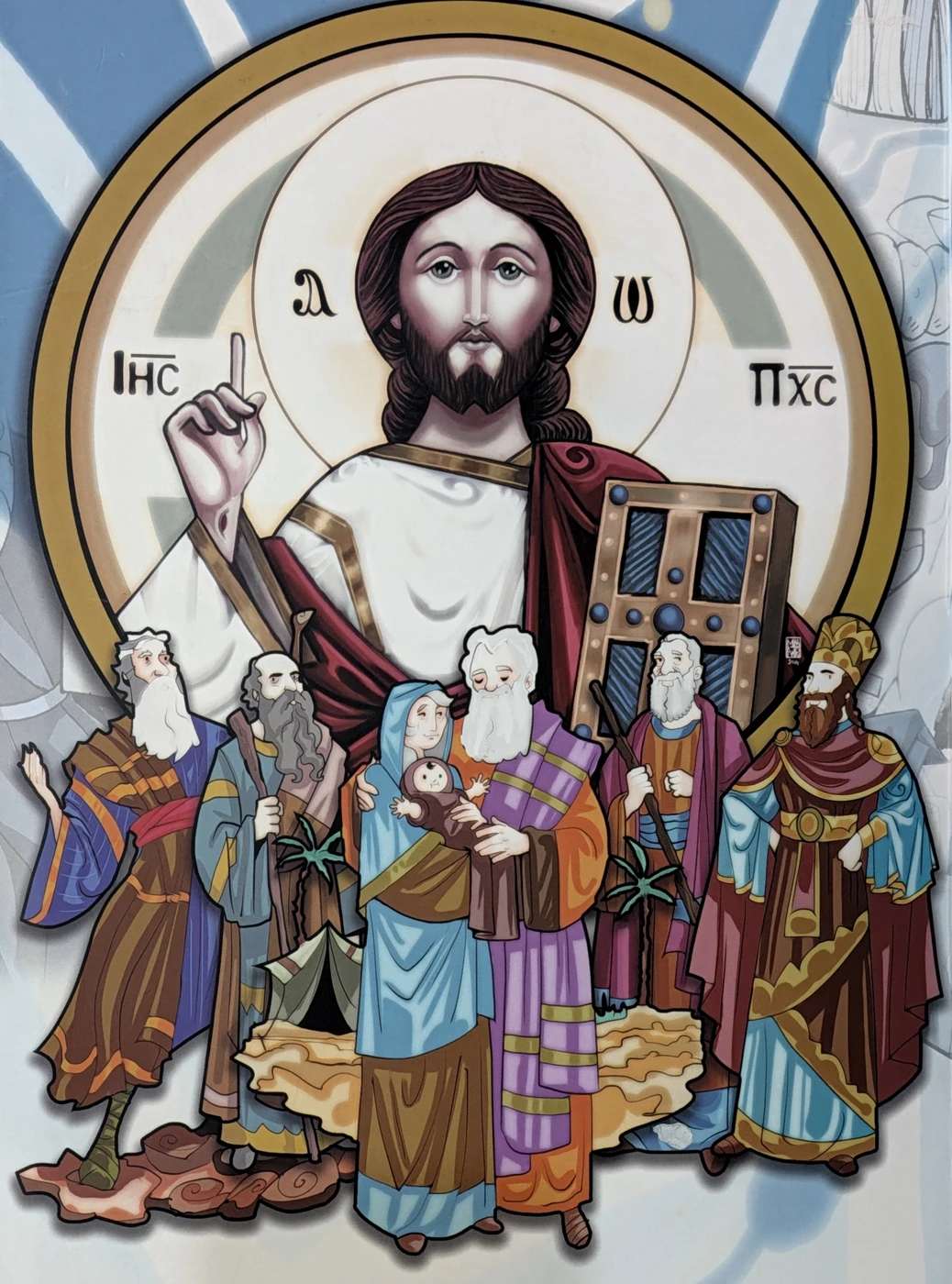
Reading note & Arabic text

These geographical itineraries, identifications and dates are the source’s ecclesiastical traditions, not a consensus historical reconstruction. The “city of Pontus” reproduces the source’s geographical wording. Arian/Alban and Absarus are source transliterations; their intended historical identifications require specialist review. John’s list reads Asia Minor (Ephesus), Smyrna, Phrygia (the western part), and the Asiatic coast. The James AD 63 date conflicts with AD 62 in the apostolic chronology table. Coptic month names are retained without Gregorian conversion.

كرازة الرسل واستشهادهم

أريان أو ألبان (أرمينيا)

مدن إبساروس

The story

#

Paul’s journeys

Paul the Apostle: martyred 5 Abib, AD 68. He wrote fourteen epistles.

First journey (Acts 13–14): Antioch; Seleucia; Salamis; Paphos; Perga; Pisidian Antioch; Iconium; Lystra; Derbe; return to Antioch.

Second journey (Acts 15–18): Antioch; Syria and Cilicia; Lystra; Derbe; Pisidian Antioch; Galatia; Asia; Mysia; Thessalonica; Berea; Athens; Corinth; Cenchreae; Ephesus; return to Antioch.

Third journey (Acts 18–21): Antioch; Ephesus; Troas; Philippi; Illyricum; Philippi; Neapolis; Assos; Miletus; Tyre; Caesarea; Jerusalem.

Journey to Rome (Acts 21–28): Jerusalem; Caesarea; Sidon; Myra; Cnidus; the Adriatic Sea; Malta; Syracuse; Forum of Appius; Rome.

Reading note & Arabic text

Names and sequence follow the printed route list, including its omissions and repetition of Philippi. The book attribution and count follow the Coptic source; authorship of Hebrews is not established by this translation.

بولس الرسول

The story

#

Paul’s companions and women in ministry

Barnabas the Apostle was one of the seventy apostles. He introduced Paul to the apostles and worked with him on the first journey, but they separated on the second journey (Acts 15).

Saint Timothy, Paul's disciple, accompanied him on the second journey (Acts 16). Paul made him bishop of Ephesus. The source gives his martyrdom as AD 79.

Saint Silas, Silvanus: the Church of Jerusalem sent him and Judas with Paul and Barnabas to Antioch (Acts 15:22). He then accompanied Paul on his second journey (Acts 16).

Saint Titus was Paul's disciple. Paul mentions him in Second Corinthians, Galatians and Titus. Paul appointed him bishop of Crete.

Saint Phoebe was an active deaconess who served at Cenchreae, a port of Corinth. She carried the letter to Rome herself. The apostle urged that her task be facilitated (Romans 16:1–2).

Saint Priscilla, wife of Aquila: Paul stayed in their home in Corinth. They accompanied him to Ephesus and then moved to Rome (2 Timothy 4:19, as printed).

Reading note & Arabic text

Traditional offices, dates and claims of carrying letters are retained as source statements. The 2 Timothy 4:19 citation does not itself establish a move to Rome.

برنابا الرسول

القديس تيموثاوس

القديس سيلا

القديس تيطس

القديسة فيبي

القديسة بريسكلا

The story

#

Events in Acts: AD 30–42

AD 30: Matthias is chosen in place of Judas (Acts 1:15).

AD 30: Peter and John are arrested and then released (Acts 4).

AD 30: Ananias and Sapphira die (Acts 5).

AD 30: Many signs are performed by the apostles and many people join the Church (Acts 5).

AD 31: Stephen's sermon, stoning and death (Acts 6–7).

AD 31: Saul persecutes the Church (Acts 8).

AD 31: Philip preaches in Samaria (Acts 8).

AD 31: Simon the magician asks to buy God's gifts with money (Acts 8).

AD 31: Philip meets the Ethiopian eunuch (Acts 8).

AD 37: Peter sees a sheet coming down from heaven and begins to preach to the Gentiles (Acts 10).

AD 42: Barnabas goes to Antioch. He and Paul stay there a whole year and teach a great multitude (Acts 11:22).

AD 42: Herod puts Peter in prison. The angel opens the prison doors and brings him out (Acts 12).

Reading note & Arabic text

All years are the chart’s chronology, not explicit dates in Acts. The selection of Matthias is chronologically placed AD 30 despite the narrative resurrection date AD 29.

أهم أحداث سفر أعمال الرسل

The story

#

Events in Acts: AD 44–59

AD 44: Herod Agrippa dies (Acts 12).

AD 48: Paul begins his first missionary journey (Acts 13).

AD 48: Paul preaches in Pisidian Antioch (Acts 13).

AD 48: Paul and Barnabas are in Iconium and face death there (Acts 14).

AD 48: Paul and Barnabas escape to Lystra and Derbe (Acts 14).

AD 48: Paul and Barnabas return to Antioch (Acts 14).

AD 49: The first Jerusalem council meets (Acts 15).

AD 49: Paul and Silas begin the second missionary journey (Acts 15).

AD 49: Paul and Silas visit Syria and Cilicia (Acts 15).

AD 49: Paul reaches Derbe and Lystra. There he circumcises Timothy because of the Jews, since his father is Greek, and takes him along (Acts 16).

AD 50: Paul is in Thessalonica, Berea and Athens (Acts 17).

AD 51: Paul is in Corinth (Acts 18).

AD 54: Paul is in Ephesus (Acts 19).

AD 57: Paul is in Macedonia and Greece (Acts 20).

AD 59: Paul returns to Jerusalem (Acts 21–23).

Reading note & Arabic text

Dates are the source’s chronology; retain separately from any modern reconstruction.

أهم أحداث سفر أعمال الرسل

The story

#

Events in Acts: AD 61–66

AD 61: Paul is imprisoned in Caesarea (Acts 24).

AD 63: Paul is tried before Festus (Acts 25).

AD 63: Paul stands before Agrippa (Acts 26).

AD 64: Paul and other prisoners take a ship to Rome (Acts 27).

AD 64: Paul heals many people in Malta (Acts 28).

AD 64: Paul preaches in Rome (Acts 28).

AD 64–66: Paul stays for two years in a house he has rented and proclaims the kingdom of God (Acts 28).

Reading note & Arabic text

These printed dates are later than many common reconstructions; this translation does not silently revise them.

أهم أحداث سفر أعمال الرسل

The story

#

Awaiting Christ’s final coming

In the last days the Antichrist will come, and the battle will be decisive. But remember that evil's victory is temporary. We await Christ's final coming, when heaven is opened and there is a new heaven and a new earth.

“Behold, I am coming quickly, and my reward is with me, to repay everyone according to his work. Blessed are those who keep his commandments, that they may have authority over the tree of life.”

“Amen. Come, Lord Jesus!” (Revelation 21–22; the quoted words correspond to 22:12, 14, 20).

Reading note & Arabic text

The reading “keep his commandments” at Revelation 22:14 follows the Arabic source’s textual tradition. The print cites chapters 21 and 22; the precise verse references are identified as editorial aids.

في آخر الأيام سيأتي ضد المسيح

Historical context

#

Judaizing, Cerinthus and Saturninus

Judaizing: the adherents of this tendency sought to bind themselves to the old Jewish law, regarding the Gospel as an improved form of that law, considering Christ merely a prophet and denying his divine nature. They practiced the law of Moses and regarded it as binding and necessary for salvation. They did not understand Christianity as a new universal religion freed from the old law.

Cerinthus was a Jewish convert to Christianity who preached with his followers in Ephesus, where John the Beloved ministered. He taught that Christ was only a great prophet upon whom the power of God had come. He also held to circumcision and the Sabbath. After the Savior’s resurrection, he expected an earthly kingdom of the Messiah in an entirely material form.

Saturninus said the Savior was unbegotten, incorporeal and without form, and that he was seen as a human being only in appearance, a phantom. He said the God of the Jews was one of the angels and that all powers wished to abolish his Father. Christ therefore came to destroy the God of the Jews and save those who believed in him, who had the spark of life. Saturninus was the first, the source says, to teach that the angels created two kinds of people: one evil and one good, perhaps meaning the offspring of Cain and Seth. Since evil spirits helped the wicked, the Savior came to destroy the evil people and evil spirits and to save the good.

Reading note & Arabic text

These are the source author’s descriptions of groups he condemns as heretical, not endorsed teachings. The broad description of “Judaizing” must not be generalized to Jews or all Jewish Christians. Claims about Cerinthus and Saturninus are transmitted through ancient opponents and need historical qualification.

التهود وعقيدة كيرنثوس وساتورنينوس

Historical context

#

Nicolaitans and Basilides

The Nicolaitans: followers of Nicholas, the convert from Antioch and one of the seven deacons (Acts 6:5). They permitted eating what had been sacrificed to idols, called for intercourse with women outside marriage, encouraged pagan worship and lived in gross moral laxity. They denied that God was the Creator and attributed the work of creation to other powers. Revelation refers to them in the Lord's warning to the angel of the church at Pergamum (Revelation 2:15, 16).

The teaching of Basilides: according to their claim, powers, authorities and angels were created. The angels occupying the lowest heaven created everything in the world, divided the earth and the nations among themselves, and had as their chief the one they thought to be the God of the Jews. When he wished to subject all the nations to his own people, the Jews, all the other chiefs resisted him, and the other nations were hostile to his nation.

The unbegotten Father, who was not born and has no name, realized that they must be destroyed. He sent his firstborn, the first Mind, Nous, who is called Christ, to save those who believed in him from the powers that created the world. He appeared on earth as a human being to the nations of these powers, and performed miracles. The Nous, the Mind of the unbegotten Father, was an immaterial power and changed his appearance as he wished.

Reading note & Arabic text

This reports the source’s polemical account. Identifying Revelation’s Nicolaitans with Nicholas the deacon is a disputed tradition, not established by Acts. The source’s printed reference is Revelation 2:15, 16; the creation-denial clause belongs to its Nicolaitans paragraph, before the Basilides heading.

النيقولاويون وعقيدة باسيليدس

Maps

#

English key to the apostolic mission map

Some original text remains unclear or falls outside the photographs. The gaps are marked below.

Map labels: Britannia; Lower Germania; Upper Germania; Belgica; Lugdunensis; Aquitania; Narbonensis; Tarraconensis; Lusitania; Baetica; Raetia; Noricum; Pannonia; Dalmatia; Salona; Moesia; Dacia; Italy; Rome; Corsica; Sardinia; Sicily; Syracuse; Mauretania; Africa; Carthage; Tripoli; Cyrene; Cyrenaica, labelled al-Qayrawan in the source; Alexandria; Memphis; Egypt; Nile River; Red Sea; Mediterranean Sea; Adriatic Sea; Atlantic Ocean; Black Sea; Danube River; Rhine River; Thrace; Philippi; Macedonia; Thessalonica; Epirus; Achaia; Corinth; Athens; Bithynia and Pontus; Asia; Galatia; Cappadocia; Armenia; Assyria; Mesopotamia; Syria; Antioch; Seleucia; Cyprus; Salamis; Paphos; Crete; Salmone; Fair Havens; Judea; Jerusalem; Arabia Petraea; Arabia Magna; City with a church.

Reading note & Arabic text

The mission map’s readable labels are translated. Fine labels in central and western Asia Minor, the Alpine provinces, and the lower-left color/boundary legend remain unreadable or obscured by route lines and church symbols; the tiny legend dates are not certified. The chart’s name القيروان for Cyrenaica is retained as a historically problematic source label.

بريطانيا

جرمانيا السفلى

جرمانيا العليا

بلجيكا

لوجديننس

أكيتانيا

ناربوننسيس

تاراكوننس

لوسيتانيا

بايتيكا

رايتيا

نوريكوم

بانونيا

دلماتيا

سالونا

مويسيا

داسيا

إيطاليا

روما

كورسيكا

ساردينيا

صقلية

سيراكوسا

موريطانيا

أفريقيا

قرطاجنة

طرابلس

قيرين

القيروان

الإسكندرية

ممفيس

مصر

نهر النيل

البحر الأحمر

البحر الأبيض المتوسط

البحر الأدرياتيكي

المحيط الأطلسي

البحر الأسود

نهر الدانوب

نهر الراين

تراقية

فيلبي

مكدونية

تسالونيكي

إبيروس

أخائية

كورنثوس

أثينا

بيثينية وبنطس

آسيا

غلاطية

كبادوكية

أرمينيا

آشور

ما بين النهرين

سوريا

أنطاكية

سلوقية

قبرص

سلميس

بافوس

كريت

سلموني

المواني الحسنة

اليهودية

أورشليم

العربية الصخرية

العربية الكبرى

مدينة بها كنيسة

Continue to Maps & reference tables

Places, names and connections

Maps & reference tables

Explore the lands of Scripture and the reference material accompanying the timeline.

Maps, miracles, divine names and bibliography

Jump within this chapter 39 sections

The story

#

Old Testament miracles: Moses and the wilderness

MiraclePlace printed in sourceReference
Aaron’s rod is changedEgyptExodus 7:10–12
The Red Sea is dividedEgyptExodus 14:21–31
Marah’s water becomes sweetSinaiExodus 15:23–25
Manna and quailSinaiExodus 16:14–35
Water comes from the rock of HorebSinaiExodus 17:5–7
Aaron’s rod budsSinaiNumbers 17:1 onward
Fire consumes Nadab and AbihuSinaiLeviticus 10:1–2
Fire burns the people at TaberahSinaiNumbers 11:1–3
The earth swallows Korah’s companySinaiNumbers 16:31–35
The rock brings forth waterwilderness of ZinNumbers 20:7–11
The bronze serpentwilderness of ZinNumbers 21:8–9
Balaam’s donkey speaks“Bezor or Beor,” as printed (بصور أو بعور)Numbers 22:21–35
Read as text

Aaron’s rod is changed; Egypt; Exodus 7:10–12.

The Red Sea is divided; Egypt; Exodus 14:21–31.

Marah’s water becomes sweet; Sinai; Exodus 15:23–25.

Manna and quail; Sinai; Exodus 16:14–35.

Water comes from the rock of Horeb; Sinai; Exodus 17:5–7.

Aaron’s rod buds; Sinai; Numbers 17:1 onward.

Fire consumes Nadab and Abihu; Sinai; Leviticus 10:1–2.

Fire burns the people at Taberah; Sinai; Numbers 11:1–3.

The earth swallows Korah’s company; Sinai; Numbers 16:31–35.

The rock brings forth water; wilderness of Zin; Numbers 20:7–11.

The bronze serpent; wilderness of Zin; Numbers 21:8–9.

Balaam’s donkey speaks; “Bezor or Beor,” as printed (بصور أو بعور); Numbers 22:21–35.

Reading note & Arabic text

The place name is printed as “Bezor or Beor” (بصور أو بعور); it is retained as a source label rather than an established biblical location.

بعض معجزات العهد القديم

The story

#

Old Testament miracles: Joshua, judges and kings

MiraclePlace printed in sourceReference
The Jordan River is dividedSinai, as printedJoshua 3:14–17
Jericho’s walls fallJerichoJoshua 6:6–20
The sun and moon stand stillGibeonJoshua 10:12–14
Water comes out of the rockEn-hakkoreJudges 15:19
The Philistines dieAshdod1 Samuel 5:1–12
The men of Beth-shemesh are struck downBeth-shemesh1 Samuel 6:19
Thunder destroys the PhilistinesMizpah1 Samuel 7:10–12
Thunder and rain at harvestGilgal1 Samuel 12:18
The Lord’s sound in the balsam treesvalley of Rephaim2 Samuel 5:23–25
Uzzah touches the Ark of the Covenant and diesNacon’s threshing floor2 Samuel 6:7
Jeroboam’s hand withersBethel1 Kings 13:4–5
Read as text

The Jordan River is divided; Sinai, as printed; Joshua 3:14–17.

Jericho’s walls fall; Jericho; Joshua 6:6–20.

The sun and moon stand still; Gibeon; Joshua 10:12–14.

Water comes out of the rock; En-hakkore; Judges 15:19.

The Philistines die; Ashdod; 1 Samuel 5:1–12.

The men of Beth-shemesh are struck down; Beth-shemesh; 1 Samuel 6:19.

Thunder destroys the Philistines; Mizpah; 1 Samuel 7:10–12.

Thunder and rain at harvest; Gilgal; 1 Samuel 12:18.

The Lord’s sound in the balsam trees; valley of Rephaim; 2 Samuel 5:23–25.

Uzzah touches the Ark of the Covenant and dies; Nacon’s threshing floor; 2 Samuel 6:7.

Jeroboam’s hand withers; Bethel; 1 Kings 13:4–5.

Reading note & Arabic text

The source gives Sinai as the location of the Jordan crossing. All places and references are otherwise transcribed as printed.

بعض معجزات العهد القديم

The story

#

Old Testament miracles: Elijah and Elisha

MiraclePlace printed in sourceReference
The flour jar does not run outZarephath of Sidon1 Kings 17:14–16
Elijah raises the widow’s sonZarephath of Sidon1 Kings 17:17–24
The Lord sends fire on the sacrificeMount Carmel1 Kings 18:30–38
God sends rainthe land of Israel1 Kings 18:41–45
Fire descends and consumes fifty menSamaria2 Kings 1:10–12
Elijah divides the JordanJordan River2 Kings 2:7–8 and 14, as printed
Elisha heals the springJericho2 Kings 2:21–22
Elisha brings water for Jehoshaphat’s armyMoab2 Kings 3:16–20
Elisha multiplies a widow’s oilMoab, as printed2 Kings 4:2–7
Elisha raises the Shunammite woman’s sonShunem2 Kings 4:32–37
Elisha heals the poisonous stewGilgal2 Kings 4:38–41
A hundred men eat twenty loavesGilgal2 Kings 4:42–44
Naaman the Syrian is healed of leprosythe Jordan2 Kings 5:10–14
Gehazi is struck with leprosySamaria2 Kings 5:20–27
The iron floats on waterthe Jordan2 Kings 6:5–7
The Syrian army is struck blindSamaria2 Kings 6:18–20
Elisha’s bones raise a dead manMoab, as printed2 Kings 13:21
Read as text

The flour jar does not run out; Zarephath of Sidon; 1 Kings 17:14–16.

Elijah raises the widow’s son; Zarephath of Sidon; 1 Kings 17:17–24.

The Lord sends fire on the sacrifice; Mount Carmel; 1 Kings 18:30–38.

God sends rain; the land of Israel; 1 Kings 18:41–45.

Fire descends and consumes fifty men; Samaria; 2 Kings 1:10–12.

Elijah divides the Jordan; Jordan River; 2 Kings 2:7–8 and 14, as printed.

Elisha heals the spring; Jericho; 2 Kings 2:21–22.

Elisha brings water for Jehoshaphat’s army; Moab; 2 Kings 3:16–20.

Elisha multiplies a widow’s oil; Moab, as printed; 2 Kings 4:2–7.

Elisha raises the Shunammite woman’s son; Shunem; 2 Kings 4:32–37.

Elisha heals the poisonous stew; Gilgal; 2 Kings 4:38–41.

A hundred men eat twenty loaves; Gilgal; 2 Kings 4:42–44.

Naaman the Syrian is healed of leprosy; the Jordan; 2 Kings 5:10–14.

Gehazi is struck with leprosy; Samaria; 2 Kings 5:20–27.

The iron floats on water; the Jordan; 2 Kings 6:5–7.

The Syrian army is struck blind; Samaria; 2 Kings 6:18–20.

Elisha’s bones raise a dead man; Moab, as printed; 2 Kings 13:21.

Reading note & Arabic text

The source’s location “Moab” for the widow’s oil and Elisha’s bones, and its grouping of Elijah’s Jordan references, require clarification. Naaman’s printed reference is 2 Kings 5:10–14.

بعض معجزات العهد القديم

The story

#

Old Testament miracles: deliverance and judgment

MiraclePlace printed in sourceReference
The Lord’s angel destroys Sennacherib’s armyJerusalem2 Kings 19:35
Isaiah brings the sun back ten stepsJerusalem2 Kings 20:9–11
Uzziah is struck with leprosyJerusalem2 Chronicles 26:16–21
The three young men in the furnaceBabylonDaniel 3:19–27
Daniel in the lions’ denBabylonDaniel 6:16–23
Jonah in the fish’s bellyNineveh, as printedJonah 2:1–10
Read as text

The Lord’s angel destroys Sennacherib’s army; Jerusalem; 2 Kings 19:35.

Isaiah brings the sun back ten steps; Jerusalem; 2 Kings 20:9–11.

Uzziah is struck with leprosy; Jerusalem; 2 Chronicles 26:16–21.

The three young men in the furnace; Babylon; Daniel 3:19–27.

Daniel in the lions’ den; Babylon; Daniel 6:16–23.

Jonah in the fish’s belly; Nineveh, as printed; Jonah 2:1–10.

Reading note & Arabic text

The location column is the author’s. “Nineveh” for Jonah in the fish needs review.

بعض معجزات العهد القديم

The story

#

Some names of God in the Old Testament

NameMeaning printed in sourceOccurrences claimedFirst reference printed
El ShaddaiGod Almighty7Genesis 17:1
El ElyonGod Most High28Genesis 14:18
AdonaiThe Lord434Genesis 15:2
YahwehThe One who is6,519Genesis 2:4
Yahweh NissiThe Lord is my banner1Exodus 17:15
Yahweh RaahThe Lord is my shepherd4Genesis 48:15
Yahweh RaphaThe Lord your healer1Exodus 15:26
Yahweh ShammahThe Lord is there1Ezekiel 48:35
Yahweh TsidkenuThe Lord has spoken to us [as printed]2Jeremiah 23:6
Yahweh MekoddishimThe Lord my sanctifier2Exodus 31:13
El OlamThe everlasting God4Exodus 21:33 [as printed]
ElohimGod2,606Genesis 1:1
QannaJealous6Exodus 20:5
Yahweh YirehThe Lord sees and supplies the need1Genesis 22:14
Yahweh ShalomGod is peace1Judges 6:24
Yahweh SabaothThe Lord of hosts2851 Samuel 1:3
Read as text

Name | Meaning printed in source | Occurrences claimed | First reference printed

El Shaddai | God Almighty | 7 | Genesis 17:1

El Elyon | God Most High | 28 | Genesis 14:18

Adonai | The Lord | 434 | Genesis 15:2

Yahweh | The One who is | 6,519 | Genesis 2:4

Yahweh Nissi | The Lord is my banner | 1 | Exodus 17:15

Yahweh Raah | The Lord is my shepherd | 4 | Genesis 48:15

Yahweh Rapha | The Lord your healer | 1 | Exodus 15:26

Yahweh Shammah | The Lord is there | 1 | Ezekiel 48:35

Yahweh Tsidkenu | The Lord has spoken to us [as printed] | 2 | Jeremiah 23:6

Yahweh Mekoddishim | The Lord my sanctifier | 2 | Exodus 31:13

El Olam | The everlasting God | 4 | Exodus 21:33 [as printed]

Elohim | God | 2,606 | Genesis 1:1

Qanna | Jealous | 6 | Exodus 20:5

Yahweh Yireh | The Lord sees and supplies the need | 1 | Genesis 22:14

Yahweh Shalom | God is peace | 1 | Judges 6:24

Yahweh Sabaoth | The Lord of hosts | 285 | 1 Samuel 1:3

Reading note

The source glosses Tsidkenu as “The Lord has spoken to us” and cites Exodus 21:33 for El Olam. The editorial check explains these discrepancies. Its occurrence counts use an unspecified text and counting method.

The story

#

Jerusalem in the days of Christ

Herod the Great was renowned for his remarkable ability to construct buildings. In his time Jerusalem was a splendid city. He crowned his building projects with the great Jewish Temple. Many remains of these buildings have been discovered, including part of the Temple steps and the pools of Siloam and Bethesda. The map shows some important sites that were the setting for events in Jerusalem during the Lord Jesus’ final days there.

Map labels: Jerusalem in the days of Christ; To Damascus; To Joppa; Pool of Bethesda; Antonia fortress; Trial of Jesus; Triumphal entry from Bethany; Pool; Way of Sorrows; Golgotha; Crucifixion and burial; To Antipas; Temple; Cleansing of the Temple; Gethsemane; Arrest of Jesus; Mount of Olives; Fortress; Herod's palace; Herod Antipas's palace; To Pontius Pilate; Valley of the Cheesemakers (Tyropoeon); From Bethany; Kidron Valley; To Bethany and Jericho; To Annas; High priest's house; Before the chief priests; To Gethsemane; Traditional location; Site of the upper room; Place of the Last Supper; Pool of Siloam; Valley of Hinnom; To Bethlehem, Hebron and Gaza; Map scale; Meters; Yards.

Map scale markings: 0, 100, 200, 300 meters; 0, 100, 200, 300 yards.

Reading note & Arabic text

The valley name is associated with the Tyropoeon, or cheesemakers’ valley. Unnamed pools and fortresses retain their generic labels.

اشتهر هيرودس الكبير بقدرته المذهلة على إقامة المنشآت. وفي عصره، كانت أورشليم مدينة رائعة. وقد توج منشآته بإقامة الهيكل اليهودي العظيم. وتم اكتشاف الكثير من بقايا تلك المنشآت ومنها جزء من درج الهيكل، وبركتي سلوام وبيت حسدا. وتري الخريطة بعض المواقع الهامة التي كانت مسرحًا للأحداث التي شهدتها أورشليم في الأيام الأخيرة التي قضاها الرب يسوع في أورشليم.

The story

#

Paul’s first missionary journey

Paul began his first missionary journey about AD 47, accompanied by Barnabas and John Mark. John Mark left them after their arrival at Perga. Paul and Barnabas returned to Antioch in AD 49 (Acts 13–14).

Map labels: Paul the Apostle's missionary journeys; First journey; Asia; Phrygia; Cappadocia; Pisidian Antioch; Iconium; Lystra; Derbe; Pisidia; Pamphylia; Perga; Attalia; Cilicia; Tarsus; Antioch; Seleucia; Syria; Salamis; Paphos; Cyprus; Jerusalem; Mediterranean Sea; Map scale; Miles; Kilometers.

Map scale markings: 0, 100, 200 miles; 0, 250 kilometers.

Reading note & Arabic text

The close-up specifies that John Mark left after their arrival at Perga, rather than merely an unspecified halfway point. Dates are the source’s chronology. First Arabic sentence has been normalized only in spacing.

بدأ الرسول بولس رحلته التبشيرية الأولى حوالي عام ٤٧م مصطحبًا معه كلاً من برنابا ويوحنا مرقس الذي تركهم عائدًا بعد وصولهم إلى برجة، وقد عادا بولس وبرنابا إلى أنطاكية في عام ٤٩م. (أعمال الرسل ١٣–١٤)

The story

#

Paul’s second missionary journey

Paul set out with Silas on his second journey about AD 50, from Antioch to Lystra. Timothy joined them at Lystra, and Luke joined them at Troas. After spending eighteen months at Corinth, Paul returned to Antioch about AD 53 (Acts 15:36–18:22).

Map labels: Second journey; Macedonia; Philippi; Amphipolis; Thessalonica; Berea; Thrace; Neapolis; Troas; Bithynia; Galatia; Pisidian Antioch; Iconium; Lystra; Derbe; Tarsus; Cilicia; Asia; Ephesus; Achaia; Athens; Corinth; Cenchreae; Crete; Cyprus; Syria; Antioch; Caesarea; Samaria; Jerusalem; Mediterranean Sea; Map scale; Miles; Kilometers.

Map scale markings: 0, 100, 200 miles; 0, 250 kilometers.

Reading note & Arabic text

The source prints AD 50 and AD 53 and places Luke’s joining the group at Troas. The translation follows that chronology.

خرج الرسول بولس ومعه سيلا في رحلته الثانية حوالي عام ٥٠م من أنطاكية إلى لسترة، وفي لسترة انضم إليهما تيموثاوس، وفي ترواس انضم إليهما لوقا، وبعد ١٨ شهرًا قضاها في كورنثوس عاد الرسول بولس إلى أنطاكية حوالي عام ٥٣م. (أعمال الرسل ١٥:٣٦–١٨:٢٢)

The story

#

Paul’s third missionary journey

This was Paul’s longest missionary journey. He began it about AD 53, traveling alone to Ephesus, where he stayed for two years. At Troas, delegates from several churches accompanied him, carrying the offerings collected for the poor of Jerusalem (Acts 18:23–21:16).

Map labels: Third journey; Macedonia; Philippi; Amphipolis; Thessalonica; Apollonia; Berea; Neapolis; Troas; Assos; Mitylene; Pergamum; Smyrna; Ephesus; Miletus; Patara; Rhodes; Asia; Galatia; Pisidian Antioch; Iconium; Lystra; Derbe; Tarsus; Cilicia; Antioch; Syria; Tyre; Ptolemais; Caesarea; Jerusalem; Achaia; Corinth; Mediterranean Sea; Map scale; Miles; Kilometers.

Map scale markings: 0, 100, 200 miles; 0, 250 kilometers.

Reading note & Arabic text

The source gives two years in Ephesus and describes delegates carrying offerings. Its printed passage ends at Acts 21:16.

وهي أطول رحلات الرسول بولس التبشيرية، وقد بدأها حوالي عام ٥٣م متوجهًا منفردًا إلى أفسس، حيث مكث مدة عامين. وفي ترواس رافقه مندوبون من عدة كنائس سافروا معه، حاملين معهم التقدمات التي جمعوها لفقراء أورشليم. (أعمال الرسل ١٨:٢٣–٢١:١٦)

Historical context

#

The Persian Empire, about 450 BC

In 539 BC Cyrus the Persian occupied Babylon and took control of the empire. Cyrus encouraged his subjects to practice their religions and spread their cultures. In 538 BC he returned the Jews to Judah to restore Jerusalem and rebuild the Temple there.

Map labels: Persian Empire; About 450 BC; Thrace; Macedonia; Lydia; Sardis; Armenia; Media; Parthia; Persia; India; Nineveh; Ecbatana; Babylon; Susa; Persepolis; Damascus; Jerusalem; Memphis; Thebes; Egypt; Nile River; Euphrates; Tigris River; Oxus River; Indus River; Black Sea; Caspian Sea; Mediterranean Sea; The Gulf (Persian Gulf); Red Sea; Sea of Reeds; Map scale; Miles; Kilometers.

Map scale markings: 0, 1,000 miles; 0, 1,000 kilometers.

Reading note & Arabic text

The source gives 538 BC here and 536 BC elsewhere in the chronology. Both printed dates are retained as a documented source inconsistency.

في عام ٥٣٩ ق.م، احتل كورش الفارسي بابل وسيطر على الإمبراطورية، وشجع كورش رعاياه لممارسة دياناتهم ونشر ثقافاتهم. وفي عام ٥٣٨ ق.م أعاد اليهود إلى يهوذا لاسترداد أورشليم وإعادة بناء الهيكل فيها.

The story

#

The Babylonian Empire, about 550 BC

In 612 BC the Babylonians captured Nineveh, the Assyrian capital. They also defeated the Egyptians at the battle of Carchemish in 605 BC. In 586 BC Nebuchadnezzar destroyed Jerusalem and exiled most of the people of Judah. This brought the kingdom of Judah to an end (2 Kings 23–25).

Map labels: Babylonian Empire; About 550 BC; Lydia; Media; Carchemish; Nineveh; Ecbatana; Riblah; Syria; Damascus; Samaria; Jerusalem; Babylon; Susa; Memphis; Egypt; Nile River; Euphrates; Tigris River; Mediterranean Sea; Caspian Sea; The Gulf (Persian Gulf); Red Sea; Sea of Reeds; Map scale; Miles; Kilometers.

Map scale markings: 0, 500 miles; 0, 500 kilometers.

Reading note & Arabic text

The caption names the Babylonians. Dates and historical statements follow the printed source.

في عام ٦١٢ ق.م، استولى البابليون على مدينة نينوى، العاصمة الأشورية، كما انتصروا على المصريين في موقعة كركميش عام ٦٠٥ ق.م. وفي عام ٥٨٦ ق.م، دمر نبوخذنصر أورشليم ونفى معظم سكان يهوذا وانتهت بذلك مملكة يهوذا. (٢ ملوك ٢٣–٢٥)

The story

#

Palestine in the days of Christ

Some original text remains unclear or falls outside the photographs. The gaps are marked below.

In 63 BC the Roman commander Pompey took Jerusalem, beginning seven centuries of Roman rule in Palestine. Herod the Great ruled Palestine under Roman sovereignty. After his death in 4 BC, his kingdom was divided among his three sons. Herod Antipas ruled Galilee and Perea, Philip ruled Iturea and Trachonitis, and Judea, Samaria and Idumea were assigned to Archelaus. In AD 6 a Roman governor took over his territory. At the time of Christ’s crucifixion Pontius Pilate was governor (AD 26–36). The area called Decapolis, meaning “the ten cities,” enjoyed a measure of self-government.

Map labels: Palestine in the days of Christ; Syria; Phoenicia; Tyre; Acco / Ptolemais; Caesarea Philippi; Mount Hermon; Trachonitis; Galilee; Chorazin; Capernaum; Bethsaida; Magdala; Sea of Galilee; Cana; Nazareth; Mount Carmel; Mount Tabor; Nain; Hippos; Decapolis; The ten cities; Scythopolis; Caesarea; Maritima; Samaria; Sebaste; Shechem; Mount Gerizim; Gerasa; Joppa; Lydda; Emmaus; Judea; Jerusalem; Bethlehem; Jericho; Bethany; Hebron; Idumea; Beersheba; Gaza; Ashdod; Perea; Nabatea; Jordan River; Dead Sea; Mediterranean Sea; Territory ruled by Archelaus; Territory ruled by Herod Antipas; Territory ruled by Philip; Boundary of Herod the Great's kingdom; Map scale; Miles; Kilometers.

Map scale markings: 0, 10, 20 miles; 0, 10, 20, 30 kilometers.

Reading note & Arabic text

The statement about seven centuries is the source’s historical framing. Very small labels in the Dead Sea/eastern margin are not securely readable; they are not guessed.

في عام ٦٣ ق.م استولى القائد الروماني بومباي على مدينة أورشليم، وكان هذا بداية فترة حكم الرومان لفلسطين الذي دام سبعة قرون. وقد حكم هيرودس الكبير فلسطين تحت سيادة الرومان. وبعد موته عام ٤ ق.م قسمت مملكة هيرودس بين أبنائه الثلاثة، فحكم أنتيباس الجليل وبيرية، بينما حكم فيلبس إيطورية وتراخونيتس، أما اليهودية والسامرة وأدومية فكانت من نصيب أرخيلاوس. وفي عام ٦م حكم هذه المنطقة بدلاً منه والٍ روماني آخر. وفي أيام صلب المسيح كان بيلاطس البنطي هو الوالي (٢٦–٣٦م). أما المنطقة المسماة ديكابوليس أي المدن العشرة، فكانت تحظى بنوع من الحكم الذاتي.

The story

#

The biblical world: physical geography

Some original text remains unclear or falls outside the photographs. The gaps are marked below.

Physical relief map of the lands of the Bible, showing the Mediterranean basin, the Fertile Crescent and surrounding regions.

Map labels: Lands of the Bible; Italy; Rome; Adriatic Sea; Alps; Danube River; Balkan Mountains; Greece; Aegean Sea; Athens; Crete; Cyprus; Asia Minor; Taurus Mountains; Black Sea; Caspian Sea; Caucasus Mountains; Armenia; Iran; Syria; Fertile Crescent plain; Mesopotamia; Euphrates River; Tigris River; Babylon; Nineveh; The Gulf (Persian Gulf); Mediterranean Sea; Alexandria; Lower Egypt; Upper Egypt; Nile River; Arabian Desert; Libyan Desert; Libya; Nubian Desert; Red Sea; Sea of Reeds; Map scale; Miles; Kilometers.

Map scale markings: 0, 100, 200, 300 miles; 0, 250, 500 kilometers.

Reading note & Arabic text

Several tiny Mesopotamian settlements and Egyptian coastal labels remain unreadable. “Fertile Crescent plain” is the map’s printed highlighted band.

خريطة أراضي الكتاب المقدس

The story

#

The Exodus

Some original text remains unclear or falls outside the photographs. The gaps are marked below.

The Hebrews, Abraham’s descendants, remained in Egypt for approximately four centuries, during which they experienced the bitterness of slavery in pharaonic Egypt. Eventually they left Egypt under Moses, through whom the Lord brought a succession of severe plagues. Moses led them on the Exodus through the Red Sea and the Sinai desert. We cannot determine or confirm the route they followed. The map shows the route indicated by tradition and two alternative routes. They probably did not follow the direct coastal road because it was guarded. On Mount Sinai Moses received the Law (Exodus; Numbers).

Map labels: The Exodus; Mediterranean Sea; Nile Delta; Rameses; Tanis; Zoan; Goshen; Succoth; Pithom; Wilderness of Shur; Baal-zephon; Suez; Egypt; On; Heliopolis; Noph; Memphis; Nile River; Marah; Elim; Sinai Peninsula; Wilderness of Paran; Kadesh-barnea; Tabīlāt [Arabic reading uncertain]; Ezion-geber; Petra; Punon; Edom; Moab; Canaan; Heshbon; Mount Nebo; Jericho; Jordan River; Dead Sea; Zin; Midian; Hazeroth; Mount Sinai; Horeb; Red Sea; Sea of Reeds; Gulf of Aqaba; Arabian Desert; Map 6; Across the Jordan; Road to Palestine; Alternative routes; Map scale; Miles; Kilometers.

Map scale markings: 0, 50, 100 miles; 0, 100 kilometers.

Inset, “Across the Jordan”: After Moses’ death, the Israelites crossed the Jordan River with Joshua and entered the promised land. [The remaining words of the inset paragraph are not securely readable.]

Reading note & Arabic text

The caption describes a traditional route and two alternatives without establishing a definite Exodus route. The end of the inset paragraph, tiny inset labels, small route legend and the label provisionally read Tabīlāt remain unresolved.

مكث العبرانيون (نسل إبراهيم) في مصر ما يقارب من أربعة قرون ذاقوا فيها مرارة العبودية في مصر الفرعونية. لكنهم في النهاية خرجوا من مصر بقيادة موسى الذي أنزل الرب بواسطته سلسلة من الضربات العنيفة. وقادهم موسى في رحلة الخروج عبر البحر الأحمر وصحراء سيناء. وليس بوسعنا أن نحدد أو نؤكد الطريق التي سلكوها ونجد في الخريطة الطريق الذي تشير إليه التقاليد، بالإضافة إلى طريقين آخرين مقابلين له. من المحتمل ألا يكونوا قد سلكوا الطريق الساحلي المباشر، وذلك لوجود حراسات عليه. وعلى جبل سيناء تسلم موسى الشريعة. (خروج، عدد)

عبر الأردن: بعد موت موسى عبر بنو إسرائيل نهر الأردن مع يشوع، ودخلوا أرض الموعد، [بقية العبارة غير مقروءة بثقة].

The story

#

The division of the land

As soon as the Israelites entered the land, it was distributed among the tribes who settled in it. This concerned primarily the lands west of the Jordan. The tribe of Levi received no land except a number of cities in which to live. Six cities were appointed as cities of refuge. After Joshua’s death, judges such as Ehud, Gideon and Samson arose and led the Israelites against their enemies (Joshua 13–24; Judges).

Map labels: Division of the land; Aram; Mount Hermon; Dan; Asher; Naphtali; Hazor; Zebulun; Mount Tabor; Issachar; Megiddo; Manasseh; Eastern Manasseh; Sea of Galilee; Jordan River; Mount Ebal; Shechem; Mount Gerizim; Shiloh; Ephraim; Benjamin; Jerusalem; Gad; Ammon; Mount Nebo; Reuben; Judah; Hebron; Simeon; Beersheba; Moab; Edom; Dead Sea; Mediterranean Sea; Map scale; Miles; Kilometers.

Map scale markings: 0, 10, 20 miles; 0, 10, 20, 30 kilometers.

Reading note & Arabic text

The expanded caption includes the six refuge cities and named judges. It refers primarily to the lands west of the Jordan.

ما أن دخل بنو إسرائيل الأرض حتى تم توزيعها بين الأسباط التي استقروا فيها، وفي المقام الأول، تلك الأراضي الواقعة غربي نهر الأردن. ولم ينل سبط لاوي من الأرض سوى عدد من المدن ليعيشوا فيها. وعينوا ستة مدن كمدن للملجأ. وبعد موت يشوع جاء قضاة مثل أهود وجدعون وشمشون وقادوا بني إسرائيل ضد الأعداء. (يشوع ١٣–٢٤، قضاة)

The story

#

The divided kingdom

Some original text remains unclear or falls outside the photographs. The gaps are marked below.

After Solomon’s death, ten of Israel’s tribes separated and established the kingdom of Israel under Jeroboam, with its capital at Shechem. He established religious centers at Dan and Bethel instead of Jerusalem. The house of David continued to rule the southern kingdom, which became known as the kingdom of Judah, with Jerusalem as its capital. The two kingdoms remained separate (1 Kings 11–12). The map key identifies the northern kingdom in green and the southern kingdom in red.

Map labels: The divided kingdom; Northern kingdom (Israel); Southern kingdom (Judah); Judah; Syria; Aram; Phoenicians; Tyre; Dan; Hazor; Sea of Galilee; Megiddo; Beth-shan; Ramoth-gilead; Samaria; Shechem; Shiloh; Bethel; Jericho; Ammon; Rabbah; Jordan River; Ashdod; Ashkelon; Gaza; Gath; Philistines; Jerusalem; Bethlehem; Hebron; Beersheba; Moab; Edom; Dead Sea; Mediterranean Sea; Map scale; Miles; Kilometers.

Map scale markings: 0, 10, 20 miles; 0, 10, 20, 30 kilometers.

Reading note & Arabic text

The expanded edition adds the caption paragraph. Some tiny settlements along the southern edge remain unreadable. No dates are printed in the color key.

بعد موت سليمان انفصل عشرة من أسباط إسرائيل، وأقاموا مملكة إسرائيل، تحت حكم يربعام وعاصمتها شكيم، الذي أقام المراكز الدينية في دان وبيت إيل بدلاً من أورشليم. أما أسرة داود فظلوا يحكمون المملكة الجنوبية التي أصبحت تعرف باسم مملكة يهوذا، وعاصمتها أورشليم. وقد ظلت المملكتان منفصلتين. (١ ملوك ١١–١٢)

The story

#

The Assyrian Empire, about 650 BC

This empire reached the height of its strength and glory in the period 880–612 BC. In 722 BC it invaded the northern kingdom, Israel, and deported its inhabitants. It also subdued the kingdom of Judah in the south.

Map labels: Assyrian Empire; About 650 BC; Assyria; Nineveh; Ashur; Carchemish; Media; Elam; Persia; Babylon; Susa; Arabia; Damascus; Jerusalem; Memphis; Egypt; Nile River; Euphrates River; Tigris River; Mediterranean Sea; Caspian Sea; The Gulf (Persian Gulf); Red Sea; Sea of Reeds; Map scale; Miles; Kilometers.

Map scale markings: 0, 500 miles; 0, 500 kilometers.

Reading note & Arabic text

Dates follow the printed caption, which gives no biblical reference.

بلغت هذه الإمبراطورية قوتها ومجدها في خلال الفترة بين عامي ٨٨٠–٦١٢ ق.م، وفي عام ٧٢٢ ق.م غزت المملكة الشمالية (إسرائيل) وقامت بترحيل سكانها، كما أخضعت مملكة يهوذا في الجنوب.

The story

#

Sources listed by the original author

Printed numberSource citation
1The Holy Bible.
2The Study Bible.
3Guide to the Holy Bible.
4Archpriest Tadros Yacoub Malaty, Commentary on the Holy Books.
5Archpriest Tadros Yacoub Malaty, Introductions to the Holy Bible.
6Life Application Bible Commentary.
7Archpriest Tadros Yacoub Malaty, Historical Map of the Old Testament.
8His Holiness Pope Tawadros II, Key to the New Testament.
10Fr Matthew the Poor, Christ: His Life and Works.
10Fr Matthew the Poor, History of Israel.
11Rev Samuel Habib, Encyclopedia of Biblical Knowledge.
12Stephen M. Miller, History of the Bible from Genesis to the Present.
13Monk-priest Wissa al-Antoni, Our Holy Bible: A Study in the Sciences and History of the Bible.
14Bible Society, Bible Atlas.
15Awaidat Publications, Beirut, History of World Civilizations.
16Dr Anwar Mohamed Zanati, Encyclopedia of World History, Ain Shams University.
17Tharwat Gaber, Map of Biblical Events.
18A. Qbayli Kahina (أ. قبايلي كهينة), a specialized lecture on ancient civilizations at the Higher School.
19Prof. Dr Rashad Mahmoud Baghdadi, lecture on the history of Greece and Rome.
20Prof. Dr Hassan Hallaq, Roman History: Social, Economic, Administrative, Religious, Political and Military, Beirut.
21Hussein al-Sheikh, Studies in the History and Civilization of Greece and Rome.
22Bible Charts, Maps & Time Line, Rose Publishing.
23100 Prophecies Fulfilled by Jesus, Rose Publishing.
24Bible & Christian History Time Lines, Rose Publishing.
25Giant 10-Foot Bible Time Line, Rose Publishing [source spells “Gaint”].
26Through the Bible, Scripture Union.
Read as text

The 26-entry source bibliography follows, retaining its printed numbering (9 omitted; 10 repeated).

1. The Holy Bible.

2. The Study Bible.

3. Guide to the Holy Bible.

4. Archpriest Tadros Yacoub Malaty, Commentary on the Holy Books.

5. Archpriest Tadros Yacoub Malaty, Introductions to the Holy Bible.

6. Life Application Bible Commentary.

7. Archpriest Tadros Yacoub Malaty, Historical Map of the Old Testament.

8. His Holiness Pope Tawadros II, Key to the New Testament.

10. Fr Matthew the Poor, Christ: His Life and Works.

10. Fr Matthew the Poor, History of Israel.

11. Rev Samuel Habib, Encyclopedia of Biblical Knowledge.

12. Stephen M. Miller, History of the Bible from Genesis to the Present.

13. Monk-priest Wissa al-Antoni, Our Holy Bible: A Study in the Sciences and History of the Bible.

14. Bible Society, Bible Atlas.

15. Awaidat Publications, Beirut, History of World Civilizations.

16. Dr Anwar Mohamed Zanati, Encyclopedia of World History, Ain Shams University.

17. Tharwat Gaber, Map of Biblical Events.

18. A. Qbayli Kahina (أ. قبايلي كهينة), a specialized lecture on ancient civilizations at the Higher School.

19. Prof. Dr Rashad Mahmoud Baghdadi, lecture on the history of Greece and Rome.

20. Prof. Dr Hassan Hallaq, Roman History: Social, Economic, Administrative, Religious, Political and Military, Beirut.

21. Hussein al-Sheikh, Studies in the History and Civilization of Greece and Rome.

22. Bible Charts, Maps & Time Line, Rose Publishing.

23. 100 Prophecies Fulfilled by Jesus, Rose Publishing.

24. Bible & Christian History Time Lines, Rose Publishing.

25. Giant 10-Foot Bible Time Line, Rose Publishing [source spells “Gaint”].

26. Through the Bible, Scripture Union.

Reading note

Working English translations of Arabic titles, not verified published English titles. The lecturer’s name أ. قبايلي كهينة is transliterated approximately as A. Qbayli Kahina. The expanded edition has a separate 33-entry bibliography.

The story

#

Original production credits and contact

Some original text remains unclear or falls outside the photographs. The gaps are marked below.

Compact edition

Preparation and review: Archpriest Mark Aziz, priest of St Mark’s Church, Scotland.

Preparation and graphic design: Eng. Maged Gamil Habib.

Character illustrations: artist Mina Antoun.

Vine Activities.

Email: vineactivities@gmail.com

Facebook: www.facebook.com/vine.activities

Mobile: 01272537888; 01200165007.

National Library deposit number: 2017/17142.

We welcome all your comments, observations and ideas. More detail will be prepared for several parts of the timeline in separate panels.

Expanded edition

Preparation and review: Archpriest Mark Aziz, priest of St Mark’s Church, Washington, DC.

Preparation and graphic design: Eng. Maged Gamil Habib.

Character illustrations: artist Mina Antoun.

Vine Activities.

Email: vineactivities@gmail.com

Facebook: www.facebook.com/vine.activities

Mobile: 01272537888; 01200165007.

National Library deposit number: [partly obscured in the photograph].

We welcome all your comments, observations and ideas. More detail will be prepared for several parts of the timeline in separate panels.

Reading note & Arabic text

The compact reference version lists Scotland; the expanded version lists Washington, DC. These credits identify the printed versions but do not establish their publication dates. The expanded version’s deposit number is partly obscured.

إعداد ومراجعة: القمص مارك عزيز - كاهن كنيسة مارمرقس باسكتلندا. إعداد وتصميم جرافيك: م. ماجد جميل حبيب. رسم الشخصيات: الفنان/مينا أنطون.

The story

#

Teachings of Christ for daily life

CategoryTeachingReferences
Worship of GodThe greatest commandmentMatthew 22:36–40
Worship of GodObedience to the word of GodMatthew 7:21; Luke 11:28
Worship of GodWhom we should fearMatthew 10:28; Luke 12:4–5
Worship of GodHow to prayMatthew 6:5–13; Luke 11:1–4
Worship of GodDo not store up treasuresMatthew 6:19–21,24
Worship of GodSeek firstMatthew 6:33
Worship of GodThe narrow gateMatthew 7:13–14
Worship of GodThe greatest in the kingdom of heavenMatthew 18:1–5
Worship of GodThe Spirit of truthJohn 4:23–24; 14:16
Faith in ChristBelief in himJohn 3:16,18,36
Faith in ChristRepentanceLuke 5:32; 13:1–5; 24:47
Faith in ChristBaptismMatthew 3:13–16; Mark 16:16; John 3:3–5
Faith in ChristThe EucharistMatthew 26:20–30; Luke 22:14–20
Faith in ChristKeep my commandmentsJohn 14:15,21; 15:10
Faith in ChristWhoever loves father or mother more than meMatthew 10:37–39
Faith in ChristThe brethren of the LordMatthew 25:31–46
Faith in ChristWatch and prayLuke 21:34–36
Faith in ChristWhoever acknowledges me before peopleMatthew 10:32–33
Love of othersA new commandmentJohn 13:34–35; 15:9–13; 17:26
Love of othersLove your enemiesMatthew 5:43–48
Love of othersForgive, and you will be forgivenMark 11:25–26; Luke 17:3–4
Love of othersTreat others as you wish them to treat youMatthew 7:12
Love of othersWhoever wishes to be greatMatthew 20:25–28; 23:11
Self-denialDeny yourselfMatthew 16:24–26
Self-denialHumility: we are unworthy servantsLuke 17:10
Self-denialDo not resist evilMatthew 5:38–39
You and othersGive, and it will be given to youLuke 6:38
You and othersDo not demand back what someone has taken from youLuke 6:30
You and othersFrom the beginning he made them male and femaleMatthew 19:3–6
You and othersHonor your father and your motherMark 7:10–13
You and othersCome to terms quickly with your adversaryMatthew 5:25
You and othersIf someone compels you to go one mile, go twoMatthew 5:40–42
You and othersDo not judge, so that you will not be judgedMatthew 7:1–5; Luke 6:37
You and othersDo not judge by appearancesJohn 7:24
You and othersDo not cause others to stumbleMatthew 18:6–7
You and othersPaying taxesMatthew 17:24–27
You and othersMake friends for yourselves by means of unrighteous wealthLuke 16:9–13
Personal needsDo not worryMatthew 6:25–34; Luke 12:22–31
Personal needsAsk, and it will be given to youMatthew 7:7–11; John 15:7,16
Personal needsWork for the food that does not perishJohn 4:14; 6:27
Things to avoidCall no one on earth your fatherMatthew 23:8–10
Things to avoidDo not swear at allMatthew 5:33–37
Things to avoidGive your alms in secretMatthew 6:1–4
Things to avoidWhoever kills will be killedMatthew 26:52; Revelation 13:10
Things to avoidDivorceMatthew 5:32; Mark 10:11–12
Things to avoidBy your words you will be justified and condemnedMatthew 12:34–37
Things to avoidBeware of greedLuke 12:15–21
Things to avoidEvil comes out of the heartMatthew 15:19
Read as text

Category | Teaching | References

Worship of God | The greatest commandment | Matthew 22:36–40

Worship of God | Obedience to the word of God | Matthew 7:21; Luke 11:28

Worship of God | Whom we should fear | Matthew 10:28; Luke 12:4–5

Worship of God | How to pray | Matthew 6:5–13; Luke 11:1–4

Worship of God | Do not store up treasures | Matthew 6:19–21,24

Worship of God | Seek first | Matthew 6:33

Worship of God | The narrow gate | Matthew 7:13–14

Worship of God | The greatest in the kingdom of heaven | Matthew 18:1–5

Worship of God | The Spirit of truth | John 4:23–24; 14:16

Faith in Christ | Belief in him | John 3:16,18,36

Faith in Christ | Repentance | Luke 5:32; 13:1–5; 24:47

Faith in Christ | Baptism | Matthew 3:13–16; Mark 16:16; John 3:3–5

Faith in Christ | The Eucharist | Matthew 26:20–30; Luke 22:14–20

Faith in Christ | Keep my commandments | John 14:15,21; 15:10

Faith in Christ | Whoever loves father or mother more than me | Matthew 10:37–39

Faith in Christ | The brethren of the Lord | Matthew 25:31–46

Faith in Christ | Watch and pray | Luke 21:34–36

Faith in Christ | Whoever acknowledges me before people | Matthew 10:32–33

Love of others | A new commandment | John 13:34–35; 15:9–13; 17:26

Love of others | Love your enemies | Matthew 5:43–48

Love of others | Forgive, and you will be forgiven | Mark 11:25–26; Luke 17:3–4

Love of others | Treat others as you wish them to treat you | Matthew 7:12

Love of others | Whoever wishes to be great | Matthew 20:25–28; 23:11

Self-denial | Deny yourself | Matthew 16:24–26

Self-denial | Humility: we are unworthy servants | Luke 17:10

Self-denial | Do not resist evil | Matthew 5:38–39

You and others | Give, and it will be given to you | Luke 6:38

You and others | Do not demand back what someone has taken from you | Luke 6:30

You and others | From the beginning he made them male and female | Matthew 19:3–6

You and others | Honor your father and your mother | Mark 7:10–13

You and others | Come to terms quickly with your adversary | Matthew 5:25

You and others | If someone compels you to go one mile, go two | Matthew 5:40–42

You and others | Do not judge, so that you will not be judged | Matthew 7:1–5; Luke 6:37

You and others | Do not judge by appearances | John 7:24

You and others | Do not cause others to stumble | Matthew 18:6–7

You and others | Paying taxes | Matthew 17:24–27

You and others | Make friends for yourselves by means of unrighteous wealth | Luke 16:9–13

Personal needs | Do not worry | Matthew 6:25–34; Luke 12:22–31

Personal needs | Ask, and it will be given to you | Matthew 7:7–11; John 15:7,16

Personal needs | Work for the food that does not perish | John 4:14; 6:27

Things to avoid | Call no one on earth your father | Matthew 23:8–10

Things to avoid | Do not swear at all | Matthew 5:33–37

Things to avoid | Give your alms in secret | Matthew 6:1–4

Things to avoid | Whoever kills will be killed | Matthew 26:52; Revelation 13:10

Things to avoid | Divorce | Matthew 5:32; Mark 10:11–12

Things to avoid | By your words you will be justified and condemned | Matthew 12:34–37

Things to avoid | Beware of greed | Luke 12:15–21

Things to avoid | Evil comes out of the heart | Matthew 15:19

Reading note & Arabic text

The headings and references are source readings. Interpret them in their biblical context; these short table headings are not a substitute for the passages.

بعض تعاليم السيد المسيح للحياة اليومية

Prayers

#

Prayers of Jesus

OccasionReferences
Our Father…Matthew 6:9–13; Luke 11:2–4
I thank you, FatherMatthew 11:25–26
Raising LazarusJohn 11:41–42
Facing the cross and deathJohn 12:27–28
For his disciples and followersJohn 17
In the garden of GethsemaneMatthew 26:36–44
On the crossMatthew 27:46; Luke 23:46
Read as text

Occasion | References

Our Father… | Matthew 6:9–13; Luke 11:2–4

I thank you, Father | Matthew 11:25–26

Raising Lazarus | John 11:41–42

Facing the cross and death | John 12:27–28

For his disciples and followers | John 17

In the garden of Gethsemane | Matthew 26:36–44

On the cross | Matthew 27:46; Luke 23:46

Arabic text

صلوات يسوع

The story

#

Miracles in the Acts of the Apostles

MiraclePlace printed in sourceReference
The disciples speak in tonguesJerusalemActs 2:1–13
Peter and John heal a man lame from birthAt the Beautiful Gate of the TempleActs 3:1–11
Peter’s shadow heals the sick and those tormented by unclean spiritsStreets of JerusalemActs 5:15–18
The angel of the Lord opens the prison doors and brings out the disciplesPrison in JerusalemActs 5:19–24
Philip casts out unclean spirits and heals paralytics and the lameSamariaActs 8:5–13
Ananias lays hands on Saul, who immediately regains his sightDamascus, in the house of JudasActs 9:17–21
Peter raises Aeneas, who has been bedridden for eight yearsLyddaActs 9:32–35
Peter raises Tabitha (Dorcas) from the deadJoppaActs 9:36–42
The angel of the Lord brings Peter out of prison and rescues him from HerodJudea, in prisonActs 12:6–16
Paul calls down blindness on Elymas the sorcerer, who is full of deceitIsland of Paphos [as printed]Acts 13:8–12
Paul heals a man unable to use his feet, lame from birthLystraActs 14:6–11
Paul casts the unclean spirit out of a fortune-tellerPhilippiActs 16:16–23
Paul and Silas pray, and a great earthquake opens the prison doorsPrison in PhilippiActs 16:26–33
An evil spirit wounds and strips the sons of a chief priestEphesusActs 19:13–17
Paul raises Eutychus from the deadTroasActs 20:9–12
Paul heals the father of Publius of fever, and many others as wellIsland of MaltaActs 28:7–9
Read as text

Miracle | Place printed in source | Reference

The disciples speak in tongues | Jerusalem | Acts 2:1–13

Peter and John heal a man lame from birth | At the Beautiful Gate of the Temple | Acts 3:1–11

Peter’s shadow heals the sick and those tormented by unclean spirits | Streets of Jerusalem | Acts 5:15–18

The angel of the Lord opens the prison doors and brings out the disciples | Prison in Jerusalem | Acts 5:19–24

Philip casts out unclean spirits and heals paralytics and the lame | Samaria | Acts 8:5–13

Ananias lays hands on Saul, who immediately regains his sight | Damascus, in the house of Judas | Acts 9:17–21

Peter raises Aeneas, who has been bedridden for eight years | Lydda | Acts 9:32–35

Peter raises Tabitha (Dorcas) from the dead | Joppa | Acts 9:36–42

The angel of the Lord brings Peter out of prison and rescues him from Herod | Judea, in prison | Acts 12:6–16

Paul calls down blindness on Elymas the sorcerer, who is full of deceit | Island of Paphos [as printed] | Acts 13:8–12

Paul heals a man unable to use his feet, lame from birth | Lystra | Acts 14:6–11

Paul casts the unclean spirit out of a fortune-teller | Philippi | Acts 16:16–23

Paul and Silas pray, and a great earthquake opens the prison doors | Prison in Philippi | Acts 16:26–33

An evil spirit wounds and strips the sons of a chief priest | Ephesus | Acts 19:13–17

Paul raises Eutychus from the dead | Troas | Acts 20:9–12

Paul heals the father of Publius of fever, and many others as well | Island of Malta | Acts 28:7–9

Reading note & Arabic text

The Paphos row calls Paphos an island; Paphos is a city on Cyprus. That is a source geography error, preserved explicitly rather than silently changed.

معجزات سفر أعمال الرسل

The story

#

Titles of the Lord Jesus Christ

Title or descriptionReference
The Word of GodJohn 1:1
I and the Father are oneJohn 10:30
The First and the LastRevelation 1:17
Head of the Church, the fullness of him who fills all in allEphesians 1:22–23
He knows all thingsJohn 21:17
In him was lifeJohn 1:4
The Alpha and the Omega, the Beginning and the EndRevelation 22:13
The Bread of LifeJohn 6:35
The Good ShepherdJohn 10:11
Emmanuel, God with usMatthew 1:23
God of peace (Yahweh Shalom)John 14:27
God is good (Yahweh Tsidkenu)2 Corinthians 5:21
God our healer, Yahweh Rapha1 Peter 2:24
God Almighty, Yahweh Shaddai2 Corinthians 12:9
Read as text

Title or description | Reference

The Word of God | John 1:1

I and the Father are one | John 10:30

The First and the Last | Revelation 1:17

Head of the Church, the fullness of him who fills all in all | Ephesians 1:22–23

He knows all things | John 21:17

In him was life | John 1:4

The Alpha and the Omega, the Beginning and the End | Revelation 22:13

The Bread of Life | John 6:35

The Good Shepherd | John 10:11

Emmanuel, God with us | Matthew 1:23

God of peace (Yahweh Shalom) | John 14:27

God is good (Yahweh Tsidkenu) | 2 Corinthians 5:21

God our healer, Yahweh Rapha | 1 Peter 2:24

God Almighty, Yahweh Shaddai | 2 Corinthians 12:9

Reading note & Arabic text

“Yahweh Shaddai” is the chart’s printed form; “El Shaddai” appears in the Old Testament name table. This table is an interpretive Christian title/reference chart. “God is good” translates the Arabic printed beside Tsidkenu; it is not a Hebrew etymology.

ألقاب السيد المسيح

The story

#

Titles of the Holy Spirit

Title or descriptionReference
The Holy Spirit is God1 Corinthians 2:11
The Holy Spirit is the Spirit of the LordActs 5:9
The Holy Spirit is an eternal spiritHebrews 9:14
The Holy Spirit is the spirit of wisdom and understandingIsaiah 11:2
The Holy Spirit is the power of the Most HighLuke 1:35
The Holy Spirit is the Comforter, the Spirit of truthJohn 15:26
The Holy Spirit helps our weaknessesRomans 8:26
The Holy Spirit sets us free from the law of sin and deathRomans 8:2
The Holy Spirit remains with us and in usJohn 14:16
The Holy Spirit is the spirit of judgment and burning who purifies usIsaiah 4:4
The kingdom of God is righteousness, peace and joy in the Holy SpiritRomans 14:17
Read as text

Title or description | Reference

The Holy Spirit is God | 1 Corinthians 2:11

The Holy Spirit is the Spirit of the Lord | Acts 5:9

The Holy Spirit is an eternal spirit | Hebrews 9:14

The Holy Spirit is the spirit of wisdom and understanding | Isaiah 11:2

The Holy Spirit is the power of the Most High | Luke 1:35

The Holy Spirit is the Comforter, the Spirit of truth | John 15:26

The Holy Spirit helps our weaknesses | Romans 8:26

The Holy Spirit sets us free from the law of sin and death | Romans 8:2

The Holy Spirit remains with us and in us | John 14:16

The Holy Spirit is the spirit of judgment and burning who purifies us | Isaiah 4:4

The kingdom of God is righteousness, peace and joy in the Holy Spirit | Romans 14:17

Arabic text

ألقاب الروح القدس

The story

#

Important events and feasts in Christ’s life

Event or feastReference
The Feast of the AnnunciationLuke 1:26–38
The glorious Feast of the NativityMatthew 1; Luke 2
The Feast of the CircumcisionLuke 2:21
The Feast of the Lord Jesus Christ’s Entry into the TempleLuke 2:22–39
The Feast of Christ’s Entry into EgyptMatthew 2:13–15
The glorious Feast of the Theophany (Baptism)Matthew 3
The Feast of the Wedding at Cana of GalileeJohn 2
The Feast of the TransfigurationLuke 9
Palm SundayMatthew 21
Covenant ThursdayJohn 13
The Crucifixion of ChristJohn 18–19
The glorious Feast of the ResurrectionJohn 20
Christ’s appearance to Thomas with the disciplesJohn 20
The glorious Feast of the AscensionActs 1
The Feast of the Descent of the Holy SpiritActs 2
Read as text

Event or feast | Reference

The Feast of the Annunciation | Luke 1:26–38

The glorious Feast of the Nativity | Matthew 1; Luke 2

The Feast of the Circumcision | Luke 2:21

The Feast of the Lord Jesus Christ’s Entry into the Temple | Luke 2:22–39

The Feast of Christ’s Entry into Egypt | Matthew 2:13–15

The glorious Feast of the Theophany (Baptism) | Matthew 3

The Feast of the Wedding at Cana of Galilee | John 2

The Feast of the Transfiguration | Luke 9

Palm Sunday | Matthew 21

Covenant Thursday | John 13

The Crucifixion of Christ | John 18–19

The glorious Feast of the Resurrection | John 20

Christ’s appearance to Thomas with the disciples | John 20

The glorious Feast of the Ascension | Acts 1

The Feast of the Descent of the Holy Spirit | Acts 2

Arabic text

بعض الأحداث الهامة في حياة السيد المسيح

Dates & connections

#

Gospel miracle and parable reference tables

The expanded reference section repeats all 37 Gospel miracles and all 40 parables. The ministry and apostolic-era sections provide their full English tables and Gospel references. Every row and reference in photographs N072 and N073 has been compared with those tables and matches.

Reading note

This is an editorial cross-reference, not source prose. No content is discarded: corresponding rows are retained in the linked blocks.

Books of the Bible

#

Dates of Paul’s letters

The expanded reference section repeats the dates and places assigned to Paul’s letters, including the source’s traditional attribution of Hebrews to Paul. All 12 rows in photograph N075, covering 14 letters, match the complete table in the apostolic-era section.

Reading note

Editorial cross-reference to duplicate source material.

The story

#

Weights used in the Old Testament

UnitSource description and conversionPrinted referencesEditorial note
GerahEquivalent to 16 barley grains or 25 wheat grains, about 0.571 g.Leviticus 27:25
BekahCalled a half-shekel; equal to 10 gerahs, about 6.9 g.Exodus 30:15Printed gram value conflicts with 10 × 0.571 g and half the sacred-shekel value below. The printed reference is not silently corrected.
Shekel of the sanctuary20 gerahs, 11.4 g.Exodus 30:13; Numbers 3:47
Common shekelHalf the shekel of the sanctuary.Genesis 23:16; 1 Samuel 17:5
Royal shekelLarger than the ordinary shekel, 13 g; a standard kept by the king.No reference printed
Mina100 gold shekels; in silver, 60 shekels.Nehemiah 7:71; Ezekiel 5:12 [as printed]; 1 Kings 10:17; Ezekiel 45:12The two metal-specific conversions are source claims.
TalentGreek talanton, Hebrew kikkar; weighs valuable materials such as gold, silver, copper, iron and lead. 3,000 shekels. A gold talent is 30 minas; a silver talent is 50 minas.1 Chronicles 29:7; Zechariah 5:7; Exodus 38:25
Read as text

Unit | Source description and conversion | Printed references | Editorial note

Gerah | Equivalent to 16 barley grains or 25 wheat grains, about 0.571 g. | Leviticus 27:25 |

Bekah | Called a half-shekel; equal to 10 gerahs, about 6.9 g. | Exodus 30:15 | Printed gram value conflicts with 10 × 0.571 g and half the sacred-shekel value below. The printed reference is not silently corrected.

Shekel of the sanctuary | 20 gerahs, 11.4 g. | Exodus 30:13; Numbers 3:47 |

Common shekel | Half the shekel of the sanctuary. | Genesis 23:16; 1 Samuel 17:5 |

Royal shekel | Larger than the ordinary shekel, 13 g; a standard kept by the king. | No reference printed |

Mina | 100 gold shekels; in silver, 60 shekels. | Nehemiah 7:71; Ezekiel 5:12 [as printed]; 1 Kings 10:17; Ezekiel 45:12 | The two metal-specific conversions are source claims.

Talent | Greek talanton, Hebrew kikkar; weighs valuable materials such as gold, silver, copper, iron and lead. 3,000 shekels. A gold talent is 30 minas; a silver talent is 50 minas. | 1 Chronicles 29:7; Zechariah 5:7; Exodus 38:25 |

Reading note & Arabic text

These conversions are translated from the chart, not independently standardized metrology. The chart mixes estimates and contains internal inconsistencies; this table must not be treated as an exact modern conversion calculator.

الأوزان المستخدمة في العهد القديم

The story

#

Dry measures in the Old Testament

Some original text remains unclear or falls outside the photographs. The gaps are marked below.

UnitSource description and conversionPrinted referencesEditorial note
Qab1.37 liters2 Kings 6:25
OmerOne tenth of an ephah; also written “tenth”; 3.2 liters [as printed].Exodus 16:36; 29:40The printed value conflicts with one tenth of the 22.99-liter ephah below.
Seah (measure)7.64 litersGenesis 18:6
EphahAn Egyptian-derived word, “basket”; three seahs or ten omers; 22.99 liters.Exodus 16:36
LethekhFive ephahs or 114.95 liters.Hosea 3:2
HomerHebrew name meaning “a donkey’s load”; 100 omers, two lethekhs or ten ephahs; 229 liters. Also called a kor.Numbers 11:32; Hosea 3:2; “Exodus 45:10”; 2 Chronicles 2:[printed digits ٠٦, unresolved]“Exodus 45” is not a valid Exodus chapter. The final Chronicles verse digits remain unresolved and have not been silently supplied as 10.
Read as text

Unit | Source description and conversion | Printed references | Editorial note

Qab | 1.37 liters | 2 Kings 6:25 |

Omer | One tenth of an ephah; also written “tenth”; 3.2 liters [as printed]. | Exodus 16:36; 29:40 | The printed value conflicts with one tenth of the 22.99-liter ephah below.

Seah (measure) | 7.64 liters | Genesis 18:6 |

Ephah | An Egyptian-derived word, “basket”; three seahs or ten omers; 22.99 liters. | Exodus 16:36 |

Lethekh | Five ephahs or 114.95 liters. | Hosea 3:2 |

Homer | Hebrew name meaning “a donkey’s load”; 100 omers, two lethekhs or ten ephahs; 229 liters. Also called a kor. | Numbers 11:32; Hosea 3:2; “Exodus 45:10”; 2 Chronicles 2:[printed digits ٠٦, unresolved] | “Exodus 45” is not a valid Exodus chapter. The final Chronicles verse digits remain unresolved and have not been silently supplied as 10.

Reading note & Arabic text

The original unit conversions are approximate and not fully consistent. The Omer value is clearly printed as 3.2 liters. The Homer row’s final Chronicles verse digits remain unresolved.

المكاييل (المواد الجافة) في العهد القديم

The story

#

Dry measures in the New Testament

UnitSource description and conversionPrinted references
Seah (measure)7.6 litersMatthew 13:33; Luke 13:21
Modios (basket)8.5 litersMatthew 5:15; Mark 4:21; Luke 11:33
Choinix8.5 liters, described as a measure expressing famine in Revelation; the source also says it is expressed as a homer.Revelation 6:6; Luke 16:7
Read as text

Unit | Source description and conversion | Printed references

Seah (measure) | 7.6 liters | Matthew 13:33; Luke 13:21

Modios (basket) | 8.5 liters | Matthew 5:15; Mark 4:21; Luke 11:33

Choinix | 8.5 liters, described as a measure expressing famine in Revelation; the source also says it is expressed as a homer. | Revelation 6:6; Luke 16:7

Reading note & Arabic text

The source’s 8.5-liter choinix and its comparison with a homer are problematic and need author review. They have not been presented as verified modern equivalents.

المكاييل (المواد الجافة) في العهد الجديد

The story

#

Liquid measures in the Old Testament

UnitSource description and conversionPrinted references
LogSmallest unit, used only for oil; 0.3 liters.Leviticus 14:10
QabFour logs, 1.2 liters.“Exodus 45:10” [printed; invalid Exodus chapter]
HinOne sixth of a bath, 3.8 liters.Exodus 29:40; Ezekiel 11:4 [printed]
BathAlso called an ephah; 22.9 liters.1 Kings 7:26; Isaiah 5:10
Kor or homerTen ephahs or baths.“Exodus 45:14” [printed; invalid Exodus chapter]
Read as text

Unit | Source description and conversion | Printed references

Log | Smallest unit, used only for oil; 0.3 liters. | Leviticus 14:10

Qab | Four logs, 1.2 liters. | “Exodus 45:10” [printed; invalid Exodus chapter]

Hin | One sixth of a bath, 3.8 liters. | Exodus 29:40; Ezekiel 11:4 [printed]

Bath | Also called an ephah; 22.9 liters. | 1 Kings 7:26; Isaiah 5:10

Kor or homer | Ten ephahs or baths. | “Exodus 45:14” [printed; invalid Exodus chapter]

Reading note & Arabic text

Several abbreviations/citations are misprinted in the source, including references to a nonexistent Exodus 45. Do not silently replace them with Ezekiel references.

المكاييل (السائلة) في العهد القديم

The story

#

Liquid measures in the New Testament

UnitSource description and conversionPrinted references
BathAlso named in the New Testament.Luke 16:6
MetretesGreek liquid measure, 39 liters. The source uses it to estimate the wine Christ made at Cana at close to half a metric ton.John 2:6
Read as text

Unit | Source description and conversion | Printed references

Bath | Also named in the New Testament. | Luke 16:6

Metretes | Greek liquid measure, 39 liters. The source uses it to estimate the wine Christ made at Cana at close to half a metric ton. | John 2:6

Reading note & Arabic text

The “half a ton” estimate is printed in the source; it is not a direct biblical measurement.

المكاييل (السائلة) في العهد الجديد

The story

#

Coins and monetary units in Christ’s time

UnitSource descriptionPrinted references
LeptonHalf a quadrans; one eighth of an assarion.Mark 12:42
QuadransTranslated as the smallest coin in Matthew 5:26; a Roman copper coin worth twice the lepton or a quarter assarion.Matthew 5:26
AssarionAlso translated as a small coin.Matthew 10:29
DenariusA Roman silver coin comprising ten assaria, as the source states.Matthew 20:2
DrachmaA Greek coin equivalent to the Roman denarius.Luke 15:8
StaterA Greek coin equal to four drachmas, a Hebrew silver shekel. This is inferred by comparing the listed passages.Matthew 17:24,27; Exodus 30:13; 38:26
MinaA Greek unit smaller than the Hebrew Old Testament mina; 100 drachmas or 100 denarii.Luke 19:16
LitraGreek and Roman weight translated into Arabic as “mina”; approximately 100 drachmas.John 12:3; 19:39
Read as text

Unit | Source description | Printed references

Lepton | Half a quadrans; one eighth of an assarion. | Mark 12:42

Quadrans | Translated as the smallest coin in Matthew 5:26; a Roman copper coin worth twice the lepton or a quarter assarion. | Matthew 5:26

Assarion | Also translated as a small coin. | Matthew 10:29

Denarius | A Roman silver coin comprising ten assaria, as the source states. | Matthew 20:2

Drachma | A Greek coin equivalent to the Roman denarius. | Luke 15:8

Stater | A Greek coin equal to four drachmas, a Hebrew silver shekel. This is inferred by comparing the listed passages. | Matthew 17:24,27; Exodus 30:13; 38:26

Mina | A Greek unit smaller than the Hebrew Old Testament mina; 100 drachmas or 100 denarii. | Luke 19:16

Litra | Greek and Roman weight translated into Arabic as “mina”; approximately 100 drachmas. | John 12:3; 19:39

Reading note & Arabic text

Values are the source’s historical equivalences, not modern currency conversions. The denarius/assaria relationship changed over time and should not be treated as a universal fixed ratio.

العملات أيام المسيح

The story

#

Measures of length in the Old Testament

Some original text remains unclear or falls outside the photographs. The gaps are marked below.

UnitSource description and conversionPrinted references
FingerbreadthWidth of a finger: ¾ inch (19 mm).Jeremiah 52:21
HandbreadthFour fingers: 3 inches (76 mm).Exodus 25:25
SpanDistance between thumb and little finger: 9 inches (230 mm; the zero-like dot is displaced in the printed layout).1 Kings 7:26
CubitElbow to the tip of the middle finger: 17.5 inches (445 mm).ت ١١:٣ [printed abbreviation/order unclear, probably Deuteronomy 3:11]
ReedSix cubits: 105 inches (2.67 meters).Ezekiel 41:8
Read as text

Unit | Source description and conversion | Printed references

Fingerbreadth | Width of a finger: ¾ inch (19 mm). | Jeremiah 52:21

Handbreadth | Four fingers: 3 inches (76 mm). | Exodus 25:25

Span | Distance between thumb and little finger: 9 inches (230 mm; the zero-like dot is displaced in the printed layout). | 1 Kings 7:26

Cubit | Elbow to the tip of the middle finger: 17.5 inches (445 mm). | ت ١١:٣ [printed abbreviation/order unclear, probably Deuteronomy 3:11]

Reed | Six cubits: 105 inches (2.67 meters). | Ezekiel 41:8

Reading note & Arabic text

The span’s millimeter value uses a dot-like zero displaced by the source’s typesetting; it is read as 230 mm, consistent with 9 inches. Do not misread it as 23 mm. The cubit citation prints abbreviation ت with 11:3 order; its expansion/order remains uncertain, probably intended Deuteronomy 3:11.

مقاييس الأطوال في العهد القديم

The story

#

Measures of length in the New Testament

UnitSource description and conversionPrinted references
Cubit21.6 inches (550 mm; the zero-like dot is displaced in the printed layout).John 21:8
FathomFour cubits (1.85 meters).Acts 27:28
StadionA Greek measure: 202 yards (185 meters).Luke 24:31; Revelation 14:20 [Luke reference as printed]
MileRoman measure: 1,618 yards (1,470 meters; the zero-like dot is displaced in the printed layout).Matthew 5:41
Sabbath day’s journeyDistance permitted on the Sabbath: 2,000 cubits, or 1,000 yards (914 meters).Acts 1:12; Exodus 16:9 [Exodus reference as printed]
Read as text

Unit | Source description and conversion | Printed references

Cubit | 21.6 inches (550 mm; the zero-like dot is displaced in the printed layout). | John 21:8

Fathom | Four cubits (1.85 meters). | Acts 27:28

Stadion | A Greek measure: 202 yards (185 meters). | Luke 24:31; Revelation 14:20 [Luke reference as printed]

Mile | Roman measure: 1,618 yards (1,470 meters; the zero-like dot is displaced in the printed layout). | Matthew 5:41

Sabbath day’s journey | Distance permitted on the Sabbath: 2,000 cubits, or 1,000 yards (914 meters). | Acts 1:12; Exodus 16:9 [Exodus reference as printed]

Reading note & Arabic text

Dot-like zero glyphs are displaced in the printed layout. Read the cubit as approximately 550 mm and the mile as 1,470 meters, not 55 mm and 1.47 meters. The printed citations Luke 24:31 and Exodus 16:9 remain source reference problems. Values are the chart’s approximations.

مقاييس الأطوال في العهد الجديد

Historical context

#

Greek Empire, about 322 BC [as printed]

During the period between 513 and 333 BC [as printed], the struggle between the Persian and Greek empires for control of the Middle East was at its height. Alexander the Great finally overran Persia and all the countries through which he passed on his way there, creating a vast empire. This empire came to an end and broke apart with his death in 322 BC [as printed]. Palestine came under the rule of the Seleucid kings.

Map labels: Greek Empire; About 322 BC [as printed]; Macedonia; Greece; Athens; Black Sea; Asia Minor; Sardis; Mediterranean Sea; Antioch; Damascus; Jerusalem; Alexandria; River Nile; Egypt; Thebes; Red Sea; Euphrates River; Tigris River; Babylon; Ecbatana; Persepolis; Parthia; Caspian Sea; Oxus River; Indus River; The Gulf; Map scale; Miles; Kilometers.

Map scale markings: 0, 1,000 miles; 0, 1,000 kilometers.

Reading note & Arabic text

The source prints about 322BC in the heading, 513–333BC in the opening sentence and 322BC for Alexander’s death. These dates are retained as printed. The death year is erroneous; see the linked editorial check. The statement about Seleucid rule compresses the succession after Alexander.

في خلال الفترة بين عامي ٥١٣ و٣٣٣ ق.م، كان الصراع على أشده، بين إمبراطوريتي فارس واليونان للسيطرة على منطقة الشرق الأوسط. وأخيرًا اكتسح الإسكندر الأكبر فارس وكل البلاد التي اجتازها في طريقه إلى هناك، مكونًا إمبراطورية مترامية الأطراف، إلا أن هذه الإمبراطورية انتهت وتبعثرت بموته في عام ٣٢٢ ق.م. أصبحت فلسطين تحت حكم الملوك السلوقيين.

The story

#

Paul’s journey to Rome

Some original text remains unclear or falls outside the photographs. The gaps are marked below.

After his arrest in Jerusalem, Paul spent two years imprisoned at Caesarea. He appealed for his trial to be heard before Caesar. In August AD 59 he sailed toward Rome. A clause concerning the voyage and storm is not fully readable. The ship was wrecked on the island of Malta, and Paul finally arrived in Rome (Acts 27:1–28:16).

Map labels: Paul the Apostle’s journey to Rome; Rome; Three Taverns; Forum of Appius; Puteoli; Italy; Rhegium; Syracuse; Malta (Melita); Crete; Fair Havens; Cnidus; Lycia; Rhodes; Myra; Cyprus; Syria; Sidon; Caesarea; Jerusalem; Mediterranean Sea; Map scale; Miles; Kilometers.

Map scale markings: 0, 100, 200 miles; 0, 250 kilometers.

Reading note & Arabic text

The opening sentence states two years in prison at Caesarea. One clause concerning the voyage and storm remains unreadable. “August” is the sailing month. Three small labels near Rome remain provisional.

بعد القبض عليه في أورشليم قضى عامين رهن الحبس في سجن قيصرية. والتمس الرسول بولس أن تتم محاكمته أمام قيصر. وفي أغسطس عام ٥٩م أبحر بسفينة إلى جهة روما. [عبارة عن العاصفة غير واضحة] إلا أن السفينة تحطمت على جزيرة مالطة، وأخيرًا حط الرسول بولس الرحال في روما. (أعمال الرسل ٢٧:١–٢٨:١٦)

Prophecies

#

Prophecies of the Lord Jesus Christ

Some original text remains unclear or falls outside the photographs. The gaps are marked below.

TopicVisible printed referencesPhoto coverage
His death and resurrectionMatthew 16:21–23; Mark 8:31; John 12:27–36Readable across the overlapping photographs.
Peter’s denialMatthew 26:33–35; Mark 13:27–30 [as printed]; Luke 22:31–34; John 13:36–38The printed Mark chapter is 13; it has not been silently changed to 14.
His disciples will be persecuted after himMark 13:9–13; Luke 21:12–19Readable across the overlapping photographs.
Jerusalem’s destruction and the scattering of the Jews among all nationsLuke 21:20–24; 32:28–31 [as printed, following the Luke citation]Luke has no chapter 32. The printed digits are retained for correction by the author.
The spread of the Gospel to all nationsMatthew 24:14; Luke 24:47; Acts 1:8Readable across the overlapping photographs.
False prophets and signs of the Second ComingMatthew 7:21–23; Matthew 24:[start partly hidden]–42 [as printed]; Mark 13:21–22The starting verse in the Matthew 24 range is partly behind the fold.
The state of the world before his Second ComingLuke 17:26–30; Luke 21:25–62 [as printed]Luke 21 has no verse 62; the printed endpoint is retained.
His Second Coming and judgmentMatthew 16:27; Matthew 24:27–30; Mark 13:26; Revelation 22:[initial verse partly cropped],12The first Revelation verse is partly clipped; verse 12 is readable.
The resurrection of the deadLuke 20:35–36; John 5:28–29; Revelation 20:6Readable across the overlapping photographs.
Angels gather the believersMatthew 24:31; Mark 13:27; Luke 17:34–37Readable across the overlapping photographs.
Inherit the kingdom prepared for you before the foundation of the worldMatthew 24:45–47; Matthew 25:31 [join hidden] 46; Luke 12:37–40; Luke 20:35 [join hidden] 37The endpoints 46 and 37 are visible, but commas versus range dashes are hidden.
He will come in the glory of his FatherMatthew 16:27; Mark 8:[partly hidden verse]; Luke 9:26; Revelation 11:15–18Some digits of the Mark verse remain behind the fold.
His disciples will judge the twelve tribes of IsraelMatthew 19:27–28; Luke 22:28–30Readable across the overlapping photographs.
Read as text

Topic | Visible printed references | Photo coverage

His death and resurrection | Matthew 16:21–23; Mark 8:31; John 12:27–36 | Readable across the overlapping photographs.

Peter’s denial | Matthew 26:33–35; Mark 13:27–30 [as printed]; Luke 22:31–34; John 13:36–38 | The printed Mark chapter is 13; it has not been silently changed to 14.

His disciples will be persecuted after him | Mark 13:9–13; Luke 21:12–19 | Readable across the overlapping photographs.

Jerusalem’s destruction and the scattering of the Jews among all nations | Luke 21:20–24; 32:28–31 [as printed, following the Luke citation] | Luke has no chapter 32. The printed digits are retained for correction by the author.

The spread of the Gospel to all nations | Matthew 24:14; Luke 24:47; Acts 1:8 | Readable across the overlapping photographs.

False prophets and signs of the Second Coming | Matthew 7:21–23; Matthew 24:[start partly hidden]–42 [as printed]; Mark 13:21–22 | The starting verse in the Matthew 24 range is partly behind the fold.

The state of the world before his Second Coming | Luke 17:26–30; Luke 21:25–62 [as printed] | Luke 21 has no verse 62; the printed endpoint is retained.

His Second Coming and judgment | Matthew 16:27; Matthew 24:27–30; Mark 13:26; Revelation 22:[initial verse partly cropped],12 | The first Revelation verse is partly clipped; verse 12 is readable.

The resurrection of the dead | Luke 20:35–36; John 5:28–29; Revelation 20:6 | Readable across the overlapping photographs.

Angels gather the believers | Matthew 24:31; Mark 13:27; Luke 17:34–37 | Readable across the overlapping photographs.

Inherit the kingdom prepared for you before the foundation of the world | Matthew 24:45–47; Matthew 25:31 [join hidden] 46; Luke 12:37–40; Luke 20:35 [join hidden] 37 | The endpoints 46 and 37 are visible, but commas versus range dashes are hidden.

He will come in the glory of his Father | Matthew 16:27; Mark 8:[partly hidden verse]; Luke 9:26; Revelation 11:15–18 | Some digits of the Mark verse remain behind the fold.

His disciples will judge the twelve tribes of Israel | Matthew 19:27–28; Luke 22:28–30 | Readable across the overlapping photographs.

Reading note & Arabic text

Four rows retain hidden digits or punctuation: false prophets, the Second Coming, inheriting the kingdom, and the glory of the Father. Invalid references printed in the original are identified in the table.

نبوات السيد المسيح

The story

#

Expanded edition bibliography

Printed numberSource citationReading note
1The Holy Bible.Beginning clipped; parallel old bibliography confirms wording.
2The Study Bible.
3Guide to the Holy Bible.
4Archpriest Tadros Yacoub Malaty, Commentary on the Holy Books.
5Archpriest Tadros Yacoub Malaty, Introductions to the Holy Bible.Clipped line beginning cross-checked against N066.
6Life Application Bible Commentary.
7Archpriest Tadros Yacoub Malaty, Historical Map of the Old Testament.
8His Holiness Pope Tawadros II, Key to the New Testament.Name/title crosses clipped margin; parallel old list supplies identification.
9Fr Matthew the Poor, Christ: His Life and Works.
10Fr Matthew the Poor, History of Israel.
11Anba Yoannis, bishop of Gharbia, The Christian Church in the Apostolic Age.Recovered from the complementary N076 and N077 photographs.
12Archpriest Raphael al-Baramousi, Christ in the Jewish Feasts.
13Rev Samuel Habib, Encyclopedia of Biblical Knowledge.
14Stephen M. Miller, History of the Bible from Genesis to the Present.Line beginning clipped; confirmed against parallel old list.
15Monk-priest Wissa al-Antoni, Our Holy Bible: A Study in the Sciences and History of the Bible.
16Saʿid Marqus Ibrahim, Explanation of the Words of the Bible: Dictionary of Difficult Expressions.Author recovered from the complementary N076 photograph.
17Anba Makarios, general bishop, Commentary on the First Book of Maccabees.
18Anba Makarios, Commentary on the Second Book of Maccabees.Title crosses the cropped line beginning.
19Bible Society, Bible Atlas.
20Ophir, Atlas of the Bible and the History of Christianity.
21Awaidat Publications, Beirut, History of World Civilizations.Line beginning clipped; parallel old entry supports identification.
22Dr Anwar Mohamed Zanati, Encyclopedia of World History, Ain Shams University.
23Tharwat Gaber, Map of Biblical Events.
24A. Qbayli Kahina (أ. قبايلي كهينة), a specialized lecture on ancient civilizations at the Higher School.Approximate transliteration of the printed name, checked against the earlier bibliography.
25Prof. Dr Rashad Mahmoud Baghdadi, lecture on the history of Greece and Rome.
26Prof. Dr Hassan Hallaq, Roman History: Social, Economic, Administrative, Religious, Political and Military, Beirut.Line beginning clipped; parallel old list confirms author.
27Hussein al-Sheikh, Studies in the History and Civilization of Greece and Rome.Final words confirmed in N076.
28Bible Charts, Maps & Time Line, Rose Publishing.
29100 Prophecies Fulfilled by Jesus, Rose Publishing.
30Bible & Christian History Time Lines, Rose Publishing.Continuation visible in N076.
31Giant 10-Foot Bible Time Line, Rose Publishing.Source spells “Gaint.”
32Through the Bible, Scripture Union.
33Bible Overview, Rose Publishing.Beginning visible in N076, publisher continuation in N077.
Read as text

Printed number | Source citation | Reading note

1 | The Holy Bible. | Beginning clipped; parallel old bibliography confirms wording.

2 | The Study Bible. |

3 | Guide to the Holy Bible. |

4 | Archpriest Tadros Yacoub Malaty, Commentary on the Holy Books. |

5 | Archpriest Tadros Yacoub Malaty, Introductions to the Holy Bible. | Clipped line beginning cross-checked against N066.

6 | Life Application Bible Commentary. |

7 | Archpriest Tadros Yacoub Malaty, Historical Map of the Old Testament. |

8 | His Holiness Pope Tawadros II, Key to the New Testament. | Name/title crosses clipped margin; parallel old list supplies identification.

9 | Fr Matthew the Poor, Christ: His Life and Works. |

10 | Fr Matthew the Poor, History of Israel. |

11 | Anba Yoannis, bishop of Gharbia, The Christian Church in the Apostolic Age. | Recovered from the complementary N076 and N077 photographs.

12 | Archpriest Raphael al-Baramousi, Christ in the Jewish Feasts. |

13 | Rev Samuel Habib, Encyclopedia of Biblical Knowledge. |

14 | Stephen M. Miller, History of the Bible from Genesis to the Present. | Line beginning clipped; confirmed against parallel old list.

15 | Monk-priest Wissa al-Antoni, Our Holy Bible: A Study in the Sciences and History of the Bible. |

16 | Saʿid Marqus Ibrahim, Explanation of the Words of the Bible: Dictionary of Difficult Expressions. | Author recovered from the complementary N076 photograph.

17 | Anba Makarios, general bishop, Commentary on the First Book of Maccabees. |

18 | Anba Makarios, Commentary on the Second Book of Maccabees. | Title crosses the cropped line beginning.

19 | Bible Society, Bible Atlas. |

20 | Ophir, Atlas of the Bible and the History of Christianity. |

21 | Awaidat Publications, Beirut, History of World Civilizations. | Line beginning clipped; parallel old entry supports identification.

22 | Dr Anwar Mohamed Zanati, Encyclopedia of World History, Ain Shams University. |

23 | Tharwat Gaber, Map of Biblical Events. |

24 | A. Qbayli Kahina (أ. قبايلي كهينة), a specialized lecture on ancient civilizations at the Higher School. | Approximate transliteration of the printed name, checked against the earlier bibliography.

25 | Prof. Dr Rashad Mahmoud Baghdadi, lecture on the history of Greece and Rome. |

26 | Prof. Dr Hassan Hallaq, Roman History: Social, Economic, Administrative, Religious, Political and Military, Beirut. | Line beginning clipped; parallel old list confirms author.

27 | Hussein al-Sheikh, Studies in the History and Civilization of Greece and Rome. | Final words confirmed in N076.

28 | Bible Charts, Maps & Time Line, Rose Publishing. |

29 | 100 Prophecies Fulfilled by Jesus, Rose Publishing. |

30 | Bible & Christian History Time Lines, Rose Publishing. | Continuation visible in N076.

31 | Giant 10-Foot Bible Time Line, Rose Publishing. | Source spells “Gaint.”

32 | Through the Bible, Scripture Union. |

33 | Bible Overview, Rose Publishing. | Beginning visible in N076, publisher continuation in N077.

Reading note & Arabic text

All 33 entries are included. The titles are working English translations. The lecturer’s name أ. قبايلي كهينة is transliterated approximately as A. Qbayli Kahina.

بعض المراجع

Continue to Reading the Holy Bible

A guide to Scripture

Reading the Holy Bible

The author’s introduction to reading the two Testaments together.

Jump within this chapter 9 sections

The story

#

Our Holy Bible

Our Holy Bible is like a magnificent palace built of precious oriental stones. It consists of seventy-three splendid rooms. Each room differs in appearance, and although each is complete in its decoration, together they form a palace unequalled in magnificence, beauty and splendor.

In Genesis we enter the great hall and see the mighty works of God in the universe. From this hall we pass into the open courtyards and the exhibition of images of the historical books. Here we see battle scenes, heroic deeds, portraits of God’s courageous servants and the victory of God’s people over the pagan nations. We move to the philosophers’ room, Job, and then to the magnificent music hall, the Psalms. Here we pause to listen to the sweetest song ever heard by human ears. Next comes the office of administration, Proverbs. In its center is the great inscription: “Righteousness exalts a nation, but sin is a reproach to peoples.” We leave the office to enter the hall of research, Ecclesiastes, and then the conservatory, the Song of Songs. A fragrant scent from delightful fruits and flowers greets us, and we delight in the sweetest birdsong.

We then reach the observatory. The prophets stand with their powerful telescopes, looking for the appearance of the Bright Morning Star, preparing for the rising of the Sun of Righteousness, Jesus Christ. We cross the courtyard and enter the royal reception room, the four Gospels. There we see four wonderful portraits of the King himself, declaring the perfection of his infinite beauty. We enter the room of the works of the Holy Spirit, Acts, and then the operations room, the Epistles. We find Paul, Peter, James, John and Jude bent over their writing under the guidance of the Spirit. Finally we enter the throne room, Revelation, and cry out with the songs of praise and thanksgiving raised to the crowned King. In the adjoining corridors, the hall of judgment reveals fearful scenes of judgment and wondrous scenes of glory accompanying the coming of the Son of God, King of kings and Lord of lords.

Adapted in the original from an article in Al-Sharq wa-l-Gharb (East and West) magazine, February 1956.

Reading note

The source attributes this palace analogy to Al-Sharq wa-l-Gharb, February 1956. The quotation about righteousness is Proverbs 14:34.

The story

#

What is the Holy Bible?

“All Scripture is inspired by God and is profitable for teaching, for reproof, for correction and for training in righteousness” (2 Timothy 3:16). We must therefore study it and be filled with it. How can we neglect what God has inspired?

The Bible consists of two parts, the Old Testament and the New Testament. A testament is a covenant or agreement between God and humanity. Each completes the other, and both find their fulfillment in the person of our Lord Jesus Christ. The New Testament is hidden in the Old Testament, and the Old Testament is revealed in the New Testament.

The story

#

Why the Old Testament?

So that humanity might know the person of God. Before the Fall, God spoke directly with our first parents, Adam and Eve. Sin created a barrier between God and humanity, and made the human person weak and unable to see God and remain alive: “Man shall not see me and live” (Exodus 33:20). God desires that we should see his glory, rejoice in him, and that he should rejoice in us, but because of corruption the human body cannot enjoy the vision of God without dying. After the Fall, God began to speak to humanity through dreams and visions (Job 4:12–16), after having spoken with them directly. God began to teach humanity through the Holy Bible, through which we come to know the nature of the person of God.

The story

#

How we look at the word of God

The two Testaments can each be divided into four parts:

• The five books of Moses: the need for a savior. Their New Testament counterpart is the four Gospels: the coming of the Savior, the Desire of the nations and the Giver of life.

• The historical books: looking toward the coming Christ. Their counterpart is Acts: Christ present in his Church.

• The books of wisdom: the need for divine wisdom. Their counterpart is the Epistles: true wisdom in possessing Christ.

• The prophetic books: urging the people to repent and await the Messiah’s coming. Their counterpart is Revelation: urging us to persevere in the Lord while awaiting the final coming of the Messiah.

The story

#

How to understand the Old Testament

The general rule is to search for the great story of salvation in every rite and every episode of the Old Testament. We see Christ prophetically, recognize indications of the enemy and a revelation of God’s mighty work. The practical application leads us to examine ourselves: where am I in this story or rite?

The story

#

Keys to the Old Testament: events

The departure of the Israelites from Egypt points to the journey of our salvation: “I will see the blood and pass over you.” The crossing of the Red Sea follows, as a sign of baptism, and then the journey through Sinai, with its falls and recoveries. In the end, those who stand firm in faith reach the goal.

Exile: whenever the people of Israel strayed from God, Satan gained mastery over them. They were taken captive under Satan’s rule and subjected to humiliation until they cried out to the Lord for mercy. He then sent a savior and deliverer. This pattern is repeated twelve times in Judges.

Reading note

The figure twelve is the original author’s claim.

The story

#

Keys to the Old Testament: people

Every person or prophet sent in the Old Testament points to Christ in some aspect of his life. Examples:

• Jonah entered the belly of the fish and came out, pointing to the death and resurrection of the Lord Christ.

• Daniel was placed in the lions’ den and came out unharmed, pointing to Christ’s death and resurrection.

• Joseph was sold for a price in silver and thrown into prison. He came out and saved Egypt and the whole world. Christ too was sold for silver, was crucified, died and rose for our salvation.

• Gideon destroyed the idols of Baal, as Christ destroys the kingdom of Satan.

Kings likewise: every righteous king points to Christ, the King of Peace; every evil king points to Satan.

The story

#

Keys to the Old Testament: places, wars and enemies

Canaan points to heaven. Whoever leaves it goes far from God. For example, the Israelites left Canaan and went down to Egypt, where they suffered humiliation and slavery and needed salvation. Naomi left Canaan, lost her husband and her sons, and returned bitter in soul.

Wars in the Old Testament symbolize spiritual warfare. They were between the people of God and the pagan peoples, who represent Satan. Whenever God was the leader, the people triumphed regardless of numbers or strength. In the same way, the Church with Christ is stronger than all the kingdoms of evil.

The story

#

Keys to the Old Testament: other symbols

• Animals: bodily life.

• Good water: the Holy Spirit.

• Wood or the banner: the Cross.

• Every good father: God the Father.

• Any anointing: the anointing of the Holy Spirit.

• Fire: the presence of God.

• Trumpet: the voice of God.

• Any food from God: the Eucharist.

• Any washing: baptism.

Marriage points to Christ as bridegroom and the human soul as his bride. Marital unfaithfulness points to unfaithfulness toward God.

Names: every name has a spiritual meaning. A name beginning with “Je/Ye” or ending in “El” is attributed to God. A name therefore carries a message. Knowing the meaning of a person’s or city’s name helps us understand the significance of the situation.

Prophecies: when you find “after those days” or “in that day,” the text points to the New Testament.

Continue to The author’s introduction

About this timeline

The author’s introduction

Father Mark’s preface, the original reading instructions and acknowledgments.

Jump within this chapter 7 sections

The story

#

Let us know; let us press on to know the Lord

“Let us know; let us press on to know the Lord” (Hosea 6:3).

St Jerome says in his homilies on Isaiah, “Ignorance of the Scriptures is ignorance of Christ himself.” Because the Church lives, moves and has its being in Christ (Acts 17:28), and awaits his fearful and glorious second coming, it directs our eyes continually to the word of God, to understand it as explained by the Fathers and lived by the saints. This timeline is only a small response to the cry of the prophet Isaiah: “To the law and to the testimony! If they do not speak according to this word, there is no dawn for them” (Isaiah 8:20). Let us encourage one another to read and understand God’s word.

The story

#

What is the timeline?

The timeline is a journey through the events and people of the Holy Bible, as the Holy Spirit has portrayed them for us through the prophets and apostles. It covers more than four thousand years. Its scale varies so that the most important events can be explained, making the timeline more than four and a half metres long. Beautiful illustrations and contrasting colors carry the different meanings explained in the key. By comparing biblical history with the contemporary history of the world, we can notice that:

• Micah, Amos, Isaiah and Hosea prophesied at the same time, around the time the city of Rome was founded.

• The great prophet Daniel was a contemporary of the famous mathematician Pythagoras and also of the Chinese philosopher Confucius.

• The pyramids, one of the Seven Wonders of the World, were built before the Hebrews entered Egypt.

• The great prophet Jonah lived at the time of the first Olympic Games in the world, in 776 BC.

The story

#

General notes on the timeline

1. There are several theories and studies concerning dates in the Bible. This timeline uses the dates on which the greatest number of Bible scholars and students agree.

2. Differences over some dates, or the existence of more than one theory about certain historical events, confirm the reliability of the event and do not call it into question at all. We seek the most accurate information in order to understand the divine revelations better.

3. Most scholars place the writing of the book of Joel before the exile, and this is the position adopted here. Others place it after the exile, around 465 BC.

4. Some dates of the peoples and nations contemporary with biblical events rest on hypotheses unconfirmed by archaeological excavations. If they conflict with the dates of biblical events, we adopt the biblical dates. For example, some history books date the building of the pyramids before the Flood, whereas many modern studies place it after the Flood.

5. The Babylonian exile took place in three stages: the first in 605 BC, the second in 597 BC and the third in 586 BC, when Solomon’s Temple was destroyed. Some scholars count the seventy years from the beginning of the exile in 605 BC until King Cyrus’s edict permitting the Jews to return to Jerusalem in 536 BC. Others regard the destruction of Solomon’s Temple as the official beginning and count the seventy years until the rebuilding of the Temple in 516 BC. The latter view is used in this timeline.

6. Most events appear against a single biblical reference, even when the event is repeated in more than one book, to make the timeline easier to read.

7. Beside each person from Adam to David, the years of birth and death are given. For prophets and kings, the date marks the beginning and end of the prophetic ministry or reign.

8. Many historical and other objections have been raised over the centuries, and they have been answered and refuted in numerous books. This is not the place to answer them; consult reliable Church references for responses to these mistaken objections.

Reading note

This is the author’s explanation of his chronology and interpretive approach. Claims about scholarly agreement, the Flood and archaeological dating are reproduced as the author’s views, not established historical consensus.

The story

#

How can we benefit from this timeline?

1. Keep the timeline beside your Bible. Before reading a biblical book, open the timeline and try to connect its events with the biblical period about which the Holy Spirit is speaking. This will help us enter more deeply into the meaning of the word that is true.

2. The timeline can be displayed in Sunday school classrooms, meeting halls, or a special place at home, so that the events of Scripture remain before our eyes and God’s complete plan for our salvation is impressed upon our minds.

3. Every father and mother at home, together with the Church, has a role, in sitting at the feet of the Lord Jesus, listening to his word, understanding it and putting it into practice: “that your days and the days of your children may be multiplied on the land which the Lord swore to your fathers to give them, like the days of heaven upon the earth” (Deuteronomy 11:21).

The story

#

Some features that make the timeline useful

1. Its simple, clear presentation helps everyone, as far as possible, follow the events of salvation.

2. Every color is intended to convey a particular meaning. Consult the key below the timeline. This helps the reader follow events and find information despite the amount of material presented.

3. You will find many prophecies about the Lord Christ. You can connect a prophecy to the prophet’s time on the timeline. The genealogy of the Lord Christ is also shown, making it clear that, despite the diversity of its writers, the true author of the Bible is the one Holy Spirit (1 Peter 1:20–21, as printed).

4. There is a brief introduction to every book of the Bible, alongside the biblical historical circumstances and the civilizations and kingdoms contemporary with it.

5. Several tables make Bible study easier: Christ’s miracles, with Gospel references; Christ’s parables, with Gospel references; the names of God in the Old Testament, with references; Old Testament miracles, with references; the chronological sequence of the judges; the stages of the exile; and the return from exile.

6. Simple maps connect events with places.

7. Most biblical prayers are included with their references, to be used as material for prayer and as a teacher of prayer.

8. There is an account of the religious and heretical groups that appeared at the beginning of the New Testament, during the first hundred years of Church history.

9. There are also some names of the Holy Spirit and some titles of the Lord Christ.

Reading note

The printed reference is 1 Peter 1:20–21. The statement about prophecy and the Holy Spirit corresponds to 2 Peter 1:20–21; this is a source citation error, not an uncertain reading.

The story

#

Acknowledgments

At the end I can only offer all thanks to the Holy Trinity, who revealed himself to us in the true word of God through the incarnation of the only Son, Jesus Christ, who rescued us from the power of darkness and transferred us to his kingdom (Colossians 1:13).

Special thanks to Eng. Maged Gamil for the excellent artistic design, his work in collecting information and checking it against several references, and his patience with all the revisions that brought the work to this form. I also thank Eng. Mina Antoun, assistant lecturer at the Faculty of Art Education, who drew all the figures; Tasoni Monica Youssef, who translated some texts; and Ms Marianne Shaker, who reviewed the Arabic language. May the good God reward everyone with heavenly recompense and bless this work for the glory of his holy name, through the prayers of our Lady the pure Virgin St Mary and the joyful herald, the archangel Gabriel, and the prayers of our beloved father His Holiness Pope Tawadros II, who loves the word of God and encouraged our publications from the beginning.

Archpriest Mark Aziz

Priest of St Mark’s Church, Scotland

The story

#

Contact and publication details

Email: vineactivities@gmail.com

Facebook: www.facebook.com/vine.activities

Mobile: 01272537888 · 01200165007

Egyptian National Library deposit number: 2017/17142.

We welcome all your comments and suggestions. Several parts of the timeline will be expanded in greater detail on separate panels.

Reading note

Contact details are reproduced from the original edition and have not been verified as current.

Continue to Credits & editions

The original work

Credits & editions

The people behind the Arabic timeline and its illustrations.

Jump within this chapter 2 sections

The story

#

The Bible Timeline

An illustrated account of the events of the Old and New Testaments, alongside the history and civilizations of the contemporary world.

First edition.

Arabic text

الخط الزمني للكتاب المقدس. بيان توضيحي لأحداث الكتاب المقدس بعهديه وتاريخ وحضارات العالم المعاصرة له. الإصدار الأول.

The story

#

Original Arabic edition

Prepared, reviewed and introduced by Archpriest Mark Aziz, priest of St Mark’s Church, Scotland.

Preparation, design and art direction: Eng. Maged Gamil Habib.

Vine Activities.

Arabic text

إعداد ومراجعة وتقديم القمص مارك عزيز، كاهن كنيسة مارمرقس باسكتلندا. إعداد وتصميم وإخراج فني م. ماجد جميل حبيب.

Back to the beginning

Continue in the Word

Keep the Scriptures close.

Use the timeline alongside your Bible, returning to the passages themselves as you read.

Explore Father Mark’s books

Open full image